



Across the country, the people who build, preserve, and steward community-owned homes are forming coalitions to make community ownership of housing a centerpiece of state and local policy. Drawing on conversations with 37 advocates and practitioners, the two of us set out to understand why these coalitions are multiplying—and what it will take for them to last.
Of the 16—by our count—state and local coalitions focused on advancing community ownership policy, 13 are less than 10 years old, and 9 have formed in the past 3 years. Many more coalitions incorporate community ownership policies into their broader advocacy agenda.
These coalitions are pressuring statehouses and city councils to support community land trusts (CLTs), housing cooperatives, community investment trusts, and related community ownership strategies—models in which community members have a stake in both decision-making and the ownership of land and housing, prioritizing long-term community benefit over profit.
What They’re Fighting For
Most community ownership coalitions serve multiple functions: helping members connect, sharing resources, and building the capacity of start-up organizations. Still, policy change is typically a top priority.
Public policy can directly support the growth and sustainability of community-owned land and housing and help create a legal and fiscal environment in which community ownership can thrive.
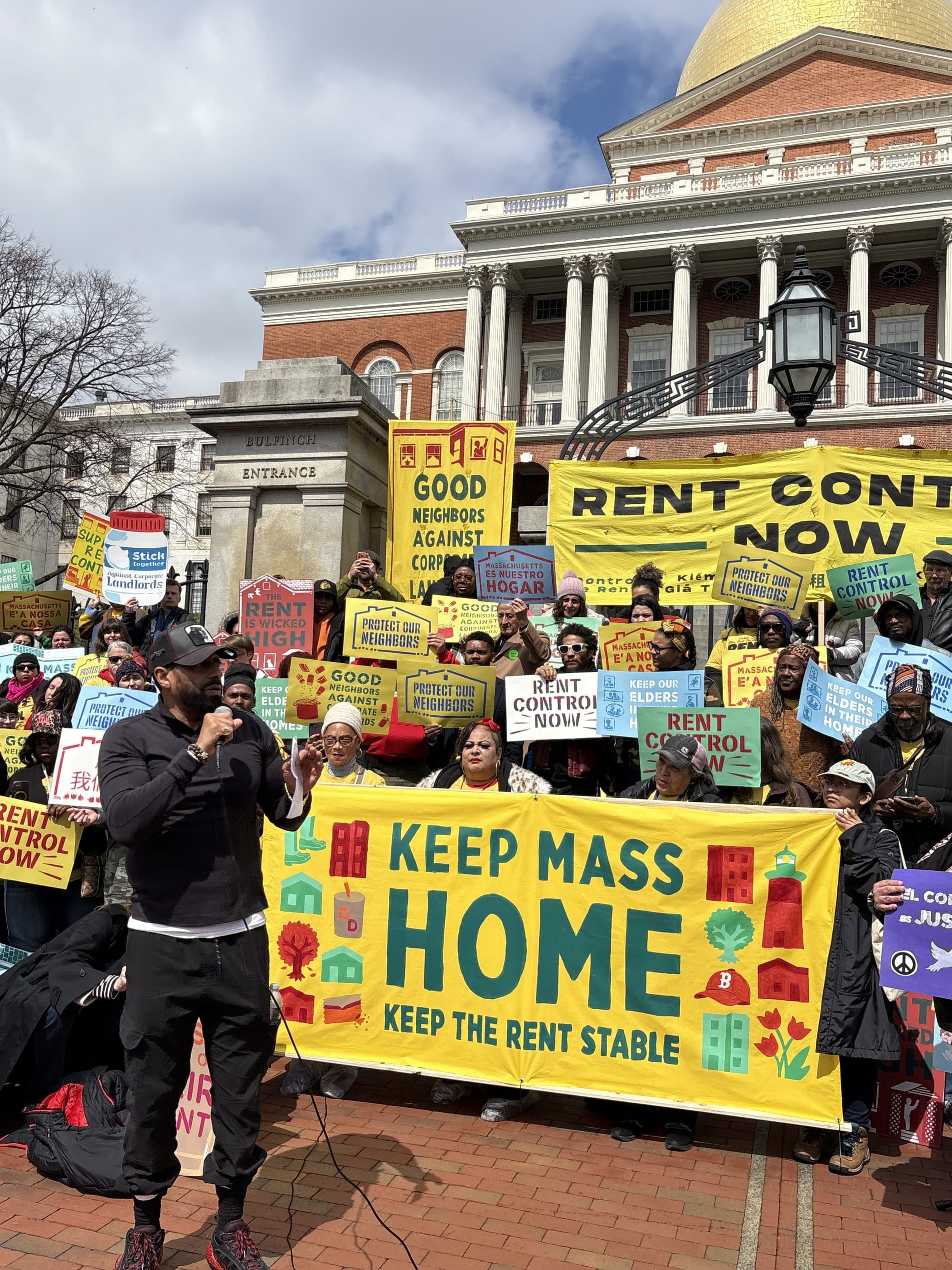
Some coalitions have won direct public support, which can include both transfers of land and allocations of subsidy, such as the $2.75 million from the city of Boston that the Greater Boston CLT Network has secured over the past five years for a CLT Funding Pool.
Efforts to create a more conducive policy environment include advocating for “opportunity to purchase” ordinances and property tax exemptions and enabling legislation such as House Bill 85 in Maryland. Passed in April, the measure removed legal barriers to forming limited equity housing cooperatives.
Founded in 2017, the California CLT Network is one of many new community ownership coalitions influencing policymakers. The organization’s founders were motivated in part by the goal of ensuring the fair taxation of CLT homes. Simply put, if CLTs restrict the sale price of homes, the assessed value of the property should be adjusted accordingly. The group has grown considerably since.
The coalition has grown to include 69 member organizations. Coalition members have left their mark on many policies, ranging from lot splits to affordable housing preservation funding, accessory dwelling units, foreclosure auctions, a state definition of CLTs, and CLT taxation. Recognizing the state’s size and diversity and its growing number of CLTs, the state coalition is also supporting local policy work, such as city-level “opportunity to purchase” ordinances, equitable fire recovery strategies, and local affordable housing funding measures.
While state and local CLT coalitions are taking off, there is also growing energy around housing cooperatives and other forms of community-owned real estate, such as community investment trusts and permanent real estate cooperatives. Less than two years old, the Oregon Cooperative Housing Network is already making its mark on state policy. In 2025 alone, the group helped pass a statewide zoning framework that gives housing cooperatives and CLTs their own density bonus, a limited equity housing cooperative property tax exemption, and regulatory changes that make co-ops eligible for existing state affordable housing resources. The Oregon coalition’s philosophy is succinctly summarized in their year-end newsletter: “Oregon is ready for more co-ops, and we intend to help communities build them.”
Why Community Ownership Coalitions Are Emerging
In just the past two years, we’ve seen new coalitions form across the country, including in cities such as Chicago and San Diego, and states such as North Carolina and Ohio. What is driving the growth of coalitions across such geographically, politically, and demographically diverse locations?
Part of the reason coalitions are emerging is that community-based organizations focused on community-owned housing are also growing. Organizations that steward permanently affordable housing have boomed over the last 10 years. These include CLTs, manufactured housing cooperatives, housing cooperative developers, and community investment trusts. New CLTs are being established across the country, resident-owned manufactured housing is taking off, and a new cohort of mixed commercial-residential community-ownership entities, such as Kensington Corridor Trust and the East Bay Permanent Real Estate Cooperative, has launched.
As more organizations form, more groups encounter financing and regulatory obstacles. These obstacles often serve as the starting point for policy advocacy campaigns. Overcoming them is usually beyond a single organization’s reach and requires coordinating and combining resources with multiple partners. That’s where practitioners have found that coalitions provide the political heft necessary to influence policy.
Of course, to succeed, community ownership coalitions rarely act alone. In conversations with advocates and practitioners, we heard that coalitions have helped establish ties with a broad set of stakeholders, including unions, climate change advocates, and tenant organizers. It’s one thing when a city council hears from CLT staff that CLTs need operating support or a development subsidy; it’s another when a city council hears that from unions, faith-based organizations, and transit advocates. The legitimacy and influence that come from broad coalitions can be especially important for newly formed organizations.
Coalitions also offer practitioners an important vehicle for vigorous advocacy without jeopardizing existing resources. This dynamic often plays out when a CLT is concerned about alienating public agencies or elected officials through advocacy and potentially losing existing resources or project support. Partnering with other groups in a coalition reduces the risk of direct reprisals while allowing advocates to take more provocative positions.
The lack of federal support for community ownership is another catalyst. Resources for affordable housing have long lagged behind the need, especially for housing interventions that are not primarily based on tax credits or vouchers.
Today, federal inaction has led many advocates to focus on the state and city levels. While a supportive federal government would do much to accelerate development, community ownership advocates have found that much can be accomplished closer to home.
Looking Ahead
In recent years, coalitions in Colorado, Los Angeles, and Massachusetts have secured financing for community ownership. Coalitions have also supported bills that help mobile home park residents form cooperatives and buy their communities in Virginia, Washington, and Maine, among other states. Others have won planning incentives that prioritize community ownership, shared-equity tax exemptions, and land disposition policies that facilitate the transfer of city-owned land to CLTs and other forms of community-owned housing.
But there have been setbacks as well. We heard from practitioners in California that their hard-won CLT and housing cooperative subsidy program was cut to help the state address a budget gap in 2024; that a historic municipal transfer tax that designates a portion of its revenue specifically to community ownership projects in LA is under attack by political adversaries; and that proposed opportunity to purchase ordinances have been undermined by real estate lobbyists on both coasts.
So what does the future hold? Will community ownership coalitions prove ephemeral, or can they build on their victories to date?
Our conversations with advocates highlighted a few key factors for long-term success. First, continuing the growth of the field is essential: As long as more CLTs, resident-owned mobile home parks, and community investment trusts form, both the demand for favorable policy and the means to achieve it are likely to grow.
Philanthropic support is another success factor. Foundations often prohibit grant expenses for policy work, even when it falls short of lobbying. Yet staff time, materials, and outreach costs add up. When realtor groups or other interests oppose community ownership advocates, a well-funded campaign can be the difference between success and failure.
Building broad coalitions that extend beyond the community ownership world is also critical. Our conversations with practitioners revealed several creative ways advocates are engaging other stakeholders to support community ownership campaigns.
For example, in Colorado and Minnesota, CLTs—with the support of Habitat for Humanity affiliates and other nonprofits—led the creation of “affordable homeownership” coalitions that have secured funding and tax benefits. In Chicago and San Diego, “community wealth building” has served as the framing that has mobilized partnerships. In other areas, community ownership advocates have joined with partners under the banner of “social housing,” as with the passage of California’s Senate Bill 555, which defined social housing as including limited equity cooperatives and CLTs and required the state to study its implementation at scale.
We also heard from several coalitions in which organizers had intentionally sought advocacy partners from the districts of key legislators.
The rapid proliferation of community ownership coalitions is, at its core, a story about a field embracing policy advocacy as central to its future. CLTs, co-ops, and resident-owned communities have spent years proving that community-controlled, permanently affordable housing works—and now their advocates are building the political infrastructure to match. That work is still young, and the obstacles are real.
Hoping that city councils and state legislatures will change tax, planning, and development policies without a push is unrealistic. This is why the work of community ownership housing coalitions is critical to advancing the field.
About the Author



Comments