



Every February, more than 100 housing advocates and tenants from across Tennessee convene at the Tennessee State Capitol in Nashville for the annual Housing and Homelessness Day on the Hill event, a statewide effort led by a cross-sector coalition of housing justice advocacy groups focused on tenant protections, homelessness, and housing affordability reform.
About 250 miles to the southeast, tenant advocates and leaders gather at Central Presbyterian Church in downtown Atlanta for the same reason: to appeal directly to their legislators for policy reforms that would strengthen renters’ rights and rectify the well-documented power imbalance in the landlord-tenant relationship. More than just gatherings of housing advocates, these events signal a shift toward tenant-centered and tenant-led advocacy movements in the South to enact renter protection reforms at the state and local levels.
Statewide Capitol Hill Day events—and more broadly, tenant-led and tenant-centered advocacy—require months of planning, coordination, and direct outreach to policymakers about renters’ experiences and challenges. With only a patchwork of federal, state, and local tenant protections in place, the shift to tenant advocacy and organizing has put tenants and tenant leaders at the forefront of the collective struggle to preserve affordable housing, protect and uphold tenants rights, and ensure that housing is free from health and safety risks.
To support ongoing housing advocacy efforts in the South, the National Low Income Housing Coalition, an organization I am part of, awarded year-long capacity-building grants in December 2024 to a cohort of teams working to advance state and local tenant protections in five southeastern states: Alabama, Georgia, Florida, Mississippi, and Tennessee. Comprised of housing justice advocates, tenant leaders, and legal service providers, the teams connected within and across their states to strategize, share challenges and best practices, and coordinate the development of pro-tenant policy agendas. For these organizations, a central component of their work has been to engage and center tenants and uplift the voices of those with direct experience of housing instability.
Over the course of the following year, despite resource constraints, these advocates have organized against state policymakers’ indifference and federal threats that left many housing organizations playing defense, and continue to work to give tenants a greater voice in the political process. Below are examples of how advocates in different states have worked to organize and engage tenants for safer, more affordable, and more stable housing conditions.
Leveraging Community Partnerships in Georgia

Led by Georgia Advancing Communities Together, Inc. (Georgia ACT), a partnership of diverse coalition of housing advocates spanning the housing, education, legal, and social services sectors worked to organize tenants around the implementation and enforcement of Georgia’s Safe at Home Act (Georgia House Bill 404). The bill passed in 2024, creating an “implied warranty of habitability” for tenants—a legal guarantee that a rental home must be safe, sanitary, and livable and equipped with essential utilities such as running water and working heat. Prior to implementation, Georgia was one of only three states without an enforceable warranty of habitability for renters.
During a standard coalition monthly check-in meeting, advocates noted that a key challenge was that many tenants were unaware of the new law. To address this knowledge gap and ensure the law is implemented and enforced equitably, accurately, and promptly, the Georgia coalition has coordinated efforts to educate tenants through community-based events hosted by local coalitions and committees; to establish vendor tables at statewide housing fairs; to host webinars; to distribute resources such as one-page fact sheets to renters statewide; and to host “Advocacy 101” events that not only educate tenants about the existing law but also help them design strategic advocacy campaigns and connect with legislators.
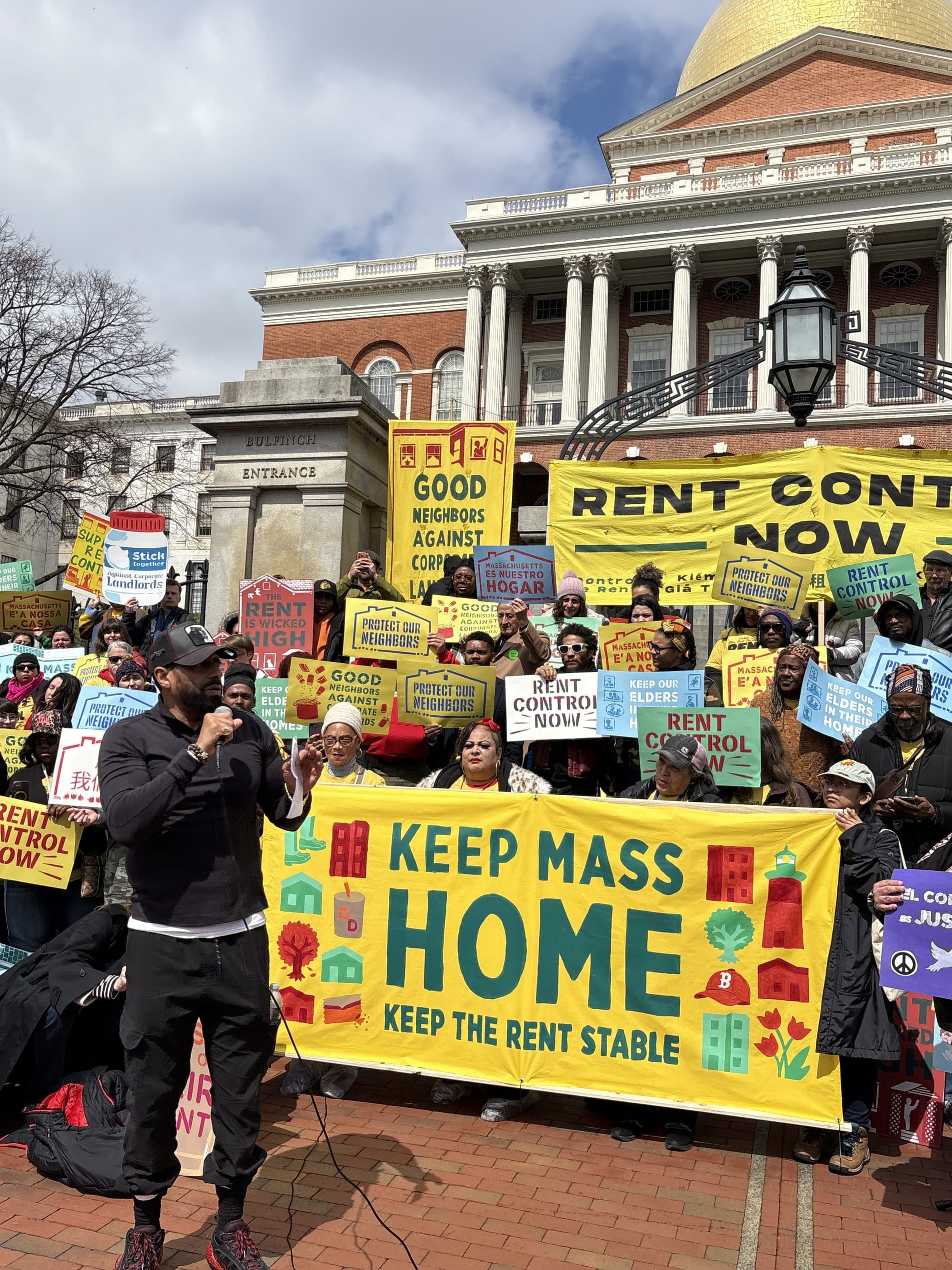
In 2025, advocates gathered in downtown Atlanta for face-to-face conversations with legislators to explain why state and local policy changes that strengthen renters’ rights are essential to helping renters thrive in homes free from health and safety concerns.
Capitol Hill Days are critical to ensuring that tenants’ voices are heard, especially in policy design, implementation, and enforcement. According to Dr. Bambie Hayes-Brown, president and CEO of Georgia ACT, “Tenant voices help lawmakers see how policies are experienced on the ground and why strong tenant protections and housing stability measures matter. This approach also affirms tenants as experts in the systems that affect them, strengthens civic participation, and ensures that housing solutions are shaped not only for tenants but with them.”
Georgia ACT has recognized the importance of connecting with tenants on issues most pertinent to them. Organizations working at the intersection of housing, including those in the health, education, and faith sectors, can tap into their networks and engage directly with tenants on issues that matter to them and bring together a diverse set of advocates for change.
For example, after researchers at Georgia State University found that more than 4,600 people living in DeKalb County alone were living in high-cost, low-quality extended-stay lodging with habitability issues including mold and pests, the coalition organized the first-ever “Healthy Housing Day” at the Georgia Capitol in January 2026.
“Tenants, advocates, and bipartisan lawmakers engaged directly on how housing laws affect children and families across Georgia,” says Luci Ruiz, policy counsel with Georgia Appleseed and a coalition member of Georgia ACT. “When more than 4,600 K-12 students in Georgia experience homelessness in a single year, and eviction records continue to block families from stable housing, educating lawmakers about how our laws operate in practice—and alternative solutions—is essential to meaningful reform.”
Getting Tenants to the Policy Table in Alabama
The Low Income Housing Coalition of Alabama (LIHCA) has advocated for improved access to safe, affordable housing for low-income Alabamians since 2007. For assistant director Christie Bevis, enabling tenants to lead systems-change work in the state remained a critical step. “Tenant organizing in the South has long been under-resourced,” Bevis observes, “yet the need for strong, coordinated tenant voices has never been greater.”
As in Georgia, limited tenant legal protections in Alabama can discourage tenants from organizing for policy change, let alone from simply exercising their rights to report landlord neglect and abuse. In 2024, LIHCA set out to use its platform as a respected statewide housing advocacy organization to create a safe space where tenants could learn strategies for effective, impactful organizing. “By acting as a convener,” Bevis says, the goal is “to bring tenant leaders together in a dedicated, shared space to cultivate leadership, build camaraderie, and strengthen collective advocacy.”
By summer 2025, LIHCA had recruited its inaugural cohort of 10 tenant leaders statewide and hosted its first official meeting, where participants worked out the nuts and bolts of a policy agenda to advance state and local tenant protections. “Through the Tenant Leaders Cohort,” shares Bevis, “LIHCA is working to foster meaningful connections among tenants most impacted by housing instability while helping to create a durable, community-rooted foundation for tenant power across Alabama and the broader region.” The group meets monthly to strategize around the needs of Alabama tenants and to receive specialized training in crafting successful advocacy campaigns.
For LIHCA, the goals of the Tenant Leaders Cohort were clear. LIHCA was intent on creating a strong foundation for tenant leadership, and the organization worked to center renters’ lived experiences to identify the most impactful tenant protection policies.
With tenants at the table, housing advocates are better positioned to push forward a policy agenda that not only benefits renters but is also designed by them.
Since their initial meeting more than six months ago, the tenant leaders have been refining their policy agenda, which includes addressing poor housing quality and a lack of maintenance, affordability barriers, education gaps that leave tenants unsure of their existing rights, and an overall lack of access to affordable housing options.
Meeting Tenants Where They Are at in Mississippi
Sixty-five of Mississippi’s 82 counties are deemed “rural.” In addition, the state has the highest percentage of Black residents in the United States. Among the challenges faced by rural renters—especially low-income rural renters—across the state are limited access to social services, healthcare, economic opportunity, job mobility, and affordable housing.
According to the Eviction Lab at Princeton University, approximately 220,000 evictions were filed against rural families in the U.S. each year from 2000 to 2018, with evictions concentrated in the South. Georgia, Mississippi, North Carolina, and South Carolina have some of the highest rural eviction rates, and the gap between rural and urban communities is especially stark in Mississippi.
To help bridge this divide, advocacy groups, including the Mississippi Center for Justice, the Mississippi Housing Partnership, and the Mississippi Chapter of the National Alliance of Social Workers (NASW-MS), banded together to support renter households in rural areas by bridging the knowledge, education, and resource gaps that exist among renters, landlords, and government agencies.
A challenge for advocates is the marked isolation that experienced by households in more remote communities. When these groups meet tenants where they are, however, tenants receive support that has historically been absent. Some of the ways this broad Mississippi coalition—which includes legal, social work, and housing advocates—has employed tenant organizing to build people power include educational events, such as hosting listening sessions, and training community members on their rights.
Given the different sectors represented by this Mississippi coalition, the educational and training materials were diverse. While the Mississippi Center for Justice held legal clinics and financial workshops to ensure tenants were aware of their rights and responsibilities as renters, NASW-MS created a new initiative called the Housing Opportunities Made for Everyone program to develop an outreach agenda to connect with renters in the Mississippi Delta, an area the organization identified as critically important for outreach.
In summer 2025, NASW-MS recruited three volunteers for this initiative. The volunteers—who were members of the communities where they volunteered and had direct insight into the issues their communities faced—held three outreach clinics or trainings for tenants, targeting areas with higher concentrations of Black, Latine, and low-income renters. These trainings aimed to build tenant strength and amplify their voices.
Organizers with NASW-MS faced many challenges. Some tenants feared that their landlords would retaliate if they spoke out; others were skeptical that these events could effect change. Finding space to meet was also a challenge. Still, these gatherings, says NASW-MS public policy and education coordinator Reginald Virgil, were considered a “success.”
These clinics helped advance proposals to address a lack of proper notice and penalties stemming from an inability to pay rent; Mississippi’s minimum wage, which remains at the paltry federal level of $7.25 an hour, renders housing unaffordable and leaves little to no money at the end of the month for other basic needs; and the need for permanent housing solutions to combat homelessness and eviction in the state.
What Comes Next?
The effort to rectify the long-standing power imbalance between landlords and tenants in the South continues. The good news is that tenant advocacy and organizing is shifting power to tenants, enabling them to speak out against poor housing conditions and to advocate for equitable policies that put tenants on track to access safe, stable, and affordable housing.
People power is evident in the South, a reminder that housing advocates are not only pressing for change now but will continue to do so.
About the Author

Georgia’s Safe at Home Act does mention specific habitability standards, but does not address what the punishment will be for landlords found in violation. As is often the case, the law may say one thing, but in actual practice, its had almost no tangible effect for tenants yet (unless they can pay for a lawyer). I’m not sure what only educating tenants will do; we need the power to compel local governments to sue landlords based on the law on behalf of tenants.