


This article is part of the Under the Lens series
Innovations in Community Ownership
Philadelphia’s Kensington neighborhood is rich with cultural history, entrepreneurial spirit, and deep-rooted community ties. But Kensington, long one of Philadelphia’s most disinvested communities, is also too familiar with outside control. For decades, decisions about which investments arrived—and which didn’t—came from people far removed from the neighborhood. A new model, a neighborhood trust, is rewriting that script.
Kensington Corridor Trust (KCT) in Philadelphia is a neighborhood trust established in 2019 to take mixed-use properties on a high-vacancy neighborhood commercial corridor and place them under community control for the benefit of existing and future residents. By doing this, the KCT seeks to preserve intergenerational affordability and to ensure local collective control of real estate outside of the speculative market. Right now, parts of Kensington are gentrifying, even as key quality of life indicators remain low and the neighborhood contends with overlapping issues of poverty, housing insecurity, and public health disparities. The KCT views this as an opportunity to co-create new systems—ones that center neighborhood voice, preserve what makes Kensington powerful, and return control to the people who have long sustained the community.
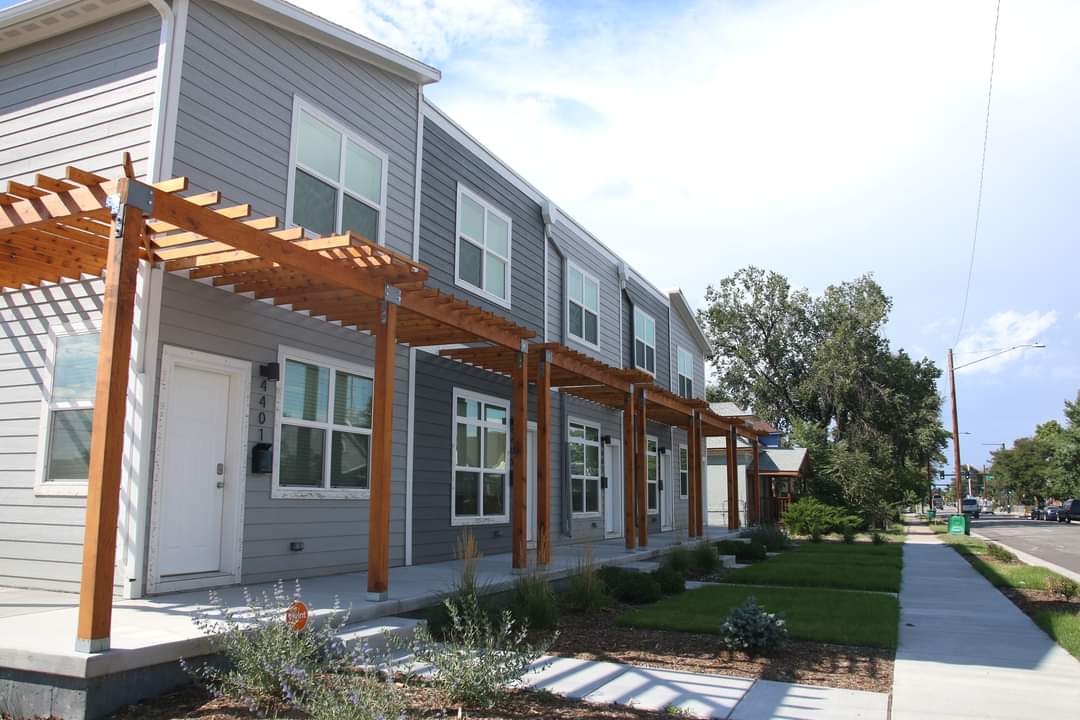
Led by neighbors and small-business owners in the Kensington neighborhood, the KCT acquires, redevelops, and rents storefronts and upper-floor apartments to community business owners and residents for affordable prices. (The residential units are currently affordable households making 25–50 percent of area median income [AMI], or up to $59,700 for a family of four, and the commercial spaces are renting for about 25 percent below market.) The KCT is working to transform the corridor so that it can support local entrepreneurship, provide safe communal spaces, and preserve community culture.
“The goal is to rebuild a distressed commercial corridor that, once stabilized, will generate jobs for people in the neighborhood,” says Alex Robles, chair of the KCT board and a longtime neighborhood resident. “It’ll also provide amenities at price points that are affordable for those residents, and will be clean and safe enough for people from other neighborhoods to come and visit.” The KCT community leaders select properties for acquisition and commercial tenants with those goals in mind.
The KCT was built on the premise that an organization that answers to the local community can redevelop real estate, rent it in perpetuity at affordable prices, and provide modest returns to investors. So far, the KCT has purchased 31 of 222 properties along four blocks of Kensington Avenue, the neighborhood’s main commercial corridor. Organizational leaders have a goal of owning 60 properties within the targeted area within ten years, to create a thriving commercial base for the neighborhood. KCT is currently fixing buildings or building new ones on 9 of its 31 properties, creating or preserving 11 commercial spaces and 25 residential units. Eight buildings had commercial or residential tenants at the time of sale, several of which had to be moved to other trust properties because of substandard conditions in those buildings. In partnership with other neighborhood nonprofits, the KCT has formed and stewards a community garden from 11 of the acquired parcels and plans for it to provide much-needed common space for the neighborhood over the long term.
To fund this revitalization of the corridor, the KCT has raised over $3 million in grants and taken out over $13 million in loans—but all with interest rates of 2 percent or below.
Demographic Profile of Neighborhood Surrounding Kensington Corridor
The neighborhood surrounding the Kensington Avenue commercial corridor is home to approximately 32,000 residents spread across six census tracts. Residents are some of the poorest in one of the country’s poorest big cities. Forty-six percent of neighborhood households fall below the poverty line—more than twice the citywide percentage of 22 percent. The neighborhood is 64 percent Latine. Over the past two decades, the neighborhood has experienced a decline in population, losing a couple thousand people.
Governance
To realize its vision of community control, the KCT is using a neighborhood trust model, which includes both a 501(c)(3) nonprofit with a board of directors and also a perpetual purpose trust (PPT), overseen by a trust stewardship committee (TSC). A perpetual purpose trust is a legal framework that requires the trustees to steward the trust’s assets and investments to achieve a predefined purpose rather than to benefit individual beneficiaries: all profits and assets must serve the specified purpose stated in the trust documents. The stewardship committee members are the keepers of the KCT trust’s purpose and are responsible for ensuring that decisions regarding the assets in trust follow the community’s priorities.

Both the board and the stewardship committee are composed of community residents and small-business owners. Every January the KCT launches a neighborhood-wide open call for residents or small business owners in the 19134 ZIP code to apply for or nominate someone to serve on the trust stewardship committee or the board. The existing governance body votes on the slate. Members of both bodies are paid an hourly rate that is double the living wage, or approximately $46 an hour, for their time spent on KCT business.
The board members are responsible for ensuring that organization-wide decisions both further neighborhood control and preserve affordability. The stewardship committee members are the PPT’s trustees and set parameters on development and leasing of the assets in the trust, including which types of commercial tenants can be selected, and how affordability is defined in determining rental rates. For example, the TSC decided that residential rents can never exceed a level that is affordable to residents at 80 percent of AMI. The actual owners of the trust assets are residents and business owners in the 19134 ZIP code. One person serves on both the TSC and the nonprofit board to ensure good communication between the two bodies. The organization also has feedback loops to ensure that neighbors and small business owners not represented at the governance table can participate in the decision-making that is central to the neighborhood trust model. For example, for each potential commercial tenant, the staff, along with the prospective small business owner, spend approximately three months obtaining community feedback by canvassing the neighborhood and presenting at neighborhood civic meetings to ensure there is community support for their planned business. To date all proposed commercial tenants have been local entrepreneurs and their friends and neighbors have wholeheartedly supported their leases.
The neighborhood trust model borrows elements of a business improvement district, a community land trust, and a community development corporation, but seeks to create something more by introducing the legal structure of the perpetual purpose trust, and having community oversight of leasing decisions and affordability standards. A neighborhood trust offers something that the other more common models do not—the ability to ensure that its real estate properties will be held in perpetuity, with long-term affordability and guaranteed resident control over property use and disposition.
Community Control Can’t Wait
The KCT was initially created through a partnership between two for-profits, called Shift Capital and IF Lab; a nonprofit, Impact Services; and a quasi-governmental agency, the Philadelphia Industrial Development Corporation. These founding partners initially planned to guide the KCT for 10 years before transferring control to the community, but in 2020, the trust’s founding executive director, Adriana Abizadeh-Barbour (one of the authors of this article), and board chair Casey O’Donnell, CEO of Impact Services, convinced the partners to dramatically speed up the transition to a neighborhood-led board.
The founders dominated the board when it was established and had anticipated having a decade to build a large, thriving real estate portfolio using their extensive expertise and experience, while gradually adding more community residents and small-business owners to the nonprofit board. They had planned to quickly move into the neighborhood real estate market and buy up properties before they were bought up by well-resourced investors, using stealth to guard against the possibility that their acquisitions and known interest would raise sale prices. The premise was that having a board adept at fundraising from private investors and full of people experienced with commercial development, property management, and asset management would be best in order to achieve this quick portfolio accumulation.
[RELATED ARTICLE: Residents Owning Their Local Economy]
However, as Abizadeh-Barbour explained at the time, “This is a neighborhood trust and we can’t build it and hope folks will love it later. This trust needs to be created and governed by residents.” And so, the board decided to prioritize creating neighborhood buy-in and building community trust over the need to move at the speed of the market. In 2021, the board was converted to all community members with the consent of the founders, after a yearlong transition that ensured a transfer of knowledge. In July 2023, the KCT began to annually select future TSC and board members through its neighborhood-wide open application process.
In order to define the purpose it sought to achieve, the Kensington Corridor Trust needed to determine the community it represented and establish the meaning of community control of property. Roughly 32,000 residents live across six census tracts touching the 1.4 mile long Kensington Avenue corridor. How could the KCT make community the decision-maker and power holder over real estate assets when there isn’t a single homogeneous community with a clear set of desires?


Over time a diverse set of local resident and business leaders have taken responsibility for ensuring that the KCT’s decisions and direction reflect the community’s wants and needs. The starting point, however, was a 2016 neighborhood plan that had been conducted by Impact Services, one of the founding nonprofit partners of the KCT. The planning process, which included extensive community engagement, found that neighbors and businesses wanted to reduce vacancy and disrepair along the corridor, formalize the large informal economy in Kensington, and give entrepreneurs the opportunity to open brick-and-mortar businesses that would create new jobs. There was broad consensus that conditions on the corridor needed to be improved, though using real estate to build neighborhood power and local wealth was not discussed.
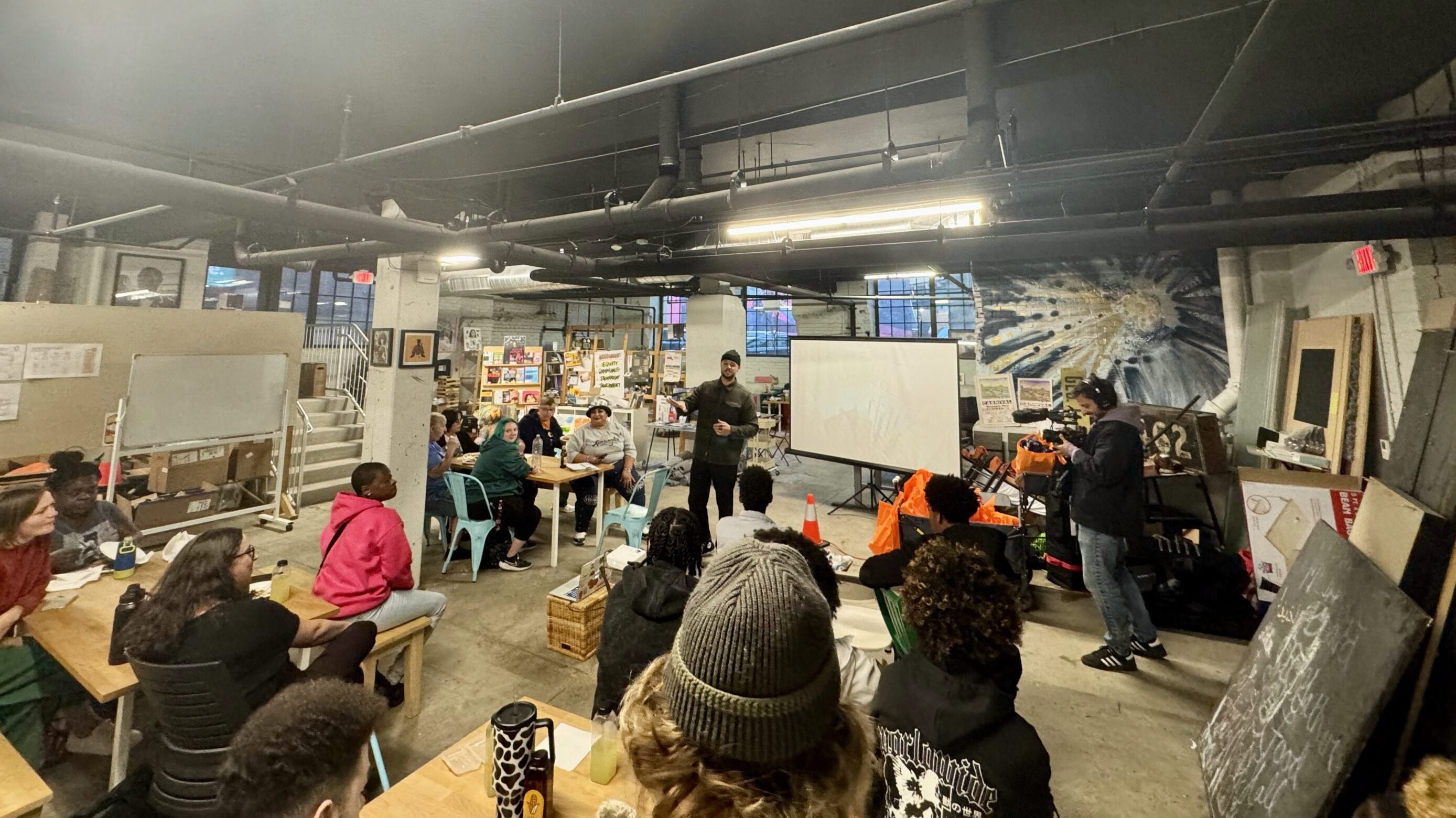
The KCT next commenced its own outreach, choosing to deeply interact with a working group of 20 community stakeholders who were recommended by allies and partners to advise the organization on the formation of the trust. Two members of the working group joined the Trust Stewardship Committee that would govern the trust to bring the knowledge they obtained through the working group process to the permanent governing body. KCT followed up this process with a large neighborhood meeting and several smaller meetings with civic organizations to ensure that residents agreed with the key principles guiding formation of the KCT.
The values of KCT’s perpetual purpose trust are “stewardship, community, transparency, and equitable, community-minded development that is led by and benefits the local community.” Under the rules of the trust, real estate is to be held in perpetuity, ensuring assets meet the purpose of the trust, which officially defines a mission to “uplift and support community-led initiatives that harness neighborhood power, or those of any other values-aligned enterprises in which the KCT Neighborhood Trust holds a majority or controlling interest.” The only situation in which the KCT may sell an asset out of the trust is if it’s selling retail property to a long-term commercial tenant who has been stewarding the asset. This is to ensure that the collective ownership structure of the neighborhood trust does not inhibit intergenerational wealth building for small-business owners who have the desire and capacity to own the buildings in which their businesses are located.
Developing neighborhood-led governance required moving with intentionality and a willingness to slow down in order to speed up. That meant providing education so that governance members without financial and real estate expertise could make informed decisions about the collectively held assets. It also meant taking the time to develop processes and systems that ensure the neighborhood’s control while remaining competitive in a speculative market. For example, governance members established geographic boundaries for acquisition, formalized a prohibition against predatory or exploitative businesses as tenants, and established priorities for businesses owned by women and people of color. It also meant leaving space in governance meetings for healthy and positive discourse around areas of dissent and disagreement, deeply rooted in the lived experience of neighbors for whom sometimes just a few blocks of physical distance can mean vastly different experiences of the neighborhood.
At inception, the KCT was not well resourced and had not yet determined its acquisition processes, which meant acquisitions moved more slowly and opportunities were sometimes missed. More than five years later, the trust has garnered significant local and national support and has sufficient staff expertise to allow it to get to closing in 15 days, and thus compete with outside investors. This fall, one of the neighborhood’s primary goals for the trust will be achieved with the grand opening of a brand new community grocery store on Kensington Avenue, directly next to a train station. The small (roughly 800-square-foot) community grocery store will be accessible, both physically and financially, for the residents of Kensington. The grocery store owner grew up just four blocks away from the development site and has other successful businesses, so is less interested in high profits than in providing good quality items for an affordable price as a way to give back to the community. This marks not only proof that communities can design and build for their own futures, but it also signals to the world that local investment is necessary and viable. Today the KCT has a 0 percent vacancy rate on its commercial properties and there is a waiting list of local entrepreneurs seeking to rent a retail storefront.
The Kensington Corridor Trust has flipped the script for real estate investment, encouraging local leadership, self-determination, collaboration, and mutual care of neighborhood properties and community members. Having achieved community control of 31 properties, the KCT’s next goal is to create opportunities for neighborhood residents to personally invest in its real estate. In 2026, KCT will launch a community stewardship trust, replicating a model developed by The Guild in Atlanta, which will allow local residents to invest in shares of properties—for as little as $10 a month—and earn direct financial returns. This additional layer of complexity and benefit is being introduced directly at the request of neighbors seeking to broaden the outcomes of the neighborhood trust model to include redistribution of profits to local resident investors.
About the Author




Back in 1964-66 I used to live in Philadelphia with my mother and brother, near 5th Street and Allegheny Avenue. A group of us attended the 8th Grade in Stetson Junior High School just a few blocks from Kensington & Allegheny, the neighborhood that this article is about. We walked to school everyday instead of taking the bus to save money because our parents were what would be called today the working poor.
There wasn’t one boarded up house or empty lot where a house once stood, although there were quite a few closed factory buildings where people used to simply walk to work and earned a living wage. So the decline had already started, it just hadn’t reached the level that it has today.
Kensington was a desirable place to live then. I remember we used to walk down from where we lived just to see the homes with the nicely kept lawns and the pretty homes. We lived in tiny row homes with no front yard at all and tiny rear yards. The strip, Kensington Avenue, was bustling with shoppers going to shops of all kinds. Some of the High Schools had uniform codes and each Fall students with their parents could be seen shopping for the new school uniforms and school supplies. There was no crime to speak of that we could see, and there were no homeless. People of all ethnicities intermingled with apparent ease, although we were aware that some people had more rights than others. Still it was a peaceful existence that we had with each other.
Today Kensington is a sad sight to behold. Not a sign of its former greatness. Yes, I say greatness because even though we didn’t realize it then, what we had and have lost was priceless. Despite all the propaganda from politicians in high places, particularly in Washington, DC and state capitals, of how much richer and better and more prosperous we have become, the truth is the exact opposite. We have become poorer not only economically but in spirit. We have lost the courtesy and the kindness that we once freely expressed with one another.
But it doesn’t have to stay that way. We can do better and there are those among us that are strong and bold enough to make that effort. There are still residents who want better for their children and outside people, like those associated with this Kensington Corridor Trust, who have the energy, intelligence and perseverance to swim against the tide of all the naysayers who have long since thrown their hands up in the air and just given up.
I admire these young and old people alike. They have the brains and the energy and perseverance that is required to turn this around. They have the humanity.