


This article is part of the Under the Lens series
Innovations in Community Ownership
On a plot of land in western Connecticut resides a small group of tenants who are doing housing a little differently. “ We’re all involved and invested in the same thing, which is safe housing for ourselves and our family,” says Wandy Luna, 48, president of one of the six Brookside Housing Cooperatives, the oldest cooperative housing project in Connecticut.
Brookside, located in Waterbury, was founded in 1991 to provide permanently affordable homes to residents who were dealing with the ramifications of the deindustrialization of their community. It’s a limited equity housing cooperative (LEHC) operating on a community land trust (CLT). In layman’s terms, a LEHC is an alternative housing model where one buys shares of a property instead of an individual unit. A community land trust is an organization (usually a nonprofit with community participation in the governance) that holds the land permanently in trust for the good of the community, often to ensure permanently affordable housing. Co-ops are managed by a joint governance of elected tenants who meet monthly. Each of the six housing cooperatives elects its officers (president, vice president, secretary and treasurer) for its own leadership, and each also sends a representative to a cross-cooperative space called “All Committee,” where common concerns among the co-ops are raised and tackled. A layer above that is the community land trust, where each co-op has a representative on the board. There are also three seats for the parent organization, Naugatuck Valley Project (NVP) and six additional nonresident seats for local community members.
Successfully managing a co-op requires a “ spirit of cooperativeness,” according to Father John Cooney, a retired local priest who’s the current president of Brookside’s CLT board. “If this is going to succeed, we have to work at it.”
[RELATED ARTICLE: Why Combining Community Land Trusts and Limited-Equity Cooperatives Benefits Residents]
LEHCs create opportunities for low-income individuals and families to become homeowners, and give them more financial security and control over their housing situation. Plus, housing co-op share owners get the same tax deductions as homeowners.
What makes limited equity models a bit different from other housing co-ops is the way resale value is limited. Market-rate housing co-ops can be resold at any price, but LEHCs come with a requirement for a capped sale amount. That means that when residents move out, they can only sell their home up to a certain price, keeping the unit affordable for the next inhabitants. LEHCs started popping up in the U.S. around the mid-20th century, and now there are more than 3,290 across the U.S.—with New York and California leading the way—according to a map from UHAB National, a division of Urban Homesteading Assistance Board, a New York City–based group that helps local organizations and city agencies explore affordable housing co-ops as a viable affordable housing model across the United States.
Brookside rests on a CLT, which are increasingly being used in conjunction with cooperatives to protect their affordability provisions. Brookside’s six co-ops altogether have 102 units, each of which costs costs around $500 to $750 per month. That comes after the initial share purchase cost. Four of the six co-ops have a share purchase cost of $2,000, whereas the other two are $3,000 and $7,000. The average price for a market-rate condo or co-op in Waterbury, Connecticut, is almost $170,000 and the average rent for a one-bedroom rental is $1,250, according to Zillow. The larger units at Brookside have up to four bedrooms.
Strength in Numbers
While New York City and Chicago often get attention for their housing cooperatives, and CLTs are treated as a hot new trend, Brookside has been quietly sustaining itself in suburban Connecticut for over three decades. How has it done so? The co-op’s strength largely comes from being part of the Naugatuck Valley Project, an alliance of 23 dues-paying groups, including congregations, labor unions, and ethnic organizations.
In 1983, a multinational conglomerate laid off 92 workers from the Seth Thomas Clock Company, a clock manufacturing factory that had long been the lifeblood of Thomaston, a town in Connecticut’s Naugatuck Valley. According to a book on the history of the NVP, Banded Together: Economic Democratization in the Brass Valley, laid-off workers held a funeral for the Royal Seth mantel clock—and set on fire one of many the workers had been manufacturing when the factory shuttered. A local clergy member declared, “We ask for a resurrection here, that people may again have a chance to create.”
And they eventually did, but not before facing challenges. As secure employment opportunities began to disappear, Naugatuck Valley residents began to experience displacement. Many felt powerless in the face of outside forces that were creating massive changes in their towns. That’s when NVP was founded as an interfaith and labor organizing force helping citizens of the valley address issues in a collective manner, like rallying to protect retirement benefits for workers, securing a supermarket to provide food for low-income residents, and creating a local youth center. Today, its members still organize around housing, health care, environmental justice, labor and more.

Fighting the Condominium Craze
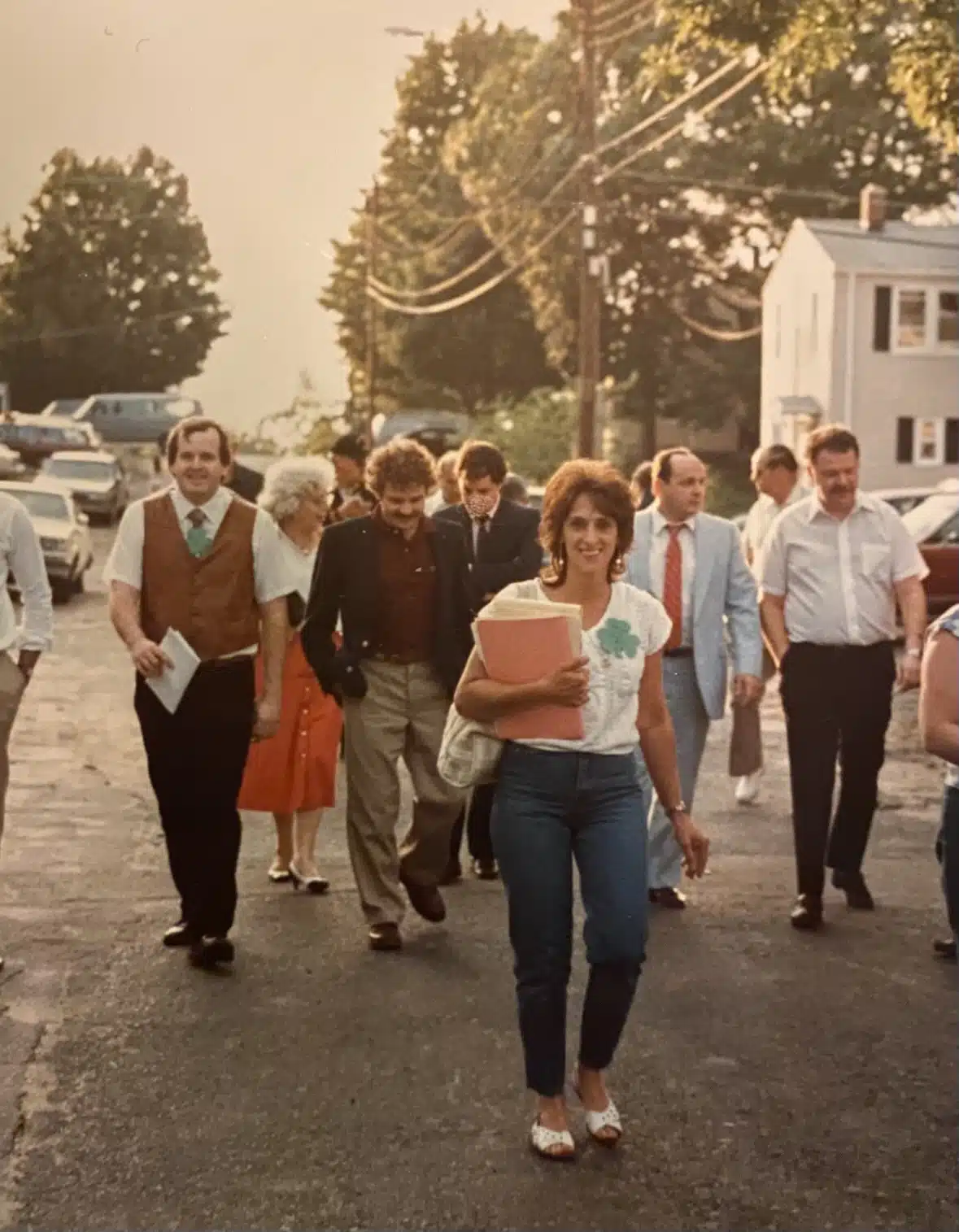
Alex Kolokotronis, current director of the NVP, recalls that in the late 1980s, “housing in the area became more and more of a pressing matter with the affordability crisis emerging out of the condominium conversions that were happening all around the United States.” At the same time, there was growing tension between tenants of a Waterbury apartment complex called Shamrock Ridge and its landlord, who was repeatedly hiking the rents and converting apartments into condos. One tenacious tenant, Evelyn Lush, became the leader of the tenants who were trying to organize. She began to meet with the NVP, who eventually came on board to help the tenants find a new place to live that would protect affordability.
After a few false starts, the organizers formed the Naugatuck Valley Housing Development Corporation, a separate entity, to control a community land trust. That structure provided a path for the residents of Shamrock Ridge to become co-op residents together, because as individuals they were not considered bankable. At the time, support for housing co-ops was introduced into Connecticut law.
The nine-member board would include three leaders from the NVP—the president of the NVP would also serve as president of the land trust—alongside three tenants. “Three board members, initially chosen by the NVP but eventually by the board itself, would be ‘outsiders’ selected for their technical expertise,” writes Jeremy Brecher in Banded Together. The organizers kept the entity tied to the NVP to create an oversight authority that would ensure long-term affordability and financial responsibility. Developing and managing housing was new for the NVP, but they applied the principles of the worker-ownership strategy they had developed through their labor organizing.
It took an organizing campaign to get the funding needed to get the project off the ground, as city officials were delaying the project because they hoped to use the funds to aid their associates’ projects instead. (The mayor eventually was arrested on federal corruption charges and served time.) Letter-writing, door-knocking, protests, and other actions finally secured the necessary funding. “ Ultimately, six co-ops were built,” says Kolokotronis.
When the project was getting off the ground, many potential residents couldn’t afford even Brookside’s modest downpayment—which was $1,500 at the time—so the board came up with an alternative: tenants could pay in “sweat equity.” Instead of cash, they paid for their initial share purchase in labor for the co-ops, including painting the units.
Since then, the spirit of solidarity has continued to support Brookside as challenges have come up. During the land trust board meetings, the conversations usually center on finding the best ways to engage residents and develop leadership opportunities. All residents are empowered to come to the monthly meeting, add items to the agenda, and engage in a collective deliberation about what the goals are for the years down the line.
Co-op residents have also held seats on the NVP board and executive council over the decades, and many residents attend the annual NVP Awards dinner to chat about their shared endeavors. When NVP was fighting to save a nursing home in Waterbury, over 50 co-op residents immediately signed a petition calling on the state to protect the organization, according to Kolokotronis. Plus, NVP hosts visitors at Brookside to educate local people on the co-ops and to promote the spread of the model throughout Connecticut.
Pushing Back against Unwanted Changes
In 2025, the city of Waterbury was attempting to raise the tax assessment of the co-op’s property by around 70 percent, according to Kolokotronis, which would have damaged affordability for tenants. (Limited-equity co-ops and community land trusts must often push back against being assessed at full market value instead of the actual limited resale value.)

”Basically, we mobilized to try and ensure that this would not happen—and we had a pretty significant win in that regard,” Kolokotronis says. Though the assessment did go up, it was by a much smaller amount. When the decision was made, a protest of about 30 people in front of the courts—which Kolokotronis says is significant for the area—turned into a celebration. “The turnout was very emblematic of NVP,” Kolokotronis said, noting the blend of attendees affiliated with labor and faith groups in addition to the co-op residents.
”The energy was excellent,” said Edmund Gadomski, president of NVP. “ The fact of the matter is that this co-op is lifesaving for so many people.”
One of Wandy Luna’s favorite memories of living at the co-op shows how the community comes together to provide team solutions to unique problems. Her child was having a conflict at school, which Luna was worried would escalate into an after-school issue. After casually venting about her concerns to her neighbors, she was pleasantly surprised to see that they and other co-op parents had arranged to have some parents at the bus stop for pickup for an entire month to ensure there were no issues for the kids. “It had a big impact on me—just knowing I’m not alone,” Luna said. “I do have people that care about me and my family.”
About the Author



Comments