


This article is part of the Under the Lens series
Innovations in Community Ownership
In a February article in Shelterforce, we started a conversation about what might constitute “fair” rent. Here, we explore another live debate among tenant organizers and social housing proponents: the dimensions of “resident control.” What does this term entail? How does it incorporate the standard duties of property management, and how does it surpass them? When do tenants’ rights expand into the realm of resident control?
Samuel Stein: There’s a growing movement for “social housing” in the United States. The term refers less to a specific model of housing than to a set of criteria for determining how social (or anti-social) a project might be. Generally, activists have looked at decommodification, social equality, and resident control as indicators of social housing. In our last conversation, we touched on the first two. But what about the third? How do residents gain control of their housing, and what does this “control” entail?
Many of us in the movement are grappling with this question today. I will focus on just two types of social housing here: limited-equity co-ops and public housing. Things can look quite different in these two models. In co-ops, residents own shares in their housing and elect a board to oversee operations. That board usually relies on a for-profit property manager to do the job, and can replace the company as they see fit. In public rentals, residents generally channel their power through elected tenants’ councils. Housing authorities often provide in-house property management (though some—particularly smaller authorities—outsource), which puts management in the public domain but removes it from the tenant council’s direct oversight. One could make the case that either model offers greater resident control or better management.
Susanne Schindler: I’m glad we’re expanding on a hard-to-pin-down aspiration of the social housing movement—control over one’s living environment—by connecting it to a very day-to-day concern—property management.
Control over one’s living environment is not just about sidestepping landlord exploitation—see our previous conversation. It’s also about being satisfied, or even outright happy with your home. This is only possible in functioning, healthy, and safe surroundings: getting the boiler to work, the trash taken out, pests eliminated, the sidewalk cleared, the staircase cleaned, monthly dues collected, taxes paid, apartments rented or sold, and neighbors to be neighborly, like when playing music.
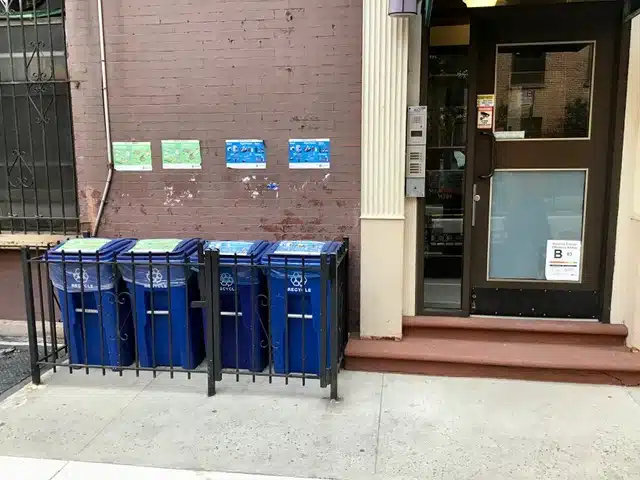
Because this is a lot of work, and takes some expertise, the co-ops you mention outsource it to professional management companies, rather than doing it themselves. Self-management might save money, but outsourcing management likely prevents the interpersonal headaches that result when you seek to discipline your neighbor for not playing by agreed-upon rules.
Housing authorities who still own properties manage in-house; others outsource it.
Do you have any thoughts on, or evidence of, which of those paths provides greater resident satisfaction, if not control?
Stein: This is an interesting question, and one that seems to be understudied. At the Community Service Society, where I work, we conducted a survey last year that included questions about housing quality and satisfaction with management. We didn’t have enough answers from residents of Mitchell Lama coops to report those findings, but we got some interesting—and somewhat conflicting—responses from New York City residents of traditional Section 9 public housing and buildings that had been privatized through RAD [Rental Assistance Demonstration].
RAD residents showed higher levels of satisfaction in terms of both treatment of residents and landlord/management performance—which includes property management, since NYCHA [New York City Housing Authority] both owns and manages public housing, and private companies both own and manage RAD projects. But when we drilled down on specific and perilous issues, like mold, leaks, clean water, and consistent heat, RAD residents reported more serious concerns than residents of buildings that remained traditional public housing.
What can we make of this? Perhaps residents in RAD-converted buildings are getting more attention from their new managers simply because they are new, and respondents are hoping building improvements will follow in the near future. Maybe they are taking a rosy view of things, now that the switch to private management has been made and cannot easily be reversed. But perhaps public managers just get a raw deal: even though conditions may be better in their buildings, they’re still blamed for inadequate staffing or insufficient improvements, even though it’s the federal budgets that shortchange them and HUD rules that constrain them.
One sector we haven’t yet covered is nonprofit rental housing. In your area, how do community development corporations (CDCs) address the question of property management and resident control?
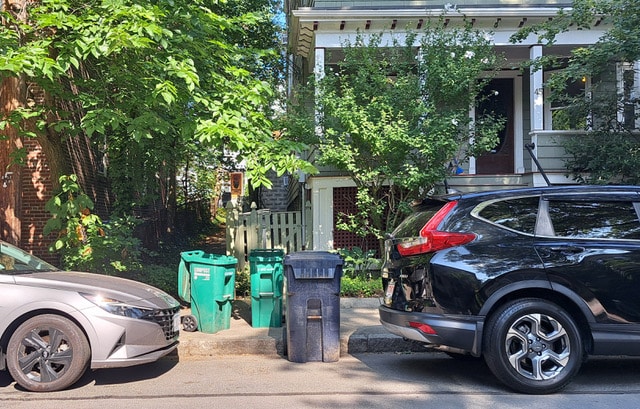
Schindler: Interesting question, because in the Boston area, there is a very robust network of CDCs that have, since the 1980s, developed much of the area’s affordable housing. CDCs tend to have precise catchment areas, in which, at least in their origins, their mission was to advocate for all types of development to benefit the residents of neighborhoods that had suffered from disinvestment and been shortchanged by urban renewal. Housing was just one part of their work. Creating job opportunities, advocating for environmental clean-up, ensuring health care provision, and other aspects of “community development” were just as important.
So it’s been astonishing to me that most Boston-area CDCs outsource their property management, often to big players like Winn, Wingate, or Beacon. These companies originated in the Boston area, but have grown to operate nationwide, each now managing tens of thousands of apartments.
In-house management would reduce external fees, create jobs in the community, and ensure immediate feedback on what works and what doesn’t in design and development. But what I’m hearing is that property management, especially of affordable housing, requires substantial compliance paperwork to funders and often involves support services for residents all to be accomplished within strict rent caps. There is also a matter of scale: it is harder to manage mid-size properties scattered on various sites, which is what the housing portfolio of many nonprofits looks like, than to run a single large building or complex.
But all this is getting away from the original question you asked: What does “resident control” entail in the proposed new social housing programs? Where does resident control intersect with management, and how does it intersect not only with ongoing maintenance but planning future upgrades? And how much of that is determined by how sources of funds are categorized as either capital investment or operational expenses? For instance, operating costs might allow you to pay for a doorperson’s salary, but not for a new intercom; conversely, capital funding will pay for that new intercom, but not for a doorperson. So even if residents know it would be better to have staff in their lobby 24/7 to ensure their building’s security, if the only funding the owners can access is a one-time capital grant, residents’ well-informed decision making is very much constrained by the terms of existing funding sources.
Stein: These are matters of dire importance to housing movements as we attempt to turn abstract principles into concrete programs. A couple years ago, when the main New York State tenant and homeless coalition sought to design and advance a new social housing program for our state, we developed a guide for organizers to discuss the ins and outs of resident control with their organizations’ members. The point was twofold: first, to build members’ awareness of the factors that might comprise resident control and the everyday work of building management, second, to assess people’s preferences and priorities.
As a renter, I hate guessing year-in, year-out whether my family can stay, and on what terms. That’s the baseline level of resident control I would like to have, and everyone deserves.”
Susanne Schindler
We asked about people’s experiences with the property management provided by existing housing and social service agencies: what works, what doesn’t, and who they think is responsible for both. Then we discussed the housing they live in now. Who makes decisions about rent or maintenance costs, and how they change from year to year? Who do you call when you need repairs? Who decides who moves in when there’s a vacancy? Then we considered who should be in charge of each of these things, and gave various options from existing housing models in New York and around the world, including the tenants themselves, companies chosen by residents, or public employees. Finally, we examined who should be making decisions about the social housing system as a whole, not just their individual building.
Schindler: I wonder how many residents simply wished they had reliable management services versus how many were in favor of doing that work themselves, perhaps even taking control—i.e., ownership—of the property. This is a question I’ve had about tenants’ unions, which are successfully organizing for fair rent and adequate services at building-, city- and even statewide levels, from Kansas City to Connecticut. Do they simply want more control or are they aiming to take over ownership?
Tenant opportunity to purchase acts (TOPA) give tenants the right of first refusal when a property goes up for sale. TOPA has a significant track record in Washington, D.C., where this option was introduced in the 1980s, as Amanda Huron chronicles in her book Carving out the Commons: Tenant Organizing and Housing Cooperatives in Washington, D.C. However, Huron also analyzes why the commitment to self-governance and self-management can fizzle after the enthusiasm of the first years.
But what do you think “resident control” could, or should, look like in the new social housing, whether in buildings that have been converted or in new developments? How do you maintain the commitment and knowledge to do this work?
Stein: There’s no single answer. The results of our conversations in New York aren’t published, but they directly informed a bill that proposes a new state-level Social Housing Authority, which would be governed at the authority level by a board that includes elected representatives of residents and workers. It would develop or acquire buildings that would each be governed by an elected board of residents, who could choose between public and private management options. Funding and programs would be available to advise residents on management and governance, and the authority would retain ownership of the land, with the power to step in if buildings fall into physical or financial distress.
Some details are left unresolved, but that’s partly by design—the authority would plan, finance, and develop/acquire lots of different kinds of housing in different kinds of places, so the legislation shouldn’t be too prescriptive. This flexibility also puts more power into the hands of future residents.
And speaking of power, that’s exactly what tenant unions are pursuing, whether through collective bargaining with a landlord or tenant takeovers of building ownership: power to democratically determine their building’s governance—which includes rent levels, but also a say in how that rent should be reinvested.
In a recent op-ed supporting the adoption of TOPA in New York state, my neighbor Red Young writes that skeptics often ask him whether renters are capable of taking on building management. He replies that since his landlord stopped maintaining the building years ago, tenants have functionally taken it over already: “It’s been years of managing the building ourselves, including boiler maintenance, upkeep, and several issues our landlord evades. The responsibilities of ownership are already ours.” Many tenants in neglected rentals would likely agree: the responsibility of ownership is already theirs, just not its rewards.
Schindler: In designing the rules of resident control, there is a tension between flexibility and accountability. On the one hand, you want to give residents of a particular building or development leeway to determine what works for them; on the other, that can quickly become exclusionary or fraught with internal tensions—as demonstrated by private co-op boards—or lead to mismanagement and poor decisions—as we discussed in our last piece related to the Florida condo collapse.
There needs to be some oversight, not only over the physical and financial dimensions you mention above, to ensure that the buildings last, but of the social dimension. How can policy makers and advocates ensure that residents understand and agree on the basic premise of the social housing they’re living in?
Here, I’ll riff on Jonathan Tarleton’s concept of “social maintenance,” which he has brought up in talks on his new book Homes for Living: The Fight for Social Housing and a New American Commons. The agencies that oversee Mitchell-Lama cooperative developments in New York City, which are self-governed, had focused solely on ensuring their financial and physical maintenance. Officials had forgotten about maintaining the social argument for why the program exists, to whose benefit, and why preserving this resource for future generations was so important. This is a major reason why 10 percent of this social housing has been converted to market-rate homes, which was a decision its residents made.
So perhaps I’ll end, just like in our conversation on what constitutes “fair” rent, on the need for a larger narrative. This isn’t just a “social housing” question: it’s about tenants’ rights in all housing. Give me a lease that doesn’t need to be renewed annually. Give me a guideline that says what rent increases are OK. Hear me out on which upgrade I think is most urgent. As a renter, I hate guessing year-in, year-out whether my family can stay, and on what terms. That’s the baseline level of resident control I would like to have, and everyone deserves.
About the Author




Comments