


Social Determinants of Health
The Latest

Why Does Habitability Matter? Health and Our Housing Stock
Whether your home is safe and suitable for healthy living depends on a variety of factors. Shelterforce puts habitability under the lens to show how problems like inadequate heating, water damage, and pest infestations negatively affect your health and further exacerbate the housing crisis.
Explore Articles in this Topic
Search & Filter Within this Topic
filter by Content Type
filter by Date Range
search by Keyword

Shelter Shorts, The Week in Community Development—Nov. 23
From hospital to housing, the toll of CA’s wildfires, gerrymandering’s famous enemy, Medicaid to the rescue, more.

Condemning Asthma, Not Homes in North Carolina
An apartment complex in North Carolina generated 120 times as many hospital visits as would have been expected for its population, until a creative coalition forced its sale and worked with the new owner to change things.

Transforming Vacant Land Into Community Assets
Vacant land activities can be low cost and high impact; the price of failure is not steep, but the return on investment can be high.

Greening Vacant Lots: Low Cost, Big Effect in Philly
A Philadelphia program is cleaning up abandoned lots, helping formerly incarcerated residents get jobs, and improving the overall health and well-being of neighborhoods.

The Mission: End Childhood Lead Poisoning in Rochester
In the 1990s, Rochester, New York, had an alarmingly large number of children who had elevated lead levels in their blood. Decades later, the rate has decreased by 85 percent. This is how a local coalition made it happen.
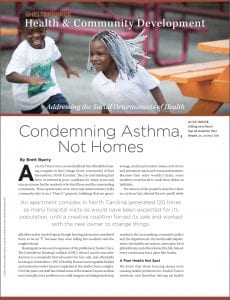
Fall 2018 — Health and Community Development Supplement
In our third supplement, we focus on a coalition’s work to lower the number of asthma-related hospital visits from an apartment complex, and how sitting on a porch can be good for your health.

Seniors Cannot Age in Place Without Access to Oral Health Services
Maintaining good health—including good oral health—as long as possible is a critical component of aging in place.
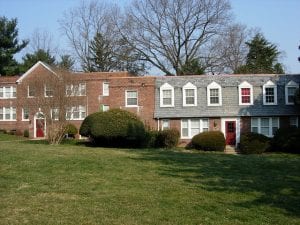
Shelter Shorts, The Week in Community Development—Oct. 26
News from—and affecting—the community development world. This week: multi-unit housing, commercial rent control, housing vouchers, vacant space and health, potential credit help, more.
What Anchor Institutions Can Do by Working Together
Anchor institutions are beginning to realize that they face similar challenges and, by joining forces, can accomplish goals that once seemed out of reach.

Shelter Shorts, The Week in Community Development—Oct. 12
News from—and affecting—the community development world. This week: fast food swamps, Seattle has too many apartments, criminal justice, basic income pilot, more.
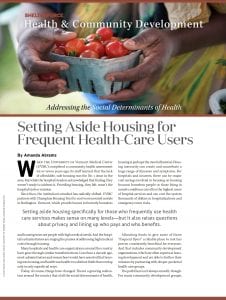
Summer 2018 – Health and Community Development Supplement
In our second supplement, we focus on setting aside housing for frequent health-care users and the dangers of utility termination for those with medical needs. Click on the photo to download a copy.
Setting Aside Housing for Frequent Health Care Users
Housing specifically for those who frequently use health care services makes sense on many levels, but it also raises questions about privacy and lining up who pays and who benefits.