


On a late September afternoon in 2025, a group of veteran housing activists who made New Jersey a national leader in tenant protection legislation and housing policy in the 1970s gathered in the West Orange home of Phyllis Salowe-Kaye. They were there to celebrate the publication of Patrick Morrissy’s memoir Staking Our Claim: The Fight for Better Housing in the 1970s, in which many of them were main characters.

Staking Our Claim sets the tenant organizing they were doing in the political, economic, and cultural context of that era, which was a bridge between the social upheaval of the 1960s and the Reagan conservative retrenchment in the 1980s.
Morrissy’s book traces several parallel stories. The primary one is his own odyssey, from growing up middle-class Irish Catholic in Detroit and Chicago, to house renovator in New Jersey (think “This Old House” plus “Whole Earth Catalog”), to housing organizer and political campaigner. From each of these stages Morrissy draws lessons about the search for community, the unifying theme of this memoir.
The memoir is bookended by memories of the charismatic housing organizer Ronald Atlas, from Morrissy’s first meeting him in 1968 to Atlas’s tragic death from cancer in 1979. It was Atlas, a legal services housing lawyer and co-founder of the New Jersey Tenants Organization, who introduced Morrissy to the community of idealistic young housing activists living in Orange and East Orange with whom he began to organize. It was Atlas, as well, who helped Morrissy scrape together the funds to purchase a 13-room Victorian house in East Orange where he set out to put down roots in his adopted community.
Supporting himself with a part-time job as a loan officer with the Englewood Redevelopment Agency, Morrissy spent evenings and weekends renovating the house in East Orange and plotting to grow tenant power. A group of tenant advocates began to meet regularly in the unfinished living room of the East Orange house. They mixed politics with social activities, as was typical of the countercultural ethos of the times. Serious discussions about tenant organizing strategy and the founding of Shelterforce were interspersed with parties, potluck dinners, camping trips, touch football in the park, and playing and listening to music.
Relying heavily on the organizing skills of activists like Phyllis Salowe (later Salowe-Kaye), a Newark schoolteacher, these tenant activists worked with a movement that succeeded in passing “rent-leveling” legislation, which placed limits on annual rent increases, in Orange, East Orange, and several other cities and towns in Essex County. Legal support from Essex County Legal Services was integral to this effort, under the leadership of Ronald Atlas’s younger brother, John, and including, notably, Joan Pransky, who died earlier this year.

Throughout the book, we are introduced to a range of significant figures, among them Elizabeth (Liz) McAlister, a former nun dedicated to community, nonviolence, and resistance to the Vietnam War; and Ernest (Ernie) Thompson, a labor organizer with United Electrical Radio and Machine Workers of America (UE) who was, not insignificantly, the father of Mindy Thompson Fullilove, a social psychiatrist and local activist whose seminal book Root Shock describes the impact of forced displacement on the human psyche.
During this decade the books on Morrissy’s nightstand included Jane Jacobs’s The Death and Life of Great American Cities, Robert Goodman’s After the Planners, Michael Harrington’s The Other America, C. Wright Mills’s The Power Elite, Christopher Alexander’s The Timeless Way of Building, The Whole Earth Catalog edited by Stewart Brand, and, to assist Morrissy’s on-the-job training as a house rehabilitator, the Reader’s Digest Complete Do-it-yourself Manual. This mix of political theory, urban planning, and an emerging environmental sensibility reflects Morrissy’s thinking at the time.
Throughout the decade, the group that lived in or worked out of the East Orange house combined grassroots organizing with discussions of political strategy. While their work was squarely grounded in issues of housing habitability and cost at the level of individual buildings, Morrissy describes how the group was conscious of the need to build a movement around these bread-and-butter issues, a political aspiration articulated most forcefully by John Atlas. The idea was to coalesce individual buildings into citywide tenant organizations capable of influencing local legislation, such as the successful rent-leveling campaigns in Orange and East Orange in the early 1970s, to combine the municipal organizations into the statewide New Jersey Tenants Organization, and then, building on the establishment of Shelterforce as a “national soapbox,” to use statewide organizations as a launching pad for the National Tenants Union.
The effort to go national in the early 1980s withered on the vine, as issues of local rent control did not easily translate into a national agenda. But the activists were able to help turn a state-wide network of single-issue groups (tenant protections, civil rights, labor, women’s rights, environmentalism, seniors’ issues) into a single lobbying force that became, in 1982, New Jersey Citizen Action, an organization that “combines political advocacy, electoral campaigns, public outreach, and community empowerment programs to make a real difference in the lives of everyday New Jerseyans.”
In addition to lobbying municipal councils for tenant rent protections, Morrissy’s cohort supported candidates for county and statewide office who were supportive of their positions. Their greatest success in this regard was the campaign to support Peter Shapiro as the first elected Essex County executive in 1978. One of Shapiro’s early acts was to establish the Ronald B. Atlas Tenant Resource Center, with Morrissy as director. Less successful was Morrissy’s own entry into electoral politics, an unsuccessful run in 1985 for a seat in the New Jersey General Assembly, a reminder that the entrenched Democratic party leadership could not so easily be swept aside.
The guts of this memoir are the accounts of the organizing campaigns at the building, municipal, and state levels. People with daytime jobs worked evenings and weekends to secure legislative protections for tenants against rent gouging, unfair eviction, and lack of building maintenance and services. The narrative focuses both on the group of organizers convened in the East Orange house and the leaders they supported at the building level, primarily women of color, who organized their neighbors, stood up to landlords, and showed up at town council meetings to press their cause. Morrissy is also careful to acknowledge the significant role of the local press in publicizing the issues and campaigns, notably the weekly East Orange Record and the Orange Transcript. The book celebrates the demanding work at the root of successful organizing and the exhilaration at successful campaigns (legislation passed, anti-tenant judges removed, etc.), while acknowledging the occasional defeats.
Morrissy employs a welcome conversational tone in his narrative, capturing his themes through the lens of a series of discussions in the East Orange house. As he notes, “The Victorian house on Chestnut Street was the hatchery where a vision evolved and where the people evolving it communed—to plan and work, to discuss and argue, to kick back and celebrate.”
As the 1970s ended, Morrissy sold the East Orange house, closing this chapter of his life, but he remained connected to Orange and East Orange. As he notes toward the end of his memoir, he went on to found HANDS (Housing and Neighborhood Development Services), a community development corporation, in his ongoing campaign to restore and protect urban neighborhoods in the cities of Orange and East Orange.
His trajectory demonstrates different components of what it means to “stake a claim”—to a house, a garden, a community. On a personal level the phrase refers to Morrissy’s determination to be part of a community, staking his own claim in East Orange. At the collective level, the title refers to Morrissy’s sense of social justice, devoting himself to working “with all the people who weren’t getting a fair shake and stake our claim to a society where no one is left behind.”
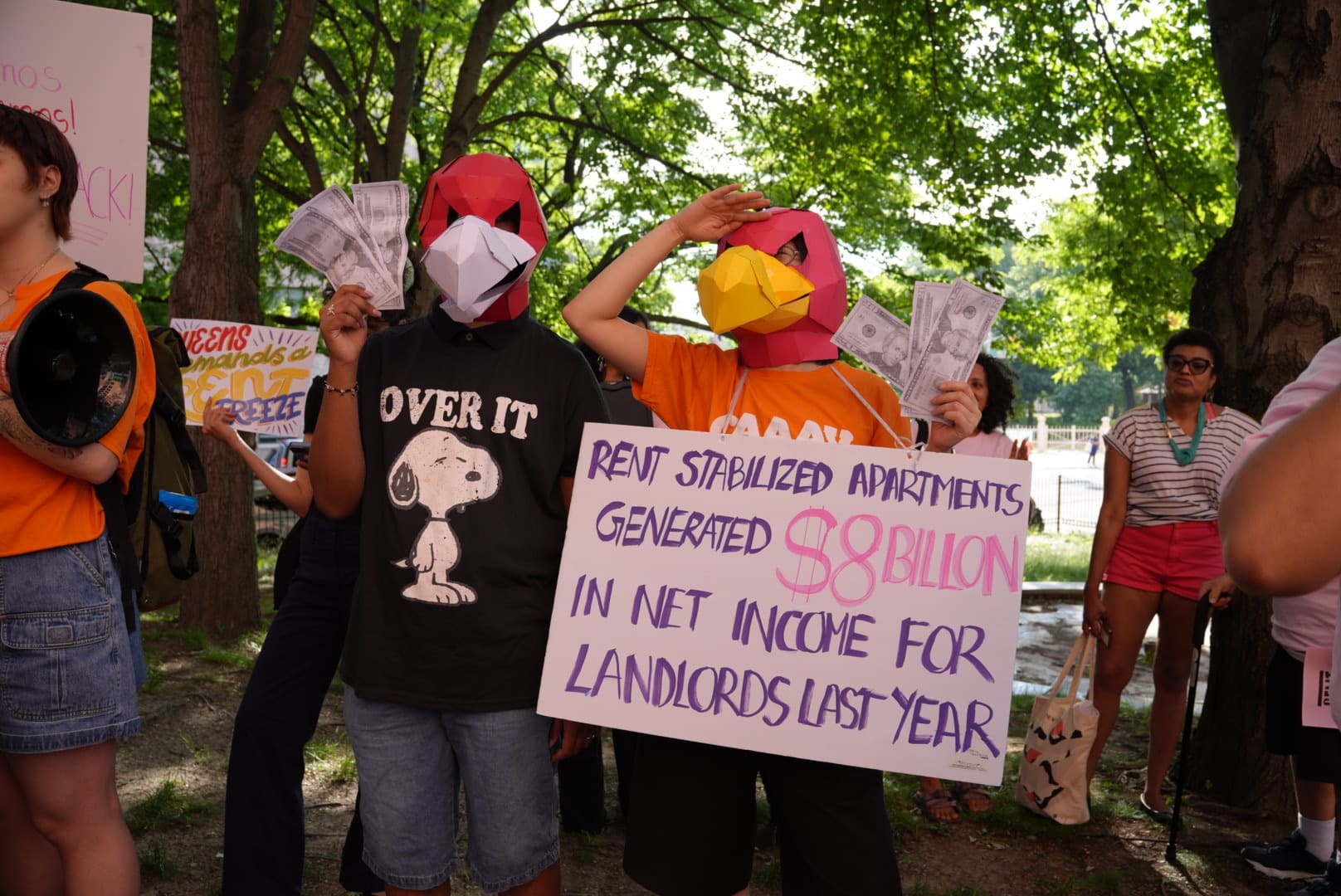
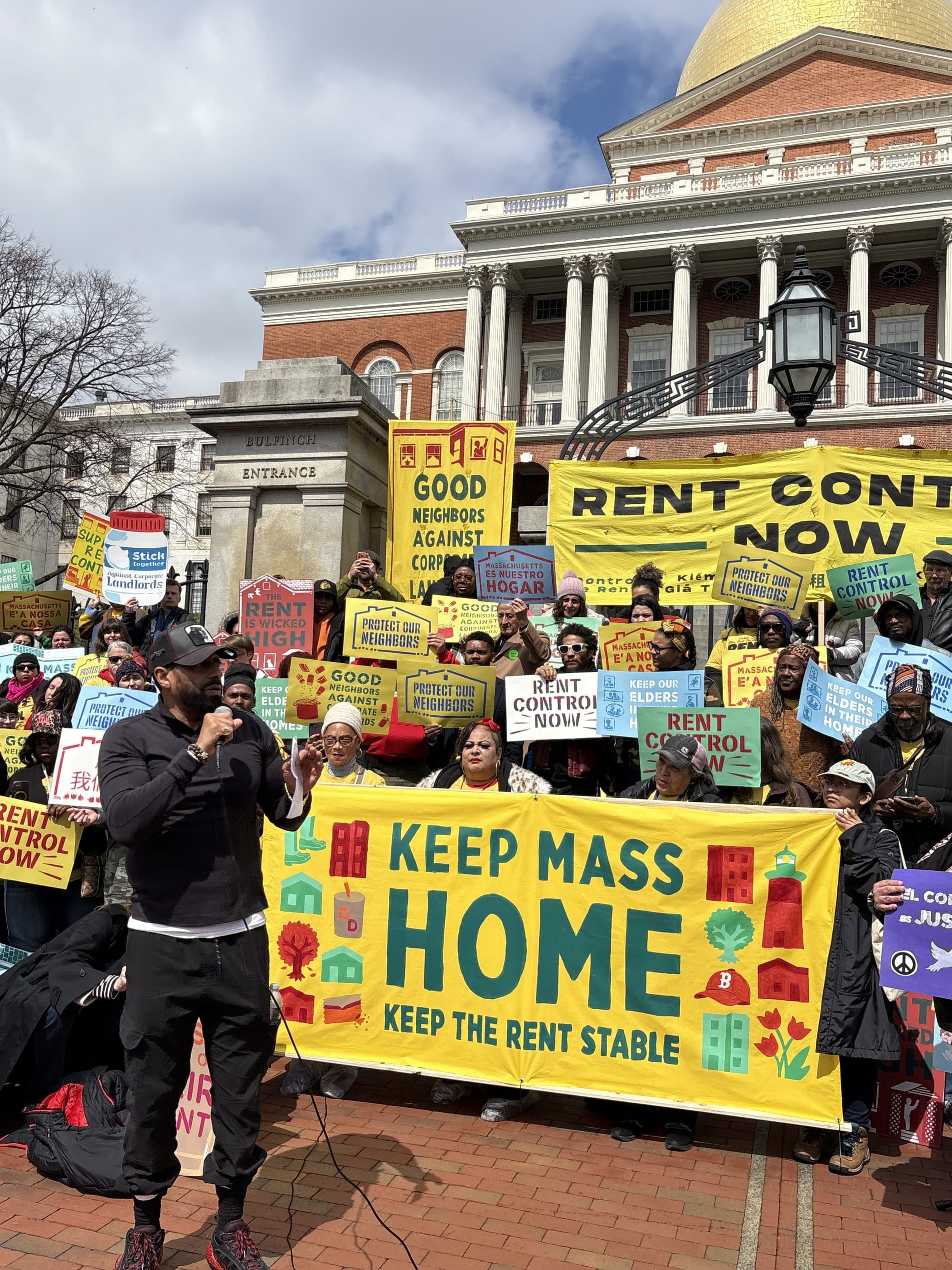
In a moment when housing affordability remains a vexing issue at every level, and rent control is rare outside New York City and New Jersey, the tenant movement has its work cut out for it. Morrissy’s book offers useful reminders that tenant organizing requires perseverance as well as ingenuity and needs to operate at several levels simultaneously—the building, the neighborhood, the municipality, the state. While not every organizing effort will take on the broader legislative and electoral strategies that these New Jersey activists did, their example offers inspiration to others.
Shelterforce, though no longer run out of that living room in East Orange, continues to tell the stories of the current generation of organizers. In telling his own story, Morrissy reminds us of the people behind the cause, driven by a desire to create and protect good urban neighborhoods where people can live in dignity.
About the Author

The reviewer highlighted parts most people usually miss.
Great review on an important memoir that informs us about a critical and generally successful campaign of tenant organizing and it’s connection to broader issues of social justice
The line “tenant organizing requires perseverance as well as ingenuity” stood out. My social network spans thousands of miles and lives mostly in digital spaces, so we can’t easily gather for potlucks or pickup games, even if we’d love to. Yet the values that drove the organizers here still resonate deeply.
How do we push for change when communication, connection, and activism take such different forms now?