


Shelterforce recently learned of the deaths of two important figures in the tenants rights world, Joan Pransky and Michael McKee. Pat Morrissy, a co-founder of Shelterforce, and Miriam Axel-Lute, its editor in chief, offer appreciations of Pransky and McKee’s lives and work.
Joan Pransky: Lawyer and Organizer in New Jersey

Joan Pransky, New Jersey’s most sought-after tenant lawyer, died on Oct. 22 at the age of 79. Pransky, a resident of Montclair, New Jersey, was a tireless advocate for tenants’ rights and an early member of the Shelterforce Collective, the group of tenant activists who started this publication in the mid-1970. She played a pivotal role in the growth of the tenant movement in New Jersey and the advancement of tenant protections written into state law. She was a unique blend of a sharp, creative, and persistent lawyer and a community organizer.
Pransky defended municipal rent ordinances all over the state from legal attacks by landlords and the real estate industry. She represented tenant groups against greedy landlords who made end runs around the law trying to displace poor and working-class tenants. She authored municipal ordinances requiring emergency repairs and landlord security deposits.
Pransky was a fierce tenant advocate, and as such was a target for a particularly biased judge who harassed poor tenants and their Legal Services lawyers. She worked successfully with tenant leaders to see that judge’s term come to an early end.
In 1973, fresh out of law school, Pransky joined the Housing Unit at Essex Newark Legal Services, a specialized group of tenant lawyers who worked to empower tenant leaders and their tenant organizations. Pransky became a board member, and then vice president and legal counsel, of the New Jersey Tenant Organization and served as an adviser to New Jersey Citizen Action, a statewide labor and community coalition. She guided law students at Seton Hall and Rutgers law schools in how to effectively represent tenants and empower them at the same time.
Pransky worked closely with Shelterforce’s founders in Orange and East Orange, New Jersey, as they organized with tenants, and she authored articles for the publication in its early years.
Pransky never gave up defending tenants after most of her comrades had retired. She was a loyal friend to all the organizers and advocates she worked with over the decades and left an indelible imprint on New Jersey’s movement for better housing. She will be missed by so many.
—Patrick Morrissy, a co-founder of Shelterforce and the author of Staking Our Claim: The Fight for Better Housing in the 1970s.
Michael McKee: Tenacious New York Tenant Advocate
Michael McKee, who spent more than 50 years in the tenant movement, passed away on Oct. 21 at the age of 85. His work began with a rent strike in his New York City building over a lack of heat, which The New York Times says “culminated in what was hailed in 1977 as the first known collective bargaining agreement between a landlord and tenants.” He went on to be a tenant organizer with both the Metropolitan Council on Housing and the Brooklyn Tenant Union. McKee co-founded New York State Tenants & Neighbors Coalition, and helped to organize and run the state’s Tenants Political Action Committee. He also served on the steering committee for the National Tenants Union, which was organized by Shelterforce leaders in 1980.
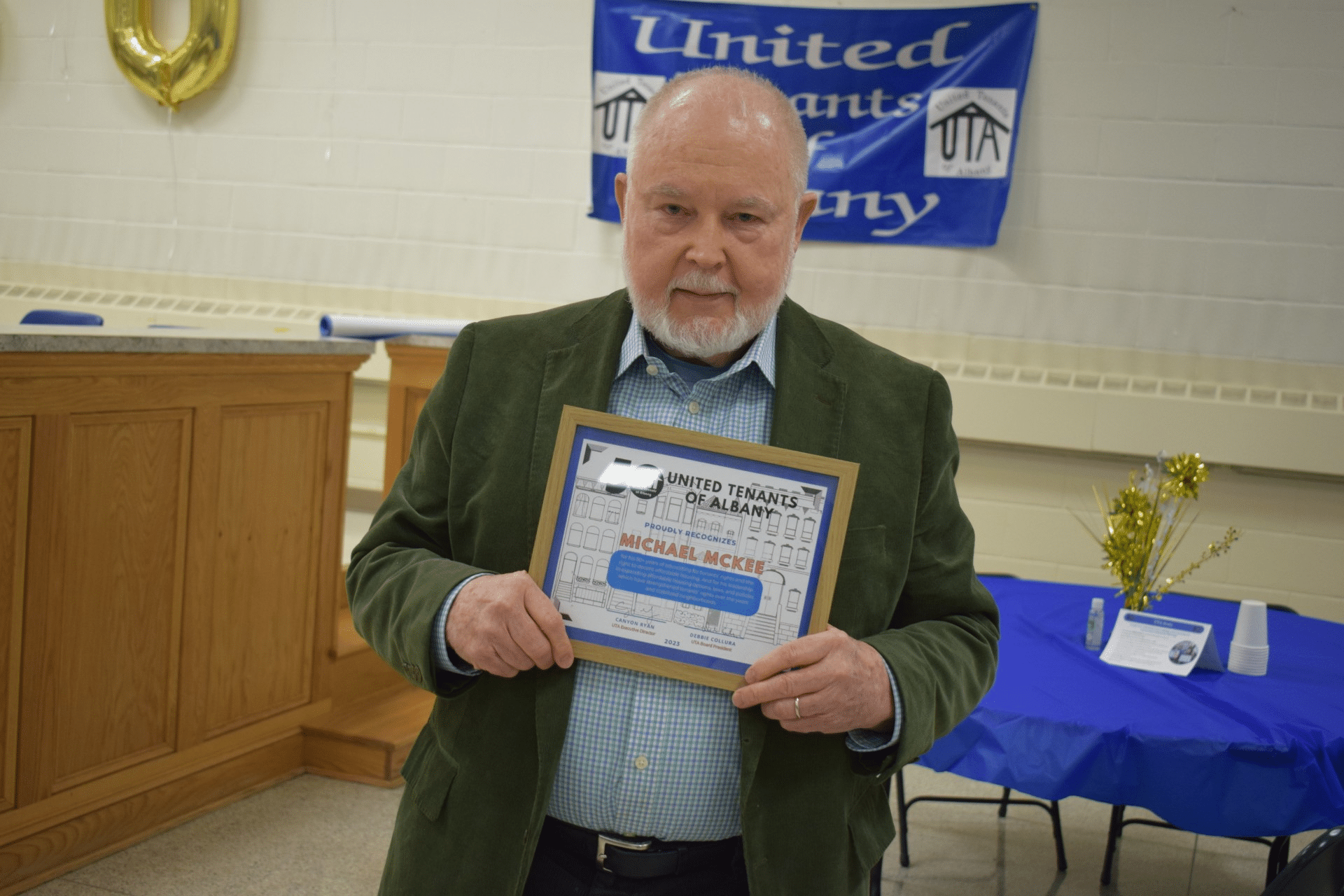
Shelterforce co-founder Woody Widrow notes that “Michael was a good friend of Shelterforce.” During the early years of Shelterforce, McKee wrote for a column called “Keeping the Heat On” based on his work with the New York State Tenants and Neighbors Coalition.
McKee’s observations continued to show up in Shelterforce throughout the years. In 1995, then–associate editor Karen Ceraso quoted him in an article on rent control’s future; McKee had written that newly elected New York Gov. George Pataki had a “perfect anti-tenant voting history” in the legislature.
Not long after, in 1997, Ceraso interviewed McKee about the campaign to renew the state’s rent laws despite Pataki’s antagonism. He provided a detailed look at how the campaign beat back a serious effort to introduce vacancy decontrol (where apartments stop being rent regulated when the tenants leave), and also foreshadowed later organizing focuses on right to counsel by observing, “The bill does contain some things that are extremely dangerous…not just the escrow provisions of the new law but other procedural changes in housing court. If you have a lawyer, you’ll be okay, but 90 percent of tenants don’t have lawyers, and people go into housing court not even knowing which room they’re supposed to go to, let alone what they’re supposed to say or what rights or defenses they might have.”
He had some commentary on national politics as well: “I think the federal government took a wrong turn back in the 1960s when it turned away from public housing and started bribing private developers to create low-income housing—to own it and operate it as a profit-making enterprise.” McKee also commented dryly on the idea of means-testing rent-control, which came up again in the recent New York City mayoral election, saying, “I might be a little less impatient about means testing under rent regulation if we means tested homeowner deductions.”
Two years later, McKee told Ceraso that the threat of losing rent control not only helped activate enough tenants to prevent the law from being as bad as it might have been, but also kept tenants involved. “There is still a tremendous awareness on the part of tenants that maybe they have been taking these laws for granted,” McKee said.
As recently as last year, McKee helped Shelterforce intern Luca Goldmansour understand the ins and outs of the extension of rent control, and passage of a rent reduction, in Kingston, New York. “Our biggest problem in Kingston . . . was getting tenants to understand that they were no longer in a position where the landlord had all the power and whatever the landlord said, you had to do,” said McKee. “It took a year and a half after the city voted to opt in just to make tenants understand that they now have the ability to say, ‘No, I don’t have to sign that illegal lease. I don’t have to pay that illegal rent increase.’”
“It is not possible to put into words the impact Michael had on housing laws and tenants power across the state and country,” wrote United Tenants of Albany (UTA) in a Facebook post about McKee’s passing. “He has served as a true friend & mentor, not only to UTA, but everyone involved in the tenants rights movement.”
—Miriam Axel-Lute
About the Author

Comments