



Topic
Financial System
“Income is how you get out of poverty; assets are how you stay out.” How do we build policies, programs, and products that reduce systematic inequality and advance financial security for all?
The Latest

Affordable Housing Financing Is Overpriced, But It Doesn’t Have to Be
Affordable housing construction finance reflects market norms, but its track record shows it’s far less risky than conventional market-rate housing loans. While lower default rates should lead to lower interest rates, they currently do not.
Explore Articles in this Topic
Search & Filter Within this Topic
filter by Content Type
filter by Date Range
search by Keyword

Measuring the Right Things: “Mobility from Poverty” Is More than Finances
How would you measure someone making progress toward escaping poverty? If you’ve been tuned in to the asset-building movement you might look at their accumulation of assets and preparation for a financial emergency. You might also want to look at cash flow. But can poverty-fighting be solely measured by money?

A Low-Cost Ownership Oasis in a Desert of Apartment Unaffordability
When this limited-equity cooperative in California began more than 30 years ago, it wasn’t the most affordable place to live. But now the co-op’s monthly costs are 50 percent lower than the average market-rate apartment.
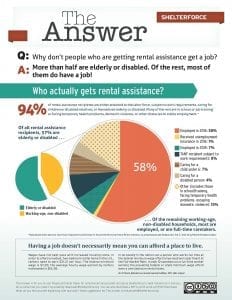
Q: Why Don’t People Who Get Rental Assistance Get a Job?
A: More than half are elderly or disabled. Of the rest, most of them do have a job! Ninety-four percent of rental assistance receipts are …

Data Drives the Movement for Economic Justice
A government report concludes that residents of low- and moderate-income Census tracts have as much access to bank branches as residents in middle- and upper-income tracts in rural areas and large metropolitan areas. Yet access to bank services for low- and moderate-income consumers is still being lost. Why is that?

CRA “Reform” Under Trump Threatens Communities of Color and the 99 Percent
Banks enjoy consumer and taxpayer-funded privileges, such as deposit insurance, and not too long ago, subsidized trillion-dollar bailouts. It’s not too much to insist that they invest a fair share of those dollars back into all of our communities.

Back in the Game: CDFIs Help 1- to 4-Unit Rental Housing Rebound in Chicago
After the housing crash, Chicago’s 1- to 4-unit rentals weren’t bouncing back in many neighborhoods. Three CDFIs came together to make it happen.
Equitable Tax Reform Begins at Home(ownership)
Talk of tax reform has reached a fever pitch, but most Americans don’t realize just how high the stakes are and what impact the final legislation could have on their own financial security for years to come.

Persistently Poor Regions Would Welcome a Little Gentrification
It is often said that you get what you pay for. Clearly, too little is being paid to create positive change in America’s most vulnerable places.

Meltdown: The Financial Crisis, Consumer Protection, and the Road Forward
In 2010, the scattered enforcement of consumer protection and fair lending laws across several agencies would end. The CFPB would have broad oversight over banks and non-banks, and though not perfect, this model has produced some impressive results.

Despite Progress, States Have Work to do to Ensure Access to Affordable Rental Housing and Homeownership
If expanding access to homeownership can reverse the trends of growing racial wealth inequality, why are we seeing so many states roll back the supports that make homeownership possible?
The Community Reinvestment Act at 40: A Careful Review of the Reviews
A review of HUD’s Cityscape issue, which is devoted to reviews and studies of the Community Reinvestment Act at its 40th anniversary.

After a Far Fall, Is Louisiana Becoming a Better Place for its Lower Income Families?
When the 2017 Prosperity Now Scorecard was published last month, it was no surprise that Louisiana ranked second-to-last among all 50 states and the District of Columbia, as it typically falls somewhere near the bottom. In many ways, the Scorecard confirmed what we already knew: that most Louisiana families, especially low-income families and families of color, are not faring well financially. What was surprising, however, was how far Louisiana had fallen.