


Top Takeaways
A growing number of affordable housing residents need support that falls between just housing and supportive housing.
Providers say many of the systems designed to deliver that support are stretched thin, difficult to access, or increasingly unstable.
Resident services are becoming critical to housing stability, yet they remain largely outside the funding structures that support affordable housing.
When tenants at a Pennrose property miss a rent payment—which happens more often since pandemic-era assistance dried up—it shows up on the ledger as a delinquency. But Timothy Henkel, CEO and principal at the regional mixed-income housing developer/operator, sees missed rent payments as a sign of tenants facing impossible choices. He describes one resident who had to choose between making her car payment and paying rent. “If you repossess her car, she’s not going to be able to go to work, and then she’ll never be able to pay the rent.”
For affordable housing providers, situations like the one Henkel describes are familiar: a renter faces an unexpected car repair, a medical bill, or a missed paycheck. The crisis is real, but it’s temporary. Given some time, help, or flexibility, these tenants regain their footing.
For other renters, however—particularly those who’ve experienced chronic homelessness or are living with serious mental illness, substance use disorder, or other health challenges—housing instability is just one part of a much larger struggle. For them, a house provides safety from the elements, but housing alone is often not enough to ensure stability. Having a roof and four walls can provide an address to receive hearing notices or a safe place to keep important medications. But housing can’t by itself reconnect someone to a lapsed prescription or help them navigate the disability benefits application process.
Most affordable housing developments—both the buildings and the budgets to run them—were built to help residents weather the first kind of challenge: lack of affordable options, low salaries, and high cost of living. But providers say a growing number of tenants also need help navigating benefits systems, accessing healthcare, responding to financial crises, or finding services that have become harder to access elsewhere.
As safety-net systems struggle to keep up with demand, and in some cases face funding instability of their own, traditional affordable housing providers increasingly find themselves filling service gaps that their operating budgets were never designed to address.

What Supportive Housing Really Does
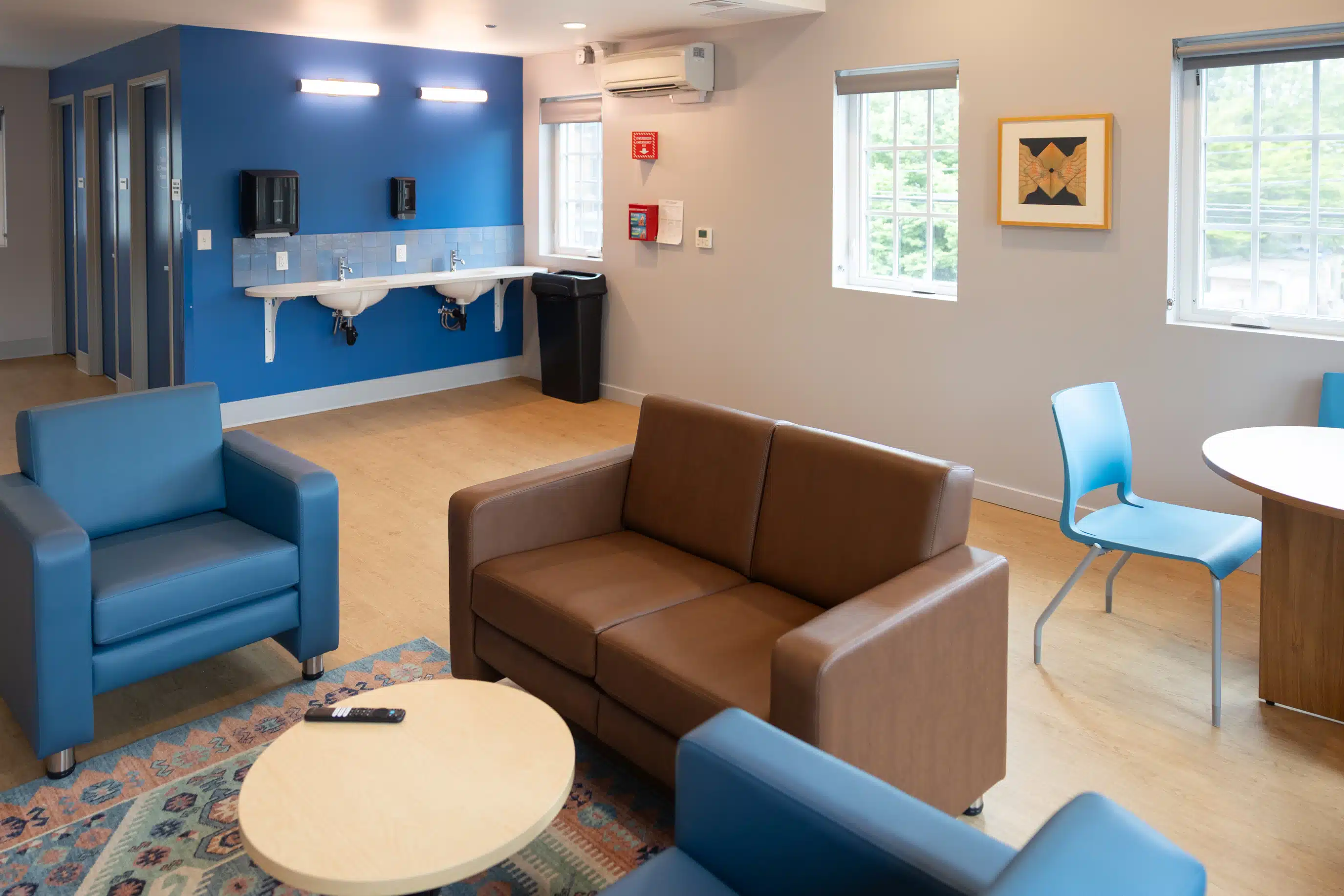
Housing with supportive or wraparound services is designed for people who need more than an affordable apartment to remain stably housed. Supportive housing typically pairs long-term, deeply affordable units with ongoing case management and on-site or closely coordinated behavioral health and medical services, targeting people who would otherwise struggle to remain housed.
In Portland, Oregon, Central City Concern (CCC) provides that type of resident support every day.
At CCC, keeping tenants housed often means far more than collecting rent or fixing a broken appliance. It can mean responding after an overdose. It can mean navigating disability benefits, coordinating with hospital discharge planners, or delivering care to residents who can’t access it on their own. CCC isn’t your typical affordable housing operator. The nonprofit, founded in the 1970s for Portland residents struggling with alcohol use disorder, operates 2,323 units of supportive and transitional housing. It serves residents with some of the region’s highest needs, which, staff say, have become even more complex in the years since the pandemic.
“We had fentanyl just readily available. So we were experiencing frequent overdoses, both in the buildings and outside,” says Sarah Holland, CCC’s senior director for supportive housing and employment services. Holland says that with the surge in fentanyl and methamphetamine, “We began seeing unprecedented levels of returning to use for folks in long-term recovery,” along with “sustained periods of psychoses for weeks at a time.”
People isolated in their apartments. Eviction courts slowed or halted. Emergency rental assistance kept some households afloat. And many face-to-face contact-dependent services were suddenly suspended. At the same time, many systems residents relied on before the pandemic became harder to access, and some never fully regained their capacity after pandemic restrictions lifted. For supportive housing providers, these changes didn’t just mean residents were harder to check on; it meant the relationships and routines that help keep people stable began to fray.
“Housing providers were really holding all of this in our facilities,” Holland recalls. “People were just really unwell, and we didn’t have access to the mechanisms to start to stabilize individuals.”
In supportive housing, even programs like CCC’s—with its on-site behavioral health staff, intensive case management, recovery services, and close ties to hospitals or crisis teams—depend on outside “mechanisms” when someone needs a higher level of care. When treatment beds are full, behavioral health services are difficult to access, or other supports are stretched thin, the crisis doesn’t wait politely outside the building.
CCC is designed and funded to serve people with high needs. Most affordable housing is not. Yet many residents arrive with unmet needs that resemble some of the challenges CCC encounters every day, even though their budgets and staffing look far different.
There’s a shortage of supportive housing across the nation. But people have to go somewhere. As needs become more acute and many of the systems designed to respond face chronic underfunding, staffing shortages, and growing uncertainty, residents with unmet needs are increasingly likely to end up in housing that was never intended to provide intensive support.
Andy Mendenhall, CCC’s CEO and president, says this means affordable housing providers are increasingly absorbing responsibilities that were once caught elsewhere in the social safety net. “[They] become the final common pathway for other parts of the system that are under-resourced and or are not working right.”
The Need for Resident Services
Outside of supportive housing, operators say they’re being pulled into more intensive resident-stability work across their core affordable portfolios, often without a clear mandate or funding.
For Becky Reinhart, executive director of DeSales Community Development in St. Louis, Missouri, the challenge often presents itself to her organization not as a psychiatric emergency or overdose, but as smaller crises that can gradually destabilize a household.
During the pandemic, residents increasingly turned to DeSales’s Community Services Coordination program because unprecedented levels of emergency assistance were available and staff could help them access it. While those funding streams have largely disappeared, the need has not. “We continue to see heightened financial challenges among our residents, but without the ample access to rental assistance,” Reinhart says.
That reality has reinforced the importance of resident services, even in properties that aren’t designed for supportive housing.
“Connecting our affordable housing residents with supportive services not only keeps our residents stably and safely housed but also helps ensure that we have the consistent rental income needed to provide high-quality housing to all tenants and [to] operate from a healthy, competitive financial position as an organization,” Reinhart says. “It fulfills the triple bottom line of supporting resident well-being, keeping the property more financially stable, and supporting the community through stable, functional housing.”
[RELATED ARTICLE: Mixed Results: How an Eviction Prevention Program Is Going]
Across the country, members of Stewards of Affordable Housing for the Future (SAHF)—a coalition of 13 multistate nonprofit affordable housing providers that collectively own and operate more than 160,500 affordable rental homes nationwide—are reporting similar experiences, says Althea Arnold, SAHF’s senior vice president for policy and chief operating officer. But she warns against overinterpreting the trend. “I would be cautious about equating that with a broad shift toward permanent supportive housing–level needs.”
The distinction is important because providers are describing two related but not identical challenges. Supportive housing operators, such as CCC, report that many of the residents they serve arrive with increasingly complex behavioral health and substance use needs.
What many SAHF members are reporting, meanwhile, is not necessarily a growing population of residents who need acute crisis intervention or wraparound services. Instead, they’re seeing more clients who need help navigating benefits systems, addressing untreated health conditions, responding to financial challenges, or accessing services that have become harder to find elsewhere as public and nonprofit support systems struggle to keep pace with demand.
Arnold says that when residents struggle with compounding financial instability, behavioral health challenges, social isolation, benefits access issues, and the complexity of navigating fragmented systems, resident-services coordinators must step in as connectors, triage points, and on-site problem-solvers.
Operationally, she says, this often looks less like property management and more like helping residents access support before problems escalate.
The distinction between resident services and full-on service or health providers matters, Arnold argues. Affordable housing providers are not mental health systems. They are not hospitals, substance use treatment programs, food pantries, or benefits offices. Most aren’t supportive housing providers, either. But when those systems are difficult to access, fragmented, or unavailable, housing providers often become the first place residents turn.

Minding the Gap from the Inside Out
Even in supportive housing, where extensive services are baked into the model, helping residents stay housed isn’t straightforward. Holland says that getting someone from “a door in housing to a door in a clinic” is often harder than it sounds. “It doesn’t matter if I have a walk-in clinic four blocks away that I walk them to personally,” she says. “They still might not go through that door.”
To bridge that gap, CCC has experimented with a model called Heart and Housing, which sends a licensed clinical social worker and a psychiatric nurse prescriber to its properties to build relationships with residents, assess their baseline needs, monitor medications, and provide ongoing support. The organization also created an addiction-focused eviction-prevention team designed to intervene before substance use and related behaviors jeopardize someone’s tenancy.
Much of the work looks deceptively simple—and even similar to resident services in traditional affordable housing. “We’re doing a lot around food access, around benefit navigation, and a ton of work around helping folks understand how to both secure and maintain benefits,” Holland says. It can also mean helping residents connect to home health services, address hoarding or sanitation concerns, participate in recovery groups, or simply build relationships with neighbors and staff. Holland describes it as reinforcing the idea that a unit is not just a place to stay but a home connected to a broader community.
In traditional affordable housing, providers say, many of the same functions—spotting warning signs, helping residents access resources, and intervening early when problems emerge—are increasingly necessary. The difference is that most affordable housing properties were not built with the funding, staffing, or clinical infrastructure that organizations such as CCC have developed over decades.
Funded Apart, Needed Together
Housing and supportive services have always been funded separately.
Housing dollars fund development, operations, compliance, and basic maintenance. Large-scale affordable rental housing construction projects are typically funded through housing subsidy programs such as the Low-Income Housing Tax Credit, project- and tenant-based rental assistance, housing trust funds, and local gap financing.
[RELATED ARTICLE: What Does It Mean When Anchor CDCs Start Selling Affordable Housing?]
Supportive services, when they exist, are often paid for separately by Medicaid, behavioral health funds, city contracts, hospital partnerships, time-limited grants, philanthropy, or scraped-together operating dollars. These funding streams are often fragmented, time limited, and vulnerable to policy or budget changes, making them difficult to rely on over the long term.
“It’s not seen as the true cost of the housing to actually have the services at a level and scale that provide the retention supports for individuals,” Holland says, adding that this disconnect often means affordable housing lacks “a livability factor that is both good for tenancy and [that] … meets a basic standard of quality of life.”
On paper, the funding split is tidy. In buildings, it is not. The result is a system that silos resident services outside the core housing budget, even as providers increasingly describe and experience them as essential services that keep tenants stably housed.
SAHF argues that these supports should be viewed as part of the housing model itself. Arnold points to recent SAHF research showing that properties offering ancillary resident services generated, on average, 26 percent higher net operating income than comparable properties without them. While the research does not establish a direct causal relationship, Arnold says the findings suggest that resident services may contribute to stronger property performance, as well as better housing-stability outcomes. Added services “are not simply mission-aligned supports for residents,” she says, “but are also connected to long-term property performance and housing stability outcomes.”
Reinhart says that is why DeSales emphasizes resident services and early intervention. While broader affordability challenges often lie outside a property’s control, she says organizations can focus on identifying problems early and helping residents access available support. “Those are the two things we can really control,” she says.
Yet while providers increasingly describe resident services as essential to property stability, the programs that finance affordable housing largely treat them as optional add-ons—if they acknowledge them at all. The systems that pay for bricks, mortar, and operating costs remain structurally separate from the systems that support residents’ ability to stay housed.
The Cost of Separating Housing and Services
The providers interviewed for this story are not suggesting that every affordable housing property should become a supportive housing development. What many are arguing is both narrower and more fundamental: that resident stability increasingly depends on services that affordable housing financing rarely treats as part of the core housing model.
Whether those services take the form of benefits navigation, eviction prevention, healthcare referrals, transportation assistance, food access, or simply helping residents resolve problems before they spiral into crises, providers say they are becoming increasingly important to successful housing operations.
The disconnect is that housing is financed, regulated, and underwritten largely as a real estate product, while the systems that support housing stability are funded separately—if they are funded at all. On paper, that separation assumed that other systems would meet residents’ needs. Providers say that assumption was shaky even in the best of times; now, it’s nearing collapse.
“The real question, the way I see it, is how do we redesign?” Mendenhall says. “What is the strategy to redesign to better meet the needs and close the access and service gaps?”
About the Author



Comments