


Operating century-old residential buildings has always been a balancing act. Legacy construction often harbors finicky boilers, crumbling roofs, and aging infrastructure that can fail unpredictably. In market-rate buildings, when things go wrong, landlords get renters to pitch in via rent and fee hikes. But in the affordable housing world, property owners can’t simply raise rents to cover capital shocks or finance needed upgrades. That means as rent-restricted buildings deteriorate, operational outlay can become a liability that outpaces the ability to replenish reserves.
And while affordable housing providers have always operated on razor-thin margins, over the past several years, that tension has sharpened into something more destabilizing, verging on untenable. Ballooning insurance premiums, skyrocketing repair and labor costs, millions in leftover pandemic-era tenant arrears, and dramatically shrinking public funding have created a financial backdrop that’s straining large and small non- and for-profit affordable housing operators, public housing authorities, and even legacy community development corporations (CDCs). In fact, some organizations greeted 2026 with no financial alternative but to begin selling assets—returning the very kinds of homes CDCs were created to protect back into the speculative market.
How did we get here? Margaret Salazar, CEO of REACH CDC in Portland, Oregon, describes the pandemic as a “triple whammy” for affordable housing providers. First, rising interest rates suddenly stalled preservation and development deals in the pipeline. Second, inflation drove up operating costs across the board, with insurance spikes hitting housing providers especially hard. “And then the third piece . . . is that a lot of families are still struggling to pay their rent, and that is a very real challenge for affordable housing providers,” she says. “So, our collections of rents are way down from where they historically were, and they still have not rebounded.”
Subscribe to Shelterforce
Sign up for our free newsletter and get our original reporting, new series, and more in your inbox.
For REACH—a well-established nonprofit affordable housing provider with 40+ years’ experience that currently operates nearly 3,000 units across 3 counties—those pressures showed up line by line in the annual budget. On top of rent arrearages, insurance became one of the most significant accelerants: REACH’s premiums increased by between 15 and 30 percent for several years after COVID first hit, adding to increases in maintenance needs and other cost growth across its portfolio.
This increasingly high-pressure financial environment means the nonprofit has had to make some tough choices, including shedding two types of housing that once defined its preservation mission. The CDC first offloaded Laurelhurst Apartments, a 23-unit walk-up it had stewarded for decades. It also got rid of a portfolio of 66 scattered-site single-family homes in a separate sale.
[RELATED ARTICLE: Can Condo Conversions Deliver Long-Term Affordability?]
Laurelhurst needed significant structural and systemic upgrades. A hefty insurance premium spike would have required REACH to subsidize cost increases from its own coffers or find outside financing. “At Laurelhurst’s operating margin, the building could not absorb those increases,” Lauren Schmidt, REACH’s fundraising and public relations manager, wrote in an email.
Selling rent-restricted units seems like a surprising move from a legacy CDC with a heavy presence in the Pacific Northwest. But REACH’s situation isn’t a one-off case where a cash-flush organization chose one small building to age out of its otherwise stable portfolio. Instead, evidence increasingly seems to reflect a deeper structural break: Operating costs for affordable housers have climbed so far beyond allowable rents and subsidy levels that even large mission-driven owners like REACH can no longer “hold it forever.”
Where does the equity trapped in some challenging properties do the most good for the most people?”
Bjorn Beer, Portland-based real estate broker
Bjorn Beer, a Portland-based real estate broker who works with nonprofits and housing authorities to find “creative disposition and recapitalization strategies” described his role as helping boards weigh their options. (Beer brokered the Laurelhurst sale.) He is frank yet optimistic about what should drive a nonprofit’s decision when it needs to sell: “Where does the equity trapped in some challenging properties do the most good for the most people?”
In the Laurelhurst negotiation and sale process, Beer says the offers varied not only in price and terms, but also in what buyers wanted to do with the building and the residents. And, with REACH under financial pressure to sell, the organization didn’t have the time to choose an ideal buyer. In times like this, many affordable housing sale decisions are defensive; operators like REACH don’t have the luxury of asking, “Is this buyer mission-aligned?” and are instead left trying to choose the buyer most likely to do the least harm—to the building, and to the people living in it.
In that environment, REACH chose what seemed to be its best option: a start-up for-profit (a company Beer consults for) that’s converting the units to condos. When the sale closed, REACH notified the 14 households living in Laurelhurst of their tenant protections, relocation resources, and support options. The letter also told recipients that they—along with other REACH property residents—would have an opportunity to purchase a renovated unit in the building, along with education and support to help with that process.
What REACH is doing now—triaging aging properties, redirecting capital, and making hard decisions about what it can realistically maintain—is a new strategy for a housing provider focused on preserving permanent affordability. But as economic, regulatory, political, and other stressors compound financial burdens, the triage-and-sell dilemma is something a growing number of operators may soon find themselves facing, if they aren’t already.
And these mounting warning signs from even experienced, financially disciplined affordable housing nonprofits seem to foreshadow impending operational challenges that could swallow smaller operators and further gouge the already limited supply of affordable units.
REACH’s Portfolio Triage in Practice
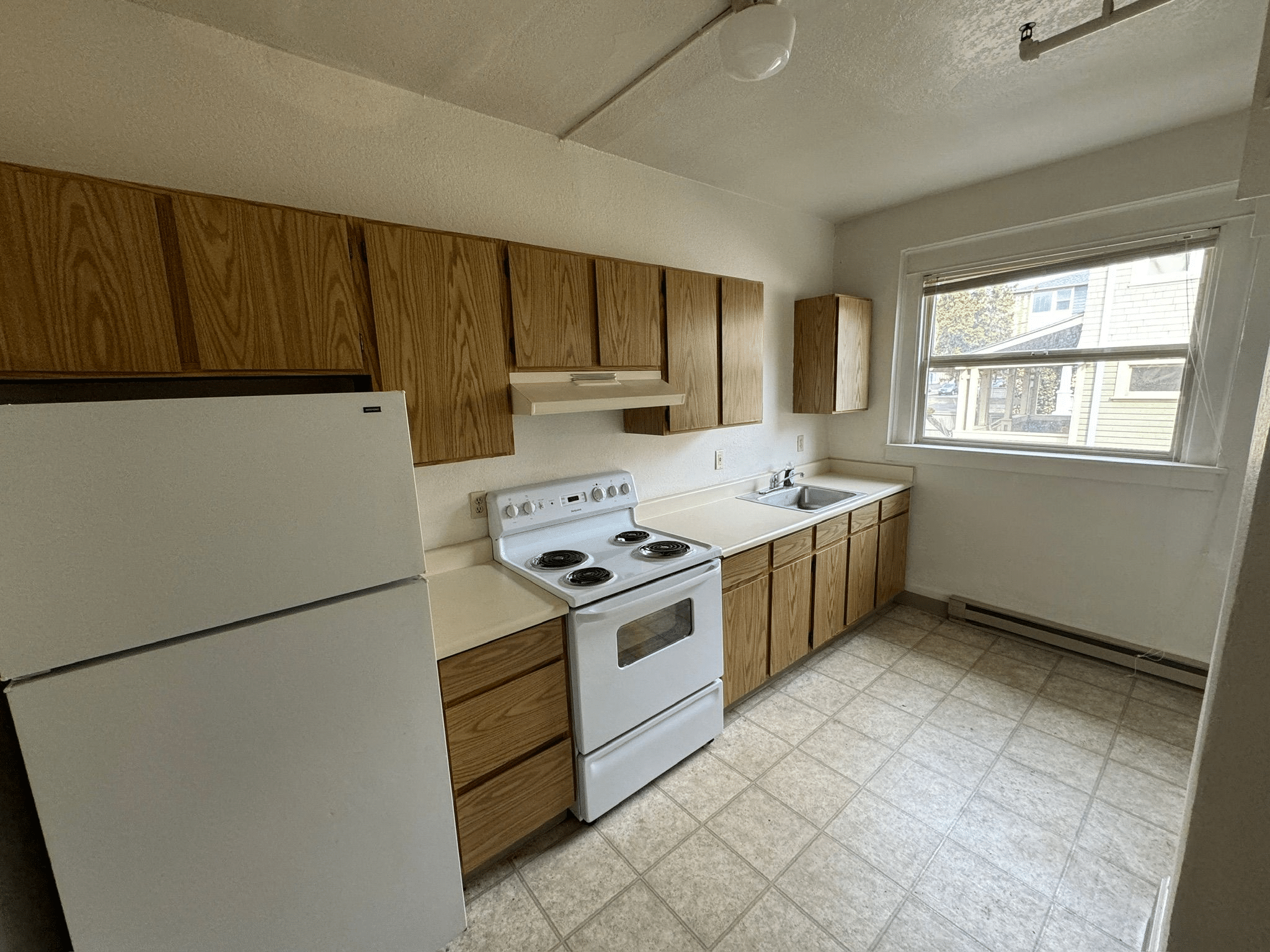
Even though Laurelhurst has outlived several generations of operational systems and individual tenants, it’s showing its age. When REACH staff conducted an in-depth capital needs evaluation of the building a few years ago, they found major issues piling up.
Laurelhurst was “a small property . . . with substantial deferred capital needs,” Schmidt says. The roof needed more than $275,000 of work—driven in large part by significant seismic upgrades that were also needed to reinforce the building’s masonry construction. Even after evaluating preservation scenarios, the scale of capital needs relative to the building’s size and revenue capacity made rehab pathways “infeasible under available subsidy and financing structures,” Schmidt says. Compounding that, Laurelhurst didn’t have dedicated replacement reserve accounts, so major repairs and surprises had to be covered by existing REACH resources.
As a last resort, REACH went looking for outside funding, including preservation funds and green rehab money—anything that could be layered into a viable recapitalization stack. When this proved unsuccessful, REACH decided to focus its efforts on more viable buildings. “We had a lot of other larger or more deeply affordable properties that we prioritized for the public funding applications,” Salazar says.
Under different circumstances, or facing an alternate political and economic reality, REACH might have chosen to hold the building anyway. But internal decisions weren’t just about Laurelhurst; they were about the organization’s entire 3,000-unit portfolio. The question shifted from Does this building deserve preservation? to Where will limited preservation dollars have the greatest impact?

REACH’s scattered-site homes—single-family homes, duplexes, and small multi-plexes acquired in the early 1980s—faced the same bang-for-the-buck dilemma. The purchases were made as a long-term preservation strategy in neighborhoods at risk of gentrification, and they accomplished that for decades—stabilizing tenants with below-market rents in homes that might otherwise have been flipped multiple times by private investors.
But as they aged, each home became its own micro-project. Every roof, furnace, and plumbing system required individualized attention on its own schedule. Property managers and maintenance teams spent hours shuttling between sites, coordinating with different renters. In older homes, which made up most of REACH’s portfolio, the energy and safety upgrades required to meet current standards can be prohibitively expensive, and none of the single-family homes under the CDC’s purview can benefit from the economies of scale that can help make multifamily rehab financially feasible.
In short, both the aging Laurelhurst and the labor-intensive scattered-site homes became too expensive for the nonprofit to operate or to bring to modern standards. REACH figured their sale would free up both capital and staff capacity to stabilize larger, more efficient properties where every preservation dollar stretches further.
“What we’ve learned over time as providers is when you can, [you should] do larger-scale and more highly dense developments with an array of unit types—everything from studios through three-bedrooms—to meet the needs of your community,” Salazar says. “And when you can get community engagement and input in the design of that development as well as the services that you provide, that is more successful.”
Inside REACH, the disposition of Laurelhurst and the scattered sites isn’t described as retreat. Staff frame it as triage: the painful but necessary decision to convert ill-fitting assets into capital for buildings that can survive the next two decades.
“Proceeds from the sale go back into REACH’s mission, operations, and programs, and really strengthening our current multifamily housing and making sure that those properties are stable and getting the maintenance that they need,” Schmidt says, “as well as investing in our new developments that are breaking ground or are in current construction phases.”
What makes REACH’s decision notable isn’t that it chose efficiency over sentiment—it’s that the tools designed to help nonprofits preserve aging housing no longer function at the scale or speed required. Even with careful asset management, strong reserves, and decades of experience, REACH found itself unable to assemble the capital needed to keep certain properties safe and viable; this wasn’t just a question of whether Laurelhurst “deserved” preservation, but also whether scarce repair capital could do more good elsewhere in REACH’s portfolio.
The new projects REACH is developing are larger, denser, and designed with energy efficiency and long-term operating sustainability in mind. The nonprofit’s leadership describes shifting from aging stock that is financially fragile to new or recently stabilized properties that can remain affordable for decades as a strategy they’re not alone in adopting. Peer organizations—especially those with older portfolios—are confronting the same financial pressures and making similar decisions.
Beyond Portland: A System Under Pressure
And indeed, REACH’s choices are increasingly common across the country. The National Housing Trust (NHT) is facing parallel dilemmas in and around the nation’s capital.
For decades, NHT has specialized in acquiring and restoring aging subsidized housing, preventing affordable homes from drifting into speculative markets. But even NHT has been compelled to sell or transfer troubled or high-risk properties—particularly buildings where years of deferred maintenance and skyrocketing insurance premiums outstripped what preservation subsidies could support.
In 2024, NHT CEO Priya Jayachandran warned in a Shelterforce op-ed that despite federal subsidies and full occupancy, “rental income only covers about 60 percent of our operating costs because of rent arrearages and rising property expenses,” at Pleasant Gardens, one of NHT’s affordable buildings. “Every month, NHT and our partner write checks to cover the operating deficits—a short-term solution that poses long-term risks to the rest of our portfolio.”
Those pressures played out for NHT in concrete ways. Less than a year after writing the op-ed, Jayachandran publicly acknowledged that five of NHT’s affordable properties were losing money due to significant ongoing rent delinquencies. The nonprofit had listed one property for sale that it could no longer afford to maintain.
The decisions organizations like NHT and REACH are making—difficult, highly scrutinized, and often misunderstood—provide mounting evidence that in today’s political, economic, and regulatory climate, many traditional preservation methods simply no longer work.
This is structural limitation, not mission drift. Subsidy systems are often oriented toward new construction or predictable financing models, not toward rehabilitation of heavily distressed stock where repair needs can climb to six figures per unit.
The uncomfortable reality is that the traditional model is failing more often—even in well-run portfolios—because costs keep rising while revenue stagnates, blowing up the math. When insurance, labor, and repair costs increase by double and triple digits in just a handful of years while working budgets and available subsidies barely grow at all, providers can’t absorb the shortfall. Across the affordable housing sector, operating costs have outpaced revenue in ways that undermine the preservation model:
- A study of more than 6,000 affordable multifamily properties found year-over-year operating expenses were up 6.4 percent through the first three quarters of 2024—well above the long-assumed 3 to 4 percent baseline.
- A report on Low Income Housing Tax Credit properties found that repairs and maintenance costs increased by 10.5 percent in a single year and insurance premiums by 22.2 percent, contributing to nearly 10 percent overall operating expense growth.
- One nonprofit permanent supportive housing provider in Los Angeles saw a 450 percent single-year insurance premium increase (from $94,000 to more than $519,000) after adding 100 units of supportive housing—despite not having filed a single claim on the property.
As Salazar explained, the drag is equally severe on the revenue side. Nationally, around 5 million renter households were behind on rent as of mid-2024 (the most recent data reliably tracked by the U.S. Census Bureau) and owed more than $9 billion in unpaid rent. Much of this debt is concentrated in subsidized housing.
Affordable housing providers—limited by what rents they can legally or practically charge—have few mechanisms to recover these losses. That’s why REACH sold Laurelhurst, Schmidt emphasizes. The fundamental operating constraint at the building wasn’t tenant behavior—it was that the property had no long-term rental assistance contract, dedicated operating subsidy, or reserves, leaving rental revenue unable to support major capital borrowing or sustained cost increases.
The stressors driving REACH’s and NHT’s experiences are not affecting only those organizations. They’re showing up for a growing pool of affordable housing providers that are quietly confronting an increasingly louder crisis: Even traditionally stable organizations designed specifically to preserve affordable housing are facing “do the most good” vs. “prevent the most harm” pressure to sell older stock to save the rest of their properties.
What Communities Lose When Legacy Stock Leaves the Portfolio
From a tenant’s perspective, the stakes are immediate and dire. While these financial calculations may look like columns and rows on a spreadsheet, they translate into whether the homes low-income renters rely on will still exist—and whether tenants can stay in their neighborhoods. Multifamily buildings like Laurelhurst and the scattered-site units often represent the last relatively low-cost footholds in neighborhoods where long-term residents have deep ties. These homes may be drafty or outdated, but they are also often the final rung before displacement or homelessness.
The nonprofit owners of these buildings know this. As Jayachandran put it in a June 2025 interview, “It’s not that people don’t want to preserve these buildings. The problem is that the money doesn’t go where the challenges are.”
When those homes are sold out of nonprofit portfolios, communities lose more than affordability—they lose stability, geographic access, and housing options that are unlikely to be replaced at the same price point or in the same locations. What fills the gap—if anything fills it at all—is rarely equivalent.
Letting go of that stock, even with plans to reinvest elsewhere, comes with losses that can’t be easily recovered or replaced. Buildings like those NHT and REACH are selling tend to be embedded in established neighborhoods. Tenants who live there often rely on long-standing ties to schools, transit, caregivers, and other types of informal support. These homes—especially the scattered-site units—are hard to come by and rent at prices far below private-market units in the same areas.
There’s also a climate cost to replacing aging housing stock. The World Green Building Council warns that “carbon emissions released before the building or infrastructure begins to be used, sometimes called upfront carbon, will be responsible for half of the entire carbon footprint of new construction between now and 2050.” When preservation efforts fail and the next answer is full rip-and-replace, you’re not just losing affordability—you’re locking in a big new tranche of emissions that thoughtful retrofits and careful rehab can often avoid.
What’s Next: Using Old Tools in a New Reality
These sales and shrinking operating budgets highlight a long-overlooked problem: it isn’t that preservation owners took on too-risky assets or were unwise with their expenditures. It’s that the public financing system encouraged them to fill this role, then failed to evolve its support as those buildings aged and economic pressures increased. Without new tools for preserving aging stock, the likely alternative isn’t fiscal discipline—it’s quiet attrition, as deeply affordable homes are taken market rate one by one.
What happens next—in Portland, Washington, D.C., and elsewhere—will determine whether mission-driven landlords can continue to anchor communities with long-term affordable housing, or whether the system itself must be reimagined to match the realities of operating it.
But selling properties like Laurelhurst doesn’t signal failure, Salazar insists. The failure would be expecting old methods and tools to work the way they always have when the policies, the purse, and the political will have shifted so dramatically. More housing providers will sell buildings, more often, she says, because the model they were asked to operate under no longer matches reality.
The opportunity—if policymakers and funders pay attention—is to reshape those transitions into something intentional rather than catastrophic. The next era of affordable housing development and operation might look different. This doesn’t have to mean giving up, but “there are some things we need to start normalizing,” Salazar says.
You’re going to see more community development corporations and nonprofit housing providers selling properties because they’re in a financial crunch.”
Margaret Salazar, CEO of REACH CDC
“Preserving the property is always our first priority—we’re always going to do everything we can to keep it in the REACH portfolio for the long term. But that’s not always going to be the case,” she explains. “The world has changed, and we have a lot of uncertainty out there with our funding streams.”
For decades, the affordable housing system was built on the assumption that nonprofit owners can acquire aging buildings, patch them together, and hold them in perpetuity, Salazar says. What providers’ recent decisions make visible is the unraveling of both that assumption and the financing mechanisms that once supported it. Salazar thinks that within a couple of years, these choices will feel inevitable, and the right questions will seem obvious in hindsight.
“We have to be open-minded, because you’re going to see more of this start happening,” she says. “I think you’re going to see more community development corporations and nonprofit housing providers selling properties because they’re in a financial crunch.”
About the Author



Maybe CDCs can reclaim their advocacy mission and demand universal vouchers or renter tax credits that can pay Fair Market Rents instead of being non-profit landlords?
Has ShelterForce looked at the insurance industry, and have housing providers looked into more affordable self insurance options?
Nailed it Ms. King. – the triple threat emerged from the COVID crisis and persists throughout the diversity of affordable housing operators across the country. The threats of interest rates and rising costs are visible. We can pour energy and investment into innovations intended to achieve efficiency. We can and do try to solve those riddles every day. The third threat: economic vulnerability among our resident customers is more pernicious. It’s possible that that threat alone is just beginning to show itself.
Enterprise just released this report: https://enterprisecommunity.org/sites/default/files/2026-02/Curbing-the-Insurance-Spiral.pdf
CDCs across the country are facing these challenges. I agree that selling properties does not signal failure. But we need to fight for the systems and resources so that place-based organizations can continue to serve community. In addition to the work REACH is doing, it would be good for Shelterforce to expand coverage of what other innovative financial solutions CDCs are implementing to meet these challenges.
this seems to me a strikingly one-sided and uncritical look at the issues and situation, reading as if and sourced as if commissioned by this Portland developer to help it out in a thorny public-relations situations, which indeed REACH CDC is in over this.
The quoted sources: CEO of REACH CDC, extensively quoted and paraphrased throughout; Lauren Schmidt, REACH’s fundraising and public relations manager; and Bjorn Beer, “a Portland-based real estate broker who works with nonprofits and housing authorities to find “creative disposition and recapitalization strategies””, and who handled these recent sales. Goodness me, I wonder what story they are going to tell about this?
Obvious questions or suggestions that might strike a reader are, why is it that buildings serving vulnerable people which were built and long maintained with public subsidy, even *can* be “disposed of” at the sole discretion of current management? what is being done to prevent such disruption and betrayal occurring again?
Having followed such cases and policies for many years, I would say that in many places including Oregon, not only is such reasonable critical scrutiny lacking, but the political power of CDC is and their organizations continues to shift policy even *further* away from strong accountability and public stewardship of such housing.
In what I considers amazing, and also deeply disturbing for the absence of critical commentary on it, Oregon in recent years via the political pressure of CDCs actually changed its laws to allow public bond measure funds to go to completely privately-owned properties. To most people working in municipal and bond financing, that sounds nonsensical, as obviously something that wouldn’t be allowed.
It violates the standard assumptions about what public bonds are even for, which is investment in infrastructure and public goods, and to enforce which there are typically strong legal guardrails. In fact, there were, but CDC developers found it encumbering, so they organized to pass legislation to repeal those.
Ironically, this field is filled with rhetoric about removing housing from the “speculative market”, but leading voices and powers in it consistently advocate for putting land, buildings, and people’s lives into private hands, removed from subsequent public process to assure that public needs met. Of course the industry considers itself different, ethically motivated, aligned with the public interest, etc.; but of course it does, every politically powerful industry does that, always has, and centuries of experience of this going wrong is exactly why we have, or had, all of these guardrails. E.g. restricting what public bond measures funds can be used for, to whom and how public lands can be given or ‘disposed’.
— Background / Sources —
Ballotpedia: Oregon Measure 102 (2018) This provides the official text and the legal history of the amendment that “removed restrictions that affordable housing projects funded by municipal bonds be government owned.”
https://ballotpedia.org/Oregon_Measure_102
Portland Housing Bond Audit (2020) This official audit discusses the transition after Measure 102, noting how the city shifted from purchasing and owning properties to providing “gap loans” to third-party sponsors, which fundamentally changed the state’s lien position and control.
https://www.portland.gov/phb/documents/portland-housing-bond-audit-report-2018/download
Oregon Public Broadcasting (OPB): “Oregon Voters Pass Affordable Housing Measure 102” A contemporaneous report detailing the “broadening” of the law to allow private developers to have a stake in bond-funded projects.
https://www.opb.org/news/article/oregon-measure-102-affordable-housing-result/
this seems to me a strikingly one-sided and uncritical look at the issues and situation, reading as if and sourced as if commissioned by this Portland developer to help it out in a thorny public-relations situations, which indeed REACH CDC is in over this.
The quoted sources: CEO of REACH CDC, extensively quoted and paraphrased throughout; Lauren Schmidt, REACH’s fundraising and public relations manager; and Bjorn Beer, “a Portland-based real estate broker who works with nonprofits and housing authorities to find “creative disposition and recapitalization strategies””, and who handled these recent sales. Goodness me, I wonder what story they are going to tell about this?
Obvious questions or suggestions that might strike a reader are, why is it that buildings serving vulnerable people which were built and long maintained with public subsidy, even *can* be “disposed of” at the sole discretion of current management? what is being done to prevent such disruption and betrayal occurring again?
Having followed such cases and policies for many years, I would say that in many places including Oregon, not only is such reasonable critical scrutiny lacking, but the political power of CDC is and their organizations continues to shift policy even *further* away from strong accountability and public stewardship of such housing.
In what I considers amazing, and also deeply disturbing for the absence of critical commentary on it, Oregon in recent years via the political pressure of CDCs actually changed its laws to allow public bond measure funds to go to completely privately-owned properties. To most people working in municipal and bond financing, that sounds nonsensical, as obviously something that wouldn’t be allowed.
It violates the standard assumptions about what public bonds are even for, which is investment in infrastructure and public goods, and to enforce which there are typically strong legal guardrails. In fact, there were, but CDC developers found it encumbering, so they organized to pass legislation to repeal those.
Ironically, this field is filled with rhetoric about removing housing from the “speculative market”, but leading voices and powers in it consistently advocate for putting land, buildings, and people’s lives into private hands, removed from subsequent public process to assure that public needs met. Of course the industry considers itself different, ethically motivated, aligned with the public interest, etc.; but of course it does, every politically powerful industry does that, always has, and centuries of experience of this going wrong is exactly why we have, or had, all of these guardrails. E.g. restricting what public bond measures funds can be used for, to whom and how public lands can be given or ‘disposed’.
“In that environment, REACH chose what seemed to be its best option: a start-up for-profit (a company Beer consults for) that’s converting the units to condos.”
This sale seems to have a conflict of interest problem
I’d like to know what happened to the Laurelhurst and its tenants .