



In a sweeping policy change, the Trump administration recently announced that billions of dollars of federal funding for people experiencing homelessness will be reallocated away from permanent housing. The move not only threatens to uproot thousands of formerly homeless people who now have housing; it could dismantle the country’s most widely adopted strategy to end homelessness.
While this announcement is alarming, it should come as no surprise.
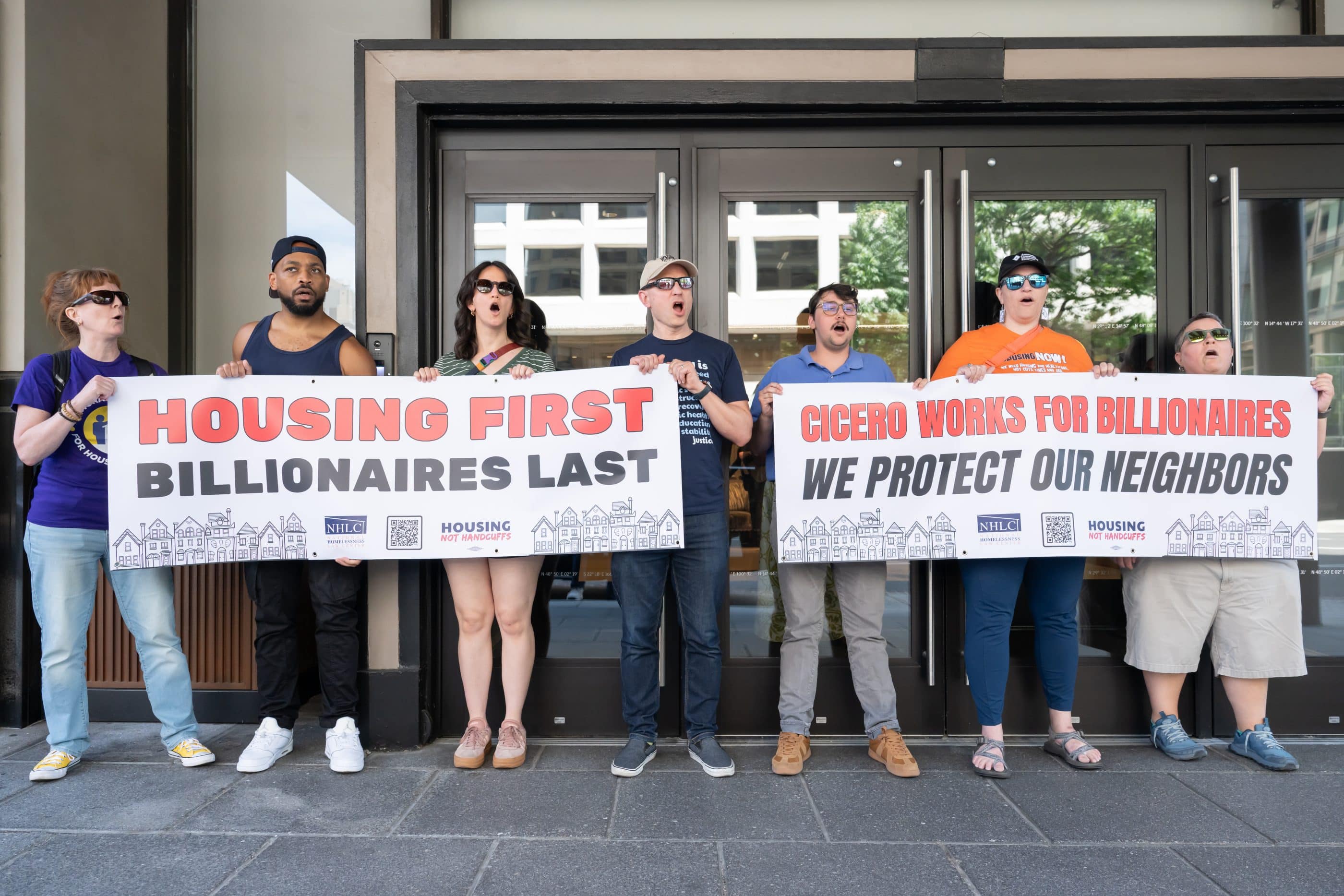
Earlier this year, President Trump signed an executive order titled “Ending Crime and Disorder on America’s Streets,” marking a watershed moment: the formal end of federal support for Housing First—an evidence-based approach that prioritizes permanent housing without preconditions like sobriety or treatment.
After more than two decades of bipartisan support, this reversal is not just a policy change. It is an ideological assault on the principle that housing is a human right.
The writing has been on the wall for years. Following the pandemic, conservative think tanks and right-wing media blamed the rise of visible homelessness on Housing First. The critique gained traction, feeding public backlash and sowing doubt even among centrists and some progressives.
The consequences of this change will be significant, especially on the local level where the bodies that manage federal homelessness dollars face a hostile environment and more pressure to abandon evidence-based practices like Housing First.
As local and state governments assess how to adapt, we must be clear about what’s at stake. The backlash against Housing First isn’t just a reaction to disappointing outcomes. It reflects a deeper effort to reassert older, punitive ways of addressing poverty. If that vision prevails, we risk losing one of the most progressive and humane shifts in social policy in decades.
Without Housing First, more people will be left to cycle through shelters, jails, and the streets, fueling efforts to criminalize homelessness instead of solving it. This shift isn’t about improving results. It’s about restoring a system where help must be earned, compliance is enforced, and housing is withheld as leverage.
Housing First: What It Means and Its History Throughout the Years
To understand the backlash against Housing First, we must first clarify what it is.
Housing First was originally developed as a program that provides immediate access to permanent housing without preconditions. People are not required to prove sobriety, participate in treatment, or be employed before they qualify for housing. Instead, housing was treated as a foundation upon which stability, recovery, and connection to services can be built.
Pioneered in the early 1990s by Sam Tsemberis through his organization Pathways to Housing in New York City, the Housing First model demonstrated that people with severe behavioral health challenges could remain stably housed when given the opportunity—without coercion. The approach acknowledged that relapse and disengagement are part of recovery, not grounds for eviction.
[RELATED ARTICLE: The Case for a Right to Housing]
The shift marked a profound departure from older compliance-based housing models that treated housing as a reward. Those approaches—sometimes labeled treatment-first, housing-ready, or stepladder approaches—flourished during the Reagan administration and required that people experiencing homelessness move through a series of shelters and transitional housing programs, proving their compliance along the way. Those who were successful gained housing at the end, and those who were not remained on the streets.
In sharp contrast, Housing First programs made housing unconditional—a prerequisite for well-being rather than a prize for good behavior. Early successes, especially with people experiencing chronic homelessness (meaning those who have been homeless for at least a year) helped lay the groundwork for federal adoption.
During George W. Bush’s administration in the early 2000s, bipartisan support grew around cost-effective solutions to chronic homelessness. At the time, studies showed that Housing First programs were effective at serving that population, and also resulted in cost savings by reducing the use of emergency services like ER visits among participants. Housing First became recognized as a more humane and effective alternative to cycling people through shelters and crisis services, and it evolved to become a set of principles that guide how homelessness policies are created.
The Obama administration further embedded Housing First principles into federal programs and performance metrics through the 2009 HEARTH Act. This meant that Housing First became the way that local homelessness systems were evaluated and funded, leading to a shift in the policy landscape. Programs were evaluated by the number of people they helped out of homelessness and into stable housing.
As immediate access to housing became the focus of interventions, the framing of homelessness began to change from a personal failure to a solvable systems issue.
Arguments Against Housing First
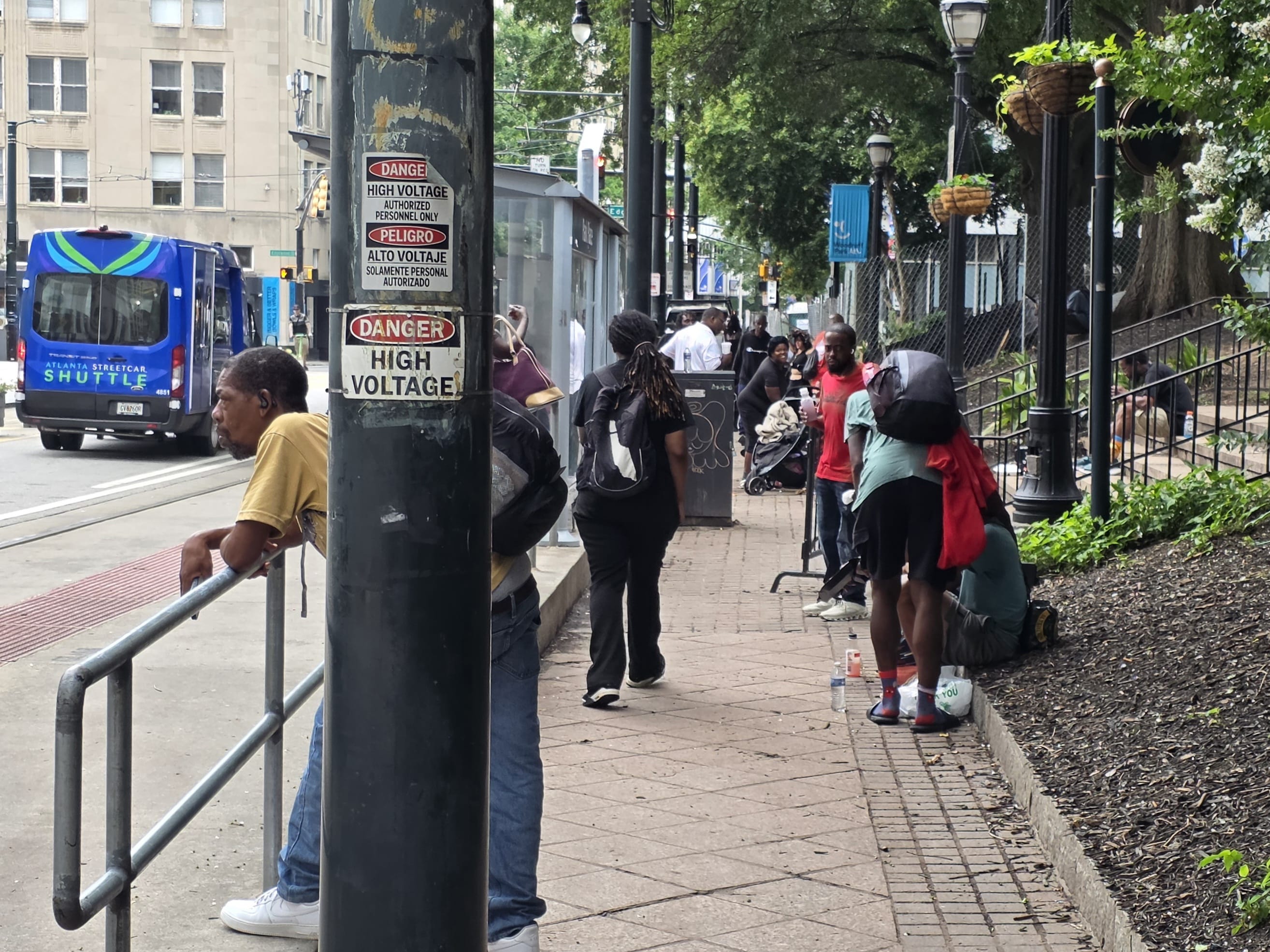
In recent years, the rates of homelessness have increased across the country, and critics on the right have used that fact as evidence of Housing First’s failure.
The campaign against Housing First accelerated during and after the first Trump administration. Key figures like Stephen Eide (Manhattan Institute) and Christopher Rufo (Heritage Foundation) produced white papers that shaped a growing backlash against Housing First.
Among critics, Eide is the most measured. He acknowledges that housing stability does improve with permanent supportive housing, which combines housing with optional services like mental health counseling and substance abuse treatment. But he questions whether Housing First can meet the needs of other groups, such as families or low-wage workers. (Housing First can meet their needs. This HUD study found that immediate access to subsidized housing produced the most positive outcomes for families, including greater housing stability, improved adult well-being, and fewer child separations.)
Eide also questions whether unconditional access to housing results in positive benefits, such as increased employment or reduction in social isolation. But recent findings suggest it does. A 2022 study from the Federal Reserve Bank of Kansas City found that Housing First interventions not only significantly reduce rates of homelessness and crime, but also lead to increases in both income and employment for participants.
What’s needed is not a retreat from Housing First, but a recommitment to its full promise, paired with investments in the public infrastructure required to sustain it.
Still, even when evidence affirms the model’s effectiveness, critics often pivot to a different line of attack: redefining what counts as a meaningful outcome. Proponents of Housing First often clarify that the model does not mean housing only. On the contrary, housing must be accompanied by supportive services to be effective.
While this is true, this response misses a subtler point made by critics like Eide, who implicitly devalue housing stability as a worthwhile end in itself. In doing so, they reinstate behavioral change as the true benchmark for success.
Rufo makes this logic explicit. While conceding that Housing First improves housing outcomes, he draws a stark line between “housing” and “human” outcomes. In his framing, stable housing is meaningless unless it produces personal transformation. This redefinition repositions behavioral change as the true measure of success and paints unconditional housing as a source of dependency and disorder. The argument is intended to shift the metrics by which to judge interventions in homelessness away from housing to individual behavior.
By shifting attention from structural causes like housing scarcity to individual pathologies, critics recast homelessness as a moral failure.They fixate on visible homelessness in West Coast cities not just to argue that policy implementation has failed, but to discredit the entire program model and its underlying values. In doing so, they collapse implementation challenges and systemic constraints, such as high rents and underfunded services, into a single indictment of Housing First itself.
What’s at stake, then, is not just the fate of one policy model. It’s a deeper conflict over the values that should shape our homelessness response.
‘Housing First’ Is Under Attack
At its core, Housing First challenges the idea that basic needs must be earned through moral performance. Rather than dividing the “deserving” from the “undeserving,” Housing First affirms housing as a right. This is what makes it such a powerful idea, and that’s precisely why it is under attack.
Unfortunately, this ideological shift has reshaped the broader public discourse. Even centrist and progressive commentators now question Housing First’s effectiveness, often citing rising homelessness as evidence of failure. These critiques may be well-intentioned, but they frequently replicate key analytical errors found in right-wing arguments, such as conflating structural constraints with programmatic shortcomings, or evaluating Housing First by population-level outcomes rather than program-level ones.
The answer is not to reject Housing First, but to return to its foundation and push beyond the private market. Combined with a robust public housing infrastructure, universal rental supports, and tenant protections, Housing First can achieve its full potential. The task ahead is not to replace it, but to build the larger systems it needs to succeed.
Housing First has faltered not because its logic is flawed, but because it has been forced to operate within a profit-driven housing system defined by scarcity, speculation, and rising rents. In every state, the stock of rental units affordable to extremely low-income households has declined. Landlords hold increasing power, and short-term subsidies like Rapid Rehousing, often the most widely implemented version of Housing First programs, cannot guarantee long-term stability in such conditions.
What’s needed is not a retreat from Housing First, but a recommitment to its full promise, paired with investments in the public infrastructure required to sustain it.
In Burlington, Vermont, the Champlain Housing Trust has developed permanent supportive housing for people experiencing homelessness, buffering against market volatility and allowing Housing First placements to continue even amid plummeting vacancies.
In Helsinki, Finland, a robust system of public and nonprofit housing, rooted in land ownership and public investment, has made Housing First implementation not just possible but successful, contributing to one of the sharpest reductions in homelessness anywhere in the world.
The rollback of Housing First is not just a shift in policy; it is a reassertion of an old moral logic that housing must be earned. But housing is not a prize. It is a precondition for safety, dignity, and health. Defending Housing First means defending that truth and building the systems that will make it a reality. That will require more than policy tweaks. It will require political courage, structural change, and a movement to reclaim universal housing as the center for progressive politics.
About the Author


Great article.