


This article is part of the Under the Lens series
Innovations in Community Ownership
Top Takeaways
Grounded Solutions Network’s program Homes for the Future will buy portfolios of single-family homes from corporate owners, rent them for 10 years, and then sell most of them into community land trusts.
The rental period will be used to pay back investors and cover rehab costs. The homes will then be sold without appreciation, with the idea that wages during that time will have grown enough to make the homes affordable..
A different nonprofit’s purchase of such a portfolio came with unexpectedly high repair costs. Without the 10-year holding period, it has struggled to sell to CLTs affordably.
A February 2024 study from Georgia State University found that 11 percent of the single-family homes for rent in metro Atlanta were owned by just three companies; Invitation Homes, Amherst Holdings, and Pretium. These companies “exercise really significant market power over tenants and renters because they have such a large concentration of holdings in those neighborhoods,” said Taylor Shelton, one of the study’s authors, in a press release.
Taking homes out of private equity ownership is not easy, and even rare victories, like a 2024 settlement forcing Pretium to sell 600 of the homes it owned in the Twin Cities, raise challenging questions: Who takes over those homes and how can they be made both habitable and affordable? Doing so requires significant capital and a plan to steward the homes to affordability, which is why community land trusts, which permanently take properties out of the speculative market through nonprofit ownership, often come up as a solution.
One organization with a strategy meant to address this is Grounded Solutions Network, a national organization that advocates for permanently affordable housing programs, including community land trusts.
Most states now have at least one community land trust, with the most dense clusters of them on the East and West coasts. Yet most CLTs are relatively small and not equipped to compete with private equity or other investors.
In an effort to operate at a larger scale to address private equity ownership without the need for government subsidy, Grounded Solutions Network (GSN) launched what it calls the Homes for the Future Fund, raising money from investors to purchase portfolios of homes on the open market, getting them out of the hands of corporate landlords and private equity firms. GSN says it has $16 million committed from CDFIs, philanthropists, and Invest Atlanta, along with $3.6 million of GSN’s own funds. GSN says the fund has borrowed its capital at “favorable interest rates that vary based on the type of capital and the capital partner.”
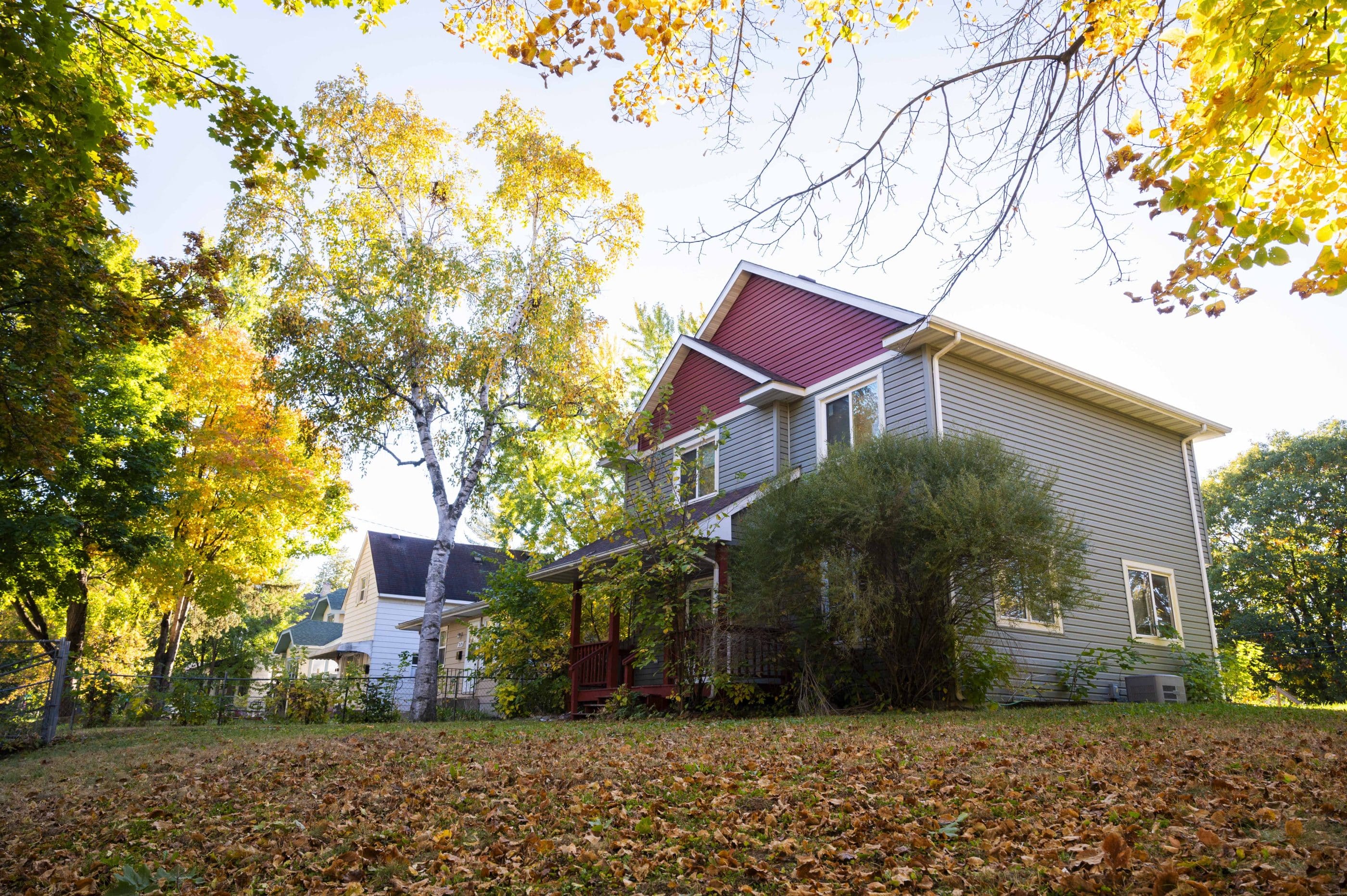
GSN will rent the homes out for 10 years to pay back its investors and fund needed repairs, and then sell them at the original purchase price, forgoing any appreciation. The assumption is that area median wages will have increased over that time, so the original purchase price will be affordable for land trust homeowners.
“A lot of what’s enabling folks to buy affordably in our model is incomes rising,” says Devin Culbertson, VP of innovative finance at Grounded Solutions. He says they are looking to have Homes for the Future only purchase properties in areas where median incomes have been rising over time.
“We don’t have any cash subsidy, so we can’t bring the rents down at the point of purchase,” Culbertson says. “So what we’re doing is keeping those rents more or less the same.”
In an email, Culbertson clarified that “rents in the program are anticipated to grow consistent with local AMIs.” He said Homes for the Future’s financial model is “intentionally conservative, built on modest rent growth assumptions and high estimates for operating costs.” He said if expenses rise, the program would raise rents modestly “while still ensuring that rents remain below market and the majority of homes are affordable to moderate income tenants.”
Grounded Solutions says it plans to buy 75 single-family homes in Atlanta by the end of 2025 through Homes for the Future, using $2 million in loans from Invest Atlanta’s Housing Opportunity Bond Fund, as well as loans from community development financial institutions (CDFIs) and private investment.
Unless a tenant makes an offer on the home they live in, the idea is that when the homes are sold after their decade of being rentals, community land trusts will be prioritized. In Atlanta, Grounded Solutions is working with Atlanta Land Trust, which already owns 80 homes in the metro area and has another 100 in development.
GSN says it will focus on necessary repairs and is not currently planning to do weatherization upgrades or accessibility upgrades. Culbertson wrote in an email that before the Greenhouse Gas Reduction Fund money was disrupted they had been hoping to work with partners who would be administering GGRF money to finance energy efficiency upgrades to the portfolio.
Acquiring substantial numbers of properties at a price that enables permanent affordability has been a major challenge for many community land trusts. Amanda Rhein, executive director of Atlanta Land Trust, says that the bulk market purchase-and-hold approach is welcome in a metropolitan area that has seen a swell of investor-owner activity in recent years. “It provides a really important opportunity for us to build our pipeline of properties.”
The Atlanta Land Trust’s main area of focus is on the Atlanta Beltline, an in-progress 22 mile stretch of walking and biking trails where displacement risk is high. Since its initial rollout in 2008, the Beltline has spurred the development of housing, restaurants and shops along its path, and has also caused property values and rents to spike. Along with developing new housing, Atlanta Land Trust has sought to acquire existing properties along the Beltline as a counterweight to rampant housing speculation. “We knew increases in property tax values would create a lot of displacement in this neighborhood,” Rhein says.
Which homes Atlanta Land Trust would acquire from Homes for the Future, and how many, depends on the proximity to the Beltline, as well as the cost and the repair needs, of the homes the fund acquires, Rhein says.
Preserving Pretium Homes
Grounded Solutions isn’t the only organization to have thought of trying to purchase bulk single-family rental portfolios. In fact it participated in a larger consortium that made a purchase in the Twin Cities in 2024. The outcomes of that purchase have made some familiar with it cautious about other similar purchases.
In March 2024, Minnesota’s attorney general Keith Ellison reached a consent judgment with HavenBrook Homes, a subsidiary of a private-equity–backed real estate company called Pretium, one of the three that dominates in the Atlanta area as well. The settlement came two years after the attorney general filed a lawsuit against the company, alleging water leaks, mold, lack of heat, and pest infestations.
The consent judgment found that Pretium was under-maintaining and neglecting the single family rental homes it owned in the Twin Cities. The company was forced to pay out $2.2 million to hundreds of tenants who rented from them and forgave millions of dollars in rental debt.
The consent judgment was seen as a major win for tenants in Pretium’s properties, who for years had been organizing with the tenant rights group Inquilinxs Unidxs Por Justicia, or Renters United for Justice. The organization helped tenants organize a rent strike across Pretium’s portfolio of single family homes in 2022 to protest poor conditions.
The agreement also incentivized Pretium to sell off the properties; it allowed tenants to cancel their leases early with all past due rent forgiven and declared that any houses remaining in the stock would have to undergo more rigorous inspections.
Pretium agreed to sell off all of the homes and said it would work to get many of them into nonprofit ownership. It sold off 255 homes to other private entities, and sold the remaining 345 single-family homes to a coalition of nonprofits in two separate sales in 2024.
In response to questions from Shelterforce, Pretium said that the 255 homes it sold first were sold on multiple listing sites and 75 percent of the buyers planned to occupy the homes. The remaining 25 percent were sold to “other entities,” but the company says none of the homes were sold off in bulk.
One nonprofit leader who spoke with Shelterforce and asked not to have their name published to preserve professional relationships said the homes that were initially sold off were in the best condition, while the remaining 345 homes sold to nonprofits all required significant repairs. Pretium denies this, telling Shelterforce in a statement that “the sales were made based on when homes became vacant and available for sale, not based on repair needs.”
The lead nonprofit in the coalition was Brick by Brick Training & Development, a nonprofit focused on affordable homeownership, which planned to rehabilitate the properties and sell some of them at market rate to aspiring homeowners and some of them to community land trusts.
However, according to Brick by Brick, just 10 of the homes were sold into land trusts—far fewer than was initially planned. That’s because many homes in Pretium’s Twin Cities portfolio faced significant deterioration, according to multiple people who spoke with Shelterforce and did not want their names published to protect their relationships with the nonprofit. The homes required such extensive repairs it would not be possible to sell them at prices that would allow community land trusts to keep them affordable, they said.
Brick by Brick has referred to all the homes in the portfolio as “naturally occurring affordable housing,” meaning that the prices were already below-market rate without any government subsidy.
Shelterforce viewed an aggregated list, with valuations, of the Pretium-owned homes on offer at the time that Brick by Brick began negotiations to buy their portfolio. Of the 509 homes listed, the lowest valued was a property in West St. Paul valued at $226,000 and the highest was one in Maple Plain valued at $475,000; the average value was $261,000. According to real estate firm Redfin, the median home sale price for the state of Minnesota in June 2025 was $371,000.
In an email, Pretium said that the average sale price of the homes from this portfolio—whether to Brick By Brick or on the private market—was approximately $220,000—notably lower than the average valuation. “These were all affordable properties, which is why we were interested in them,” Brick by Brick CEO Scott Fergus says.
The first purchase Brick by Brick’s coalition made occurred in May 2024 and consisted of 62 vacant properties. Fergus told Shelterforce that 10 of these vacant properties were renovated and sold to “mission aligned nonprofits,” while the remaining 53 were sold to owner-occupiers at market rate. Brick by Brick says on average, these first 63 homes sold for $255,000 each. The average repair costs were about $40,000.
In September, Brick by Brick co-purchased the remaining 283 homes, again with a consortium of nonprofits, and this time with a $2 million investment from Grounded Solutions. This portfolio included 45 vacant properties and 238 properties that were occupied by renters. Brick by Brick says it will continue to rent the properties to those tenants, only selling them to owner-occupiers—at market rate—when the tenants voluntarily vacate. They will also offer renters the ability to purchase the homes they rent and will work with them to become homeowners if they’re financially ready.
Grounded Solutions’ press release initially announced the Twin Cities portfolio was being jointly acquired by their Homes for the Future program along with the other participating nonprofits, although it later clarified to Shelterforce that none of the homes will formally be part of their Homes for the Future program.
“We are investing [Homes for the Future] capital,” Culbertson said in an email, “but because this was an unusual opportunity, the partnership came together in a different way than the Homes for the Future program was designed.” Grounded Solutions’ $2 million contribution was about 3 percent of the $61 million purchase price.
Brick by Brick has begun to sell vacant properties in this second tranche of homes to owner-occupiers, with an average sale price of $298,000, the nonprofit says. The average repair cost for this set of homes has so far been $20,000 per home.
Fergus says that Brick by Brick wasn’t completely aware of the extent of the repair needs when it purchased the homes from Pretium. “We had a range of expectations, but you never know until you get inside a property and start scoping the work what it’s exactly going to be,” he says.
While Fergus says all the homes Brick By Brick has sold off from the Pretium purchase were naturally affordable, he told Shelterforce they wouldn’t deepen the affordability by selling the homes for below-market prices because he believes that would devalue neighboring homes. “Our goal is not to sell properties at a discount, because that affects the larger neighborhood that those properties are in,” Fergus told Shelterforce. “We would not be a good neighbor to do that.” (Community land trust advocates, on the other hand, often take the position that it is a good thing if buying and selling homes for more modest prices in areas where costs are rising helps to keep all home prices a little more affordable.)
In any case, Fergus says, they are already selling the homes at the minimum price based on their costs, so selling the homes at a discount would require some subsidy, which Brick by Brick did not seek out. Like Homes for the Future, “we are very market-oriented in that regard,” he says.
Fergus also says that many federal, HUD-administered subsidies require more rigorous rehab requirements, which would in turn increase the resale price. For this reason, he believes federal subsidies would have made it more difficult to keep the homes affordable.
In the meantime, Brick by Brick has rental properties to run. Rachel Jones, 38, is a single mother of two and a member of the group Inquilinxs Unidxs. She participated in a 2022 rent strike. Jones said there was not much communication from Brick by Brick when they took over and “there hasn’t been a huge difference.” She said that a repair to her shower left cosmetic damage and the management company hired by Brick by Brick did not respond to her requests to address it. “They did a piss poor job,” she says.
“No property management company is 100 percent good,” says Fergus. “It’s a tough business.” But he said he would look into Jones’s complaint. He noted that his organization has a dedicated tenant services manager who has been in contact with every tenant at some point, as well as holding town hall meetings. Fergus says that the tenant manager fields lots of calls about payments, but rarely about repairs, because the management company has been taking care of repairs fairly quickly. The disagreement may serve as a reminder that for large single-family portfolios previously owned by private equity, new nonprofit owners inherit the task of managing not just years of deferred maintenance, but expectations from residents who’ve been burned by previous owners.

A Hard Sell for CLTs
Mikeya Griffin, executive director of Rondo Community Land Trust in St. Paul, Minnesota, says she has had a challenge in general in getting investors to sell for affordable prices to CLTs even though “we have been pretty well funded to be able to do the work.” Griffin appreciates the chance to work with Brick by Brick instead, and her organization is working on purchasing 15 single-family homes from the Pretium pool of homes.
But Rondo is an exception at this point. The properties’ unexpected rehab needs have made the resale price too expensive for many community land trusts. “We had hoped that we would have more nonprofit purchasers, and that did not materialize,” Fergus acknowledged to Shelterforce, though he believes getting the homes to owner-occupiers at a relatively affordable price is still a success.
Looking to the Future
The added cost of repairs might not be limited to this particular portfolio. Private equity–backed real estate companies often skimp on maintenance in order to maximize their returns, so single-family rentals coming out of the speculative market are likely to be pricier to repair, making using them to generate unsubsidized affordability harder overall.
However, this is part of why Homes for the Future is intending to hold properties for 10 years before selling them, adding in the effective subsidy of forgone appreciation.
It’s still not entirely clear how many of the 75 homes that Grounded Solutions will purchase will be sold to community land trusts at the end of the 10-year period. Culbertson says that to make the math work, the nonprofit will still need to sell some of the homes off at market rate, ideally to buyers who will live in them rather than rent them out.
However, “the hope is that we’re trying to get as many of those units into the land trust as possible,” Culbertson says.
For residents facing displacement threats in the present, the Homes for the Future approach may not work, as the fund is unable to lower existing rents. But Rhein, of Atlanta Land Trust, believes that any homes that can be kept out of the hands of investors over time is a win.
“I wish that this problem didn’t exist,” Rhein says, “But I think this is a really smart solution and a great opportunity to return these homes to the inventory for prospective homebuyers.”
About the Author



If the Atlanta model uses dollars from the Housing Opportunity Bond fund, it will not be “without subsidy.” It may be without *deep subsidy.” but the HOBs generally provide below-market rate loans to projects. It will be hard to compete with the big private equity guys at this modest scale without operating subsidy as well. Having said all that, I wish the effort well. One way to help this model serve the needs of lower-income households is to make sure Housing Choice Vouchers are accepted. This will 1) help provide more rentals that accept vouchers, a real problem in Atlanta, and 2) provide steady rental income that can minimize evictions/instability and provide a surer income stream on which to borrow if necessary for home repairs. Also, hopefully some private philanthropy might step in to help with the weatherization/energy upgrades previously planned for (with federal dollars).