


This article is part of the Under the Lens series
Innovations in Community Ownership
Top Takeaways
—Integrity Community Solutions (ICS), a for-profit subsidiary of ROC USA, is buying manufactured home communities that aren’t yet ready for co-op ownership and stabilizing them until residents can take over.
—In a market dominated by investor-driven acquisitions, ICS’s approach buys time. It invests in infrastructure and community organizing to lay the groundwork for long-term, resident-led governance.
—At Sonora Estates in California, ICS is selling new homes at near cost and keeping rents stable while ensuring that residents retain the right to buy the community. Their goal is to make this model a template for converting distressed or vulnerable parks into cooperatives nationwide.
By the time most people hear about a mobile home park changing ownership, it’s because things have gotten bad: rents are up, neighbors are being evicted, and the infrastructure is crumbling. Residents are scared and confused, and the new property owner—often a large, out-of-state private equity investment firm operating as a limited liability company—is either unresponsive to residents’ concerns or outright hostile to them.

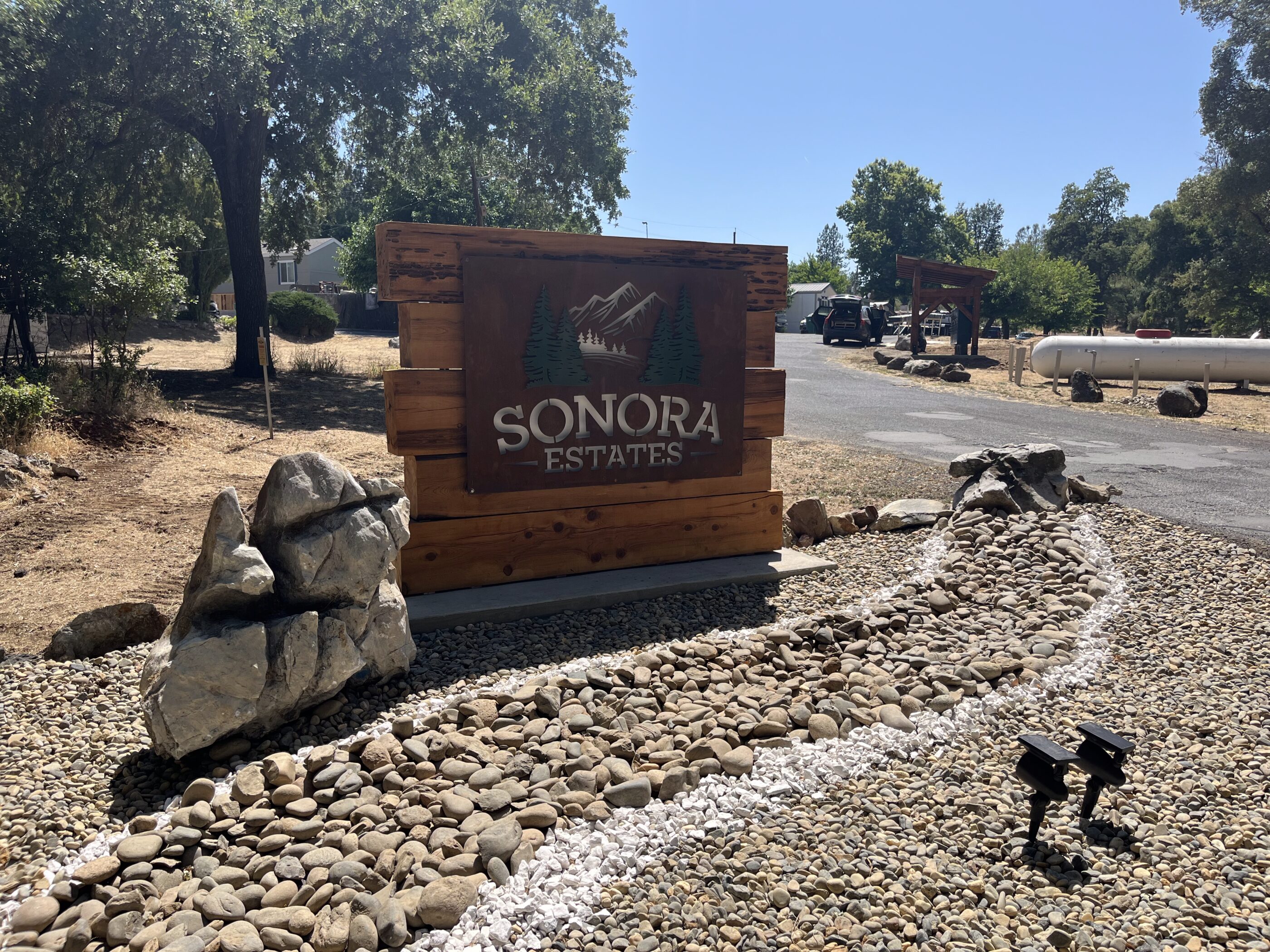
But that’s not what’s happening at Sonora Estates, an 84-site manufactured housing community in unincorporated Tuolumne County, California, perched on the western foothills of the Sierra Nevada Mountain Range. When the park sold in early 2025, it wasn’t in great shape—more than a third of the lots were vacant, existing homes were aging, and the infrastructure hadn’t been meaningfully upgraded in years. Within days of closing on the property, however, the new owner, Integrity Community Solutions (ICS), had started renovations.
Workers hauled away abandoned trailers. ICS brought in dumpsters, started clearing debris, and invited residents to use the dumpsters as needed. On-site property management met with the local authorities to discuss steps for further mitigating fire danger. Contractors started planning upgrades to water and electrical systems.
But maybe most importantly, and most unusually: ICS staff started talking to residents, building trust by answering their questions, setting expectations, and easing fears. New ownership often means rent hikes, new rules and requirements, or even a whole-park closure and redevelopment. “We closed on Tuesday, and we met with everybody on Thursday night. And it was a demoralized group,” says Paul Bradley, ICS’s president and founder. “Basically we were just another investor to them. ‘Oh yeah, we’ve heard this before.’”
Residents in recently sold manufactured housing communities have good reason to be scared. Across the nation, thousands of parks like Sonora Estates are being sold for astronomical prices, then either razed and redeveloped or subject to aggressive and unchecked lot rent increases—an ongoing, systematic process that’s quietly erasing the nation’s largest source of unsubsidized affordable housing. While owning in a manufactured housing park has long been seen as a pathway to attainable homeownership, what were once locally owned operations are increasingly under corporate ownership, pitting profitability directly against the largely low- or fixed-income population living in the nation’s 43,000-plus aging and neglected but highly valuable mobile home communities.
But Sonora Estates is under a different kind of ownership, one with a resident-focused business plan. Instead of buying mobile home parks and clearing out residents, ICS is buying aging parks with the intention of clearing a path to resident ownership.
ROC Definitions 101
Resident-owned community (ROC): A manufactured housing community (aka mobile home park) where residents collectively purchase the land and form a cooperative. Each household owns its home and one share in the co-op that owns the land, giving them the right to vote on major decisions and elect a board.
Limited equity co-op: A housing cooperative structure where share resale prices are restricted to preserve long-term affordability. Most ROCs use this model to ensure stability and accessibility for future residents.
Manufactured housing community: A planned development where residents typically own their manufactured homes (also called mobile homes; built in a factory and delivered on a chassis) and lease the land beneath them from a property owner, who supplies supporting infrastructure.
Lot rent: The monthly fee manufactured housing community residents pay to the property owner to site their home in the development. Lot rent often pays for utilities, road maintenance, access to common areas, and groundskeeping. Lot rent increases in most states are unregulated.
Getting From “But-For” to Co-op
When corporate owners swoop in, they tend to move fast—tapping investor cash to buy quickly and jacking up rents before the ink is dry. Even if residents have a legal right to make an offer to buy, there’s often not enough runway time to organize, get agreement on taking on the purchase, and prep everyone for becoming collective owners of a multimillion-dollar corporation. While resident ownership has been extremely successful once in place, making a park ready for resident ownership takes time, trust, and a lot of front-end work. And too often, the corporate buyers get there first. That’s where ICS comes in.
ICS is a mission-driven, for-profit subsidiary of ROC USA (ROC is an acronym for “resident-owned community”). Its leader and visionary, Bradley, founded ROC USA in 2008 and led it until 2023. Under his leadership, ROC successfully financed the conversion of more than 300 manufactured housing parks to cooperative resident ownership.
In a park purchase, ROC USA typically enters the picture when timing is already urgent—the community is on the market, often for tens or even hundreds of millions of dollars, and corporate buyers are circling. ROC can sometimes organize residents and financing in time and broker a deal, but many parks simply aren’t ready to be taken co-op. Maybe the infrastructure is shot, making it unfinanceable. The vacancy could be too high, or the organizational capacity may just not be there.
Given the pace at which manufactured housing communities are being swallowed by profit-seeking corporate owners, Bradley saw a need to “build a pipeline of eligible resident-owned communities by solving ‘but-for’ issues,” he says. “So, but for X issue, this mobile home park would be an excellent candidate for resident ownership.”
When a park has significant “but-for” issues, they’re often insurmountable for ROC organizers, given time and capital constraints. “Even though mission-driven or resident-run organizations (like ROCs) often have affordability as a primary goal when they purchase MH communities, these organizations and resident groups often discover years—if not decades—of deferred maintenance to community infrastructure,” Esther Sullivan, an associate professor at the University of Colorado Denver who specializes in manufactured housing, wrote in an email. “These systems often require significant investment to make up for years of disinvestment, and the result is the need to increase lot rents for current residents.”
When residents can’t afford the immediate increase in lot rent that purchasing would require, the park is scooped up by the highest bidder, and the residents pay the price anyway, through rent increases without the benefits of ownership, deferred maintenance, and other profit-focused corporate ownership strategies. ICS was created to interrupt that pipeline by buying these “but-for” properties and doing the patient, deliberate work of getting them both physically and organizationally ready for successful community ownership, without the time pressure of an immediate sale.
“The most important thing with going into these distressed communities is determining whether or not the residents would want to own it,” says Jessika Preston, ICS’s senior director of acquisitions and asset management. “That’s our ultimate priority. And at the end of the day, all we care about is if this property is going to get to the residents.”
With that goal in mind, ICS uses its balance sheet and experience to tackle the major obstacles in phases. In the case of Sonora Estates, deferred maintenance and high vacancy are two high-priority issues that would make the property unaffordable or unfinanceable for a resident-led cooperative. The more vacant sites a park has, the greater the carrying costs on the uncollected lot rent for those sites, which drives up rents on the occupied lots. The first step is to fill the vacant lots with affordable units—which ICS is bringing in and selling for around $100,000 each (the largest, a double-wide with 3 bedrooms and 2 baths, is listed at $159,900); the median home price in the area is $289,000. Preston says they’ll be selling the homes basically at cost. “We don’t need to make a profit, but no one wants to lose their shirt.”
Exit Plan: 2030
Preston is ICS’s on-the-ground project manager at Sonora Estates. The yearslong, phased process ICS is piloting allows the team to fix larger issues, such as the aging water and sewer system, piecemeal—a buffer that spreads out capital expenditures and reduces resident disruptions. “As I’m bringing in new homes, I’m upgrading the underground infrastructure with each lot. We’re hitting a lot of these issues simultaneously,” Preston says. Upgrading water lines, electrical service, roads, and common areas are all on the agenda, “increasing the useful life of the community.”
Once vacancy levels stabilize at Sonora Estates—the goal is to get to 79 owner-occupied homes by January 2030—and the physical property issues have been resolved, ICS’s ownership model includes a built-in path for transition. Residents will have the right of first refusal to buy the park as a cooperative, backed by ROC USA’s guidance and services. Homeowners who want to be part of the cooperative can purchase a share in the corporation that owns the park. Residents who don’t want to buy into the co-op can stay, paying their lot rent to the co-op corporation. But before all that happens, ICS is providing the structure, financing, and organizational support to bring the park to the point where a co-op can succeed.
While Sonora Estates has a lot of “but-for” issues that will take time to solve, the park also has a lot of potential for successful future community ownership. The high vacancy rate was actually one of the positives. At closing, only 54 of the 84 available home sites were occupied. Because ICS is filling those sites with for-sale homes, going co-op will work out much better down the road. Additionally, the property includes undeveloped expansion acreage where ICS plans to site eight additional lots.
“If it was 100 percent occupied, the only way we could increase operating income would be to raise rents or lower costs,” Bradley says. “The best way to add operating income is by filling vacant sites. So we’re adding new housing and adding net operating income. And when you do that, you add value to the mobile home park.”

By adding more homeowners and home sites, the future cooperative’s purchase loan can be spread out among more members, reducing the per-share price for everyone. While it’ll add value in the long run, such a vacancy issue would have disqualified most newly formed resident co-ops from closing this deal, given that current cash flow was too low, and the residents weren’t financially or organizationally ready to take advantage of the expansion opportunities by acting as developers—ICS, however, is.
The bright economic outlook in the area means ICS is confident it can fill the park. A recently completed $70 million expansion at a nearby casino coupled with planned hiring at the local hospital are expected to bring 600 new jobs to Tuolumne County. “The county supervisor said to us . . . ‘I have no idea where these employers think people are going to live,’” says Bradley. “There’s virtually nothing available for rent and nothing affordable to buy.’” And so, he says, the economics work for growing the park: “a good, strong housing market with a significant shortage of housing, and lots of new jobs.”
The physical fixes at Sonora Estates require time and a lot of money. Most buyers wouldn’t touch the repairs without also increasing rents, often doing so disproportionately to the amount of investment they put in. “Residents engaged in my research frequently report that landlords use infrastructure upgrades to justify rent increases, but fail to significantly upgrade water, sewer, and electrical systems, or impact the overall habitability of the community.” Sullivan wrote. She hears this most often from “residents in communities that have recently been purchased by a large investment company or private equity firm. Their rents increase as new firms take ownership and promise that community investments will follow, but residents report seeing few meaningful upgrades.”
Too often, that disinvestment and repeated broken promise leaves residents worse off—paying more for the same or even worsening conditions. ICS is trying to flip that script. Instead of extracting rent while offering minimal improvements, they’re frontloading investment—both financial and relational—to bring the park to a place where community ownership is actually viable.
“When we’re doing our modeling, we’re also modeling an exit to the residents and what that would look like to them,” Preston says. “We’re using modeling that ROC USA has created to see, will this work for the residents at the end of the day? Will they be able to take this on, at what cost, and is it something that’s going to be viable or not for them?”
The six-year exit plan ICS is on requires selling around 6 homes per year to get at least 79 units owner-occupied by 2030, while also getting the park physically and financially stable and preparing residents to manage a cooperative. “We don’t want to be long-term owners in this. Our goal is to get the homes and the community to the residents,” Preston says.
To afford to frontload investment without relying on rent hikes to recoup the cost, ICS is tapping a mix of philanthropic investment, flexible loan capital, and grant funding. Community Vision Capital, a California-based community development financial institution, is Sonora’s biggest backer, providing a $3.4 million loan toward the project. ICS also secured $786,000 in subordinate loans to fund the redevelopment, though Community Vision’s senior director of credit, Scott Sporte, said the secondary backers weren’t necessary. “I think had we been asked to do the whole thing, we would have looked at the whole thing and probably approved that, as well,” he said.
“Our whole thing is about community ownership of community assets, and this is one of the ways that can play out. So we’re excited to see where this goes, and hope that there are more transactions like this that come our way,” Sporte says. “This checks a lot of boxes for us. These are for people who generally are living at or below 20 percent of area median income, often less . . . which is a huge amount of impact for us. We love that it’s in a rural area. And they’re figuring out how to make it work without needing an ongoing source of subsidy.”
A Long Timeline, by Design
If 2030 sounds like a long way off, that’s the point. Unlike private equity-backed buyers looking for a quick flip, ICS is deliberately stretching out the timeline to give both the property and the people time to stabilize. It’s a slow-build approach that runs counter to the current trend in mobile home park acquisition, where speed and yield often outweigh long-term affordability. For ICS, that extended runway can mean the difference between a community being viable for co-op ownership—or being lost to the speculative market.
Clearing physical and financial barriers is only part of the work. Investing in the people who will eventually own and govern Sonora Estates requires building rapport, relationships, and trust. “There’s something about manufactured home communities that is really unique in the sense that they still have a neighborhood, community feel, and neighbors engage with each other. They help each other out,” Preston says. “And if the residents are engaged with what’s going on in the community, if they care about the community, if they care about their neighbors—that would be a great resident-owned community.”
Once ICS’s benchmarks for resident-ownership readiness are met, ROC USA will step in and begin building ownership capacity in earnest: educating homeowners about co-op ownership and helping them prepare to manage a multimillion-dollar asset. Before ROC underwrites a resident purchase, the community will need organizational systems in place, such as a functioning board, decision-making protocols, and a mechanism for collecting dues and enforcing park rules. That kind of organizing takes time.
A generous time frame also allows for flexibility. If construction delays, market shifts, or unforeseen repairs push back the plan, ICS has space to adjust. The goal is not to meet an arbitrary deadline, but to ensure that when the handoff happens, the residents are truly ready, organizationally and financially. “Right now we’re creating alignment,” Bradley says. “We want to get the entire property to owner occupied, because that’s what works for resident ownership. Everyone owns a home, owns one share, has one vote.”
Sonora Estates is the first test of the ICS model. But if it works, it could become a blueprint for preserving vulnerable parks that aren’t yet viable for co-op conversion. In that sense, ICS is attempting to build the missing rung on the ladder between private ownership and community control—something few other groups have tried to do.
There’s still a long road ahead. Development approvals, infrastructure upgrades, and community organizing don’t guarantee success. But in a national housing market where preservation often loses out to profit, ICS’s effort stands out as a long bet on affordability—and on residents themselves. There’s a pressing need for owned housing in rural California, and land prices often push ownership beyond the reach of most buyers’ incomes. “So this is a really great way to allow people to own something without being permanent renters, at an affordable level for them,” Sporte says, “and do it in a way that doesn’t require free money to come in to make that possible.”
If the model proves successful, ICS hopes to replicate it. It’s not a silver bullet. But in places like Tuolumne County, where housing is scarce and the stakes are high, it could be the difference between displacement and a path to permanence. “What I truly love about this is the ability to get out in front of a closure,” Bradley says. “Resident ownership is the whole point of it.”
About the Author



Yes I read this Story also across the Country.. Michigan is caught any many problems like This ..