Organizing

Jobs/Transit, Hope on the Horizon?

With all the gridlock in DC, it seems impossible that anything fruitful or significant can really happen.  But a few dedicated public officials are starting to push two very promising […]

With all the gridlock in DC, it seems impossible that anything fruitful or significant can really happen.  But a few dedicated public officials are starting to push two very promising proposals that could affect millions.

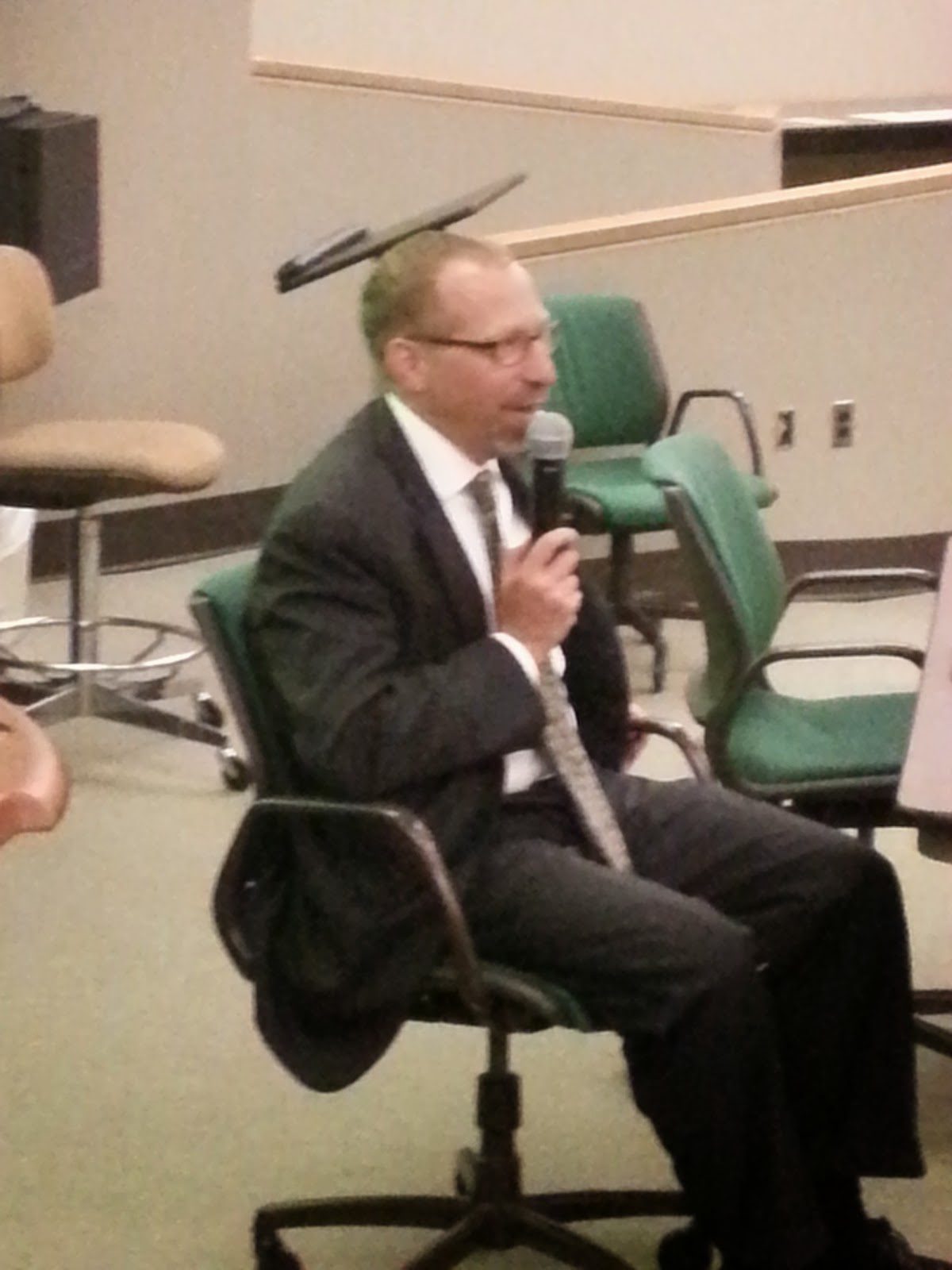
Last week Peter Rogoff, a Department of Transportation undersecretary, updated activists from 16 states on the Grow America Act

This act contains some of the best policy-making USDOT has put forward in years.  It would dramatically increase transit funding, it would allow local hire (a no-brainer if ever there was one), and it would increase funding for the ever-popular TIGER program. Rogoff told the crowd that President Obama and Secretary Foxx are determined to get Grow America passed. 

Another official who seems to be poised to make some interesting policy is Pat Shui, the head of the Office of Federal Contract Compliance (OFCCP) in the Department of Labor.  Actually, her office has been declaring that they are just about to take action on outdated minority and women inclusion standards for more than a year.  

While activists have been frustrated with the hold-up, they are comforting themselves with the fact that Secretary Perez  included the rule change in his strategic plan. Activists also got a shot in the arm this month from the 30 Congressional members of the Full Employment Caucus, who sent a strongly worded letter about the outdated regulations to the president.

Let's hope that Rogoff and Shui can follow their better angels and make the federal government more responsive to the needs of people of color, women and low-income folks.

(Photo: Peter Rogoff briefing activists at Gallaudet University; photo courtesy Laura Barrett.)

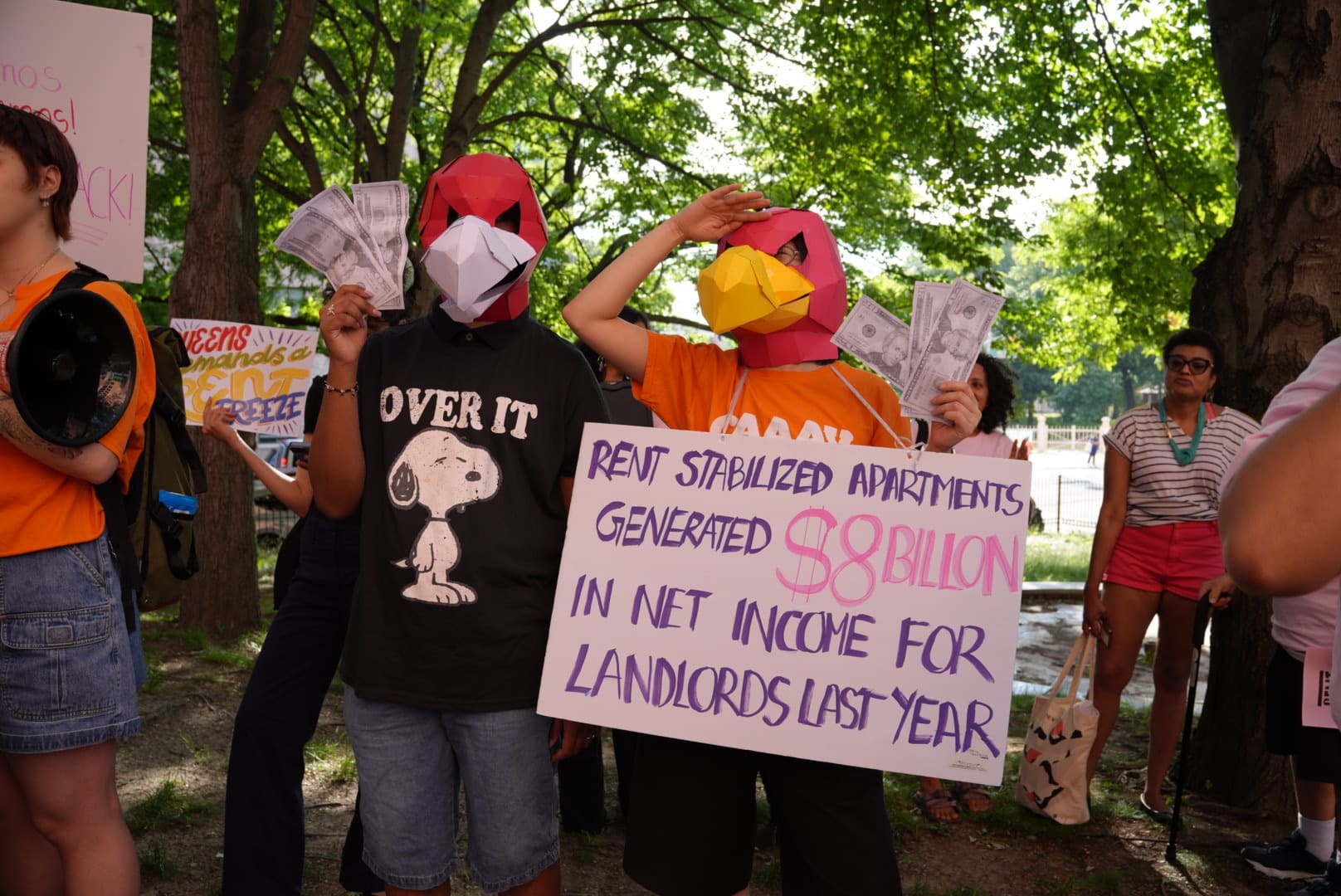
  • Two people with paper bird masks hold dollar bills. One wears a sign that says "Rent stabilized apartments generated  billion in net income for landlords last year."

    Are NYC’s Rent-Stabilized Buildings Really in Crisis?

    June 24, 2026

    A two-year rent freeze, affecting about 1 million rent-stabilized apartments in New York, was just approved. Before the freeze passed, landlords said their buildings wouldn’t survive it. But recent analyses suggest the real culprit behind distressed buildings is predatory equity, not rent stabilization.

  • A large, colorful mural painted on the exterior of a building. It says "WELCOME TO NOHO" in capital letters and depicts people of different ages, genders, races, and ethnicities dancing and playing music in front of different types of housing and community buildings, including apartment buildings, a health and fitness center, a theater, and a gallery. The building is set back from a public sidewalk, and part of a tree shades the right-hand side of the mural.

    How State Coalitions Are Advancing Community Ownership of Housing

    June 19, 2026

    In recent years, housing coalitions promoting community land trusts and real estate cooperatives have formed in multiple cities and states—and they are achieving results. Nonetheless, a lot of work is needed to achieve the policy changes these groups desire.

  • A webinar screenshot of three people. In the top-left corner is a white man with gray hair and dark eyebrows; he is wearing headphones, glasses, and a checkered shirt, and his background is blurred. In the top-right corner is a Hawaiian woman with dark hair; she is wearing glasses and a black t-shirt, and she is set against a screensaver of a tree-lined field. On the bottom is a white woman with brown hair; she is wearing a green floral top and large earrings, and she is set against a screensaver background of the earth viewed from space.

    What Does a Solidarity Approach to Housing Look Like? A Shelterforce Webinar

    June 10, 2026

    In this webinar, we examine what a solidarity economy approach is, what its principles are, how these principles are being applied presently, and how they might be applied more broadly to support housing justice and transformative economic change.