

From the Field

Shelterforce has always been driven by the voices of the people in the housing field. From the Field pieces are neither reported journalism nor standard opinion pieces, but articles that share knowledge, insight, lessons learned, or examples from people who work, organize, or volunteer in the field.

The Latest

A casually dressed young man and woman sit with their toddler in a small office room. A man with his back to the camera sits at a desk in front of them, with paperwork on the table.

HUD’s Work Requirement and Time Limit Proposals Put Rental Assistance at Risk

A proposed HUD rule that would allow housing agencies and subsidized housing owners to impose work requirements and time limits on tenants has drawn nearly 2,000 public comments, most opposing changes that advocates say could threaten housing stability for millions.

Search & Filter Within this Topic

filter by Content Type

filter by Date Range

search by Keyword

Nineteen people stand in a semi-circle facing the camera, on a partly paved road near some mobile homes and parked cars. They are mixed in age, gender, and skin color, and most have one arm raised high, making a fist; one person is raising both arms with thumbs up, and one person has not raised her arms.
From the Field

Let’s Harness the Growth of the Shared-Equity Field

Between 2011 and 2022, the number of nonprofits with shared-equity programs and CLTs increased by 30 percent. Here’s a look at the diversity of their programs and portfolios, and who’s benefiting from their rise.

A woman with long dark hair sits on a sofa; she is visible from the waist up. Her elbows rest on her knees and her hands cover her face, expressing dejection with body language. She is wearing a long-sleeve tan top and the sofa is about the same color. Behind her are pale drapes partially covering a bright window.
From the Field

Low-Income Residents of Inclusionary Housing Report Facing More Bias

A survey of Cambridge, Massachusetts, residents found that residents of affordable units in inclusionary housing properties reported frequently experiencing bias, especially from management. Here’s how we can change that.
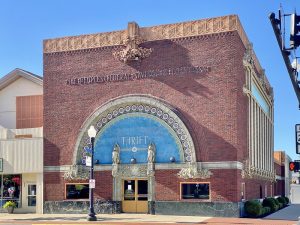
View from the street of a bank built in 1917. From the photographer: The building features a red brick exterior with terra cotta trim, decorative panels with Sullivanesque detailing, Sullivanesque trim, a decorative mosaic in the tympanum below the arch above the front entrance with the word “Thrift” in gold lettering in the middle of an expanse of blue tile and decorative white, cream, green, purple, red, and orange tile accents, decorative metal lettering on the facade above the arch displaying the words “The People’s Federal Savings & Loan Assn." ... Gargoyles above the pilasters framing the front entrance, fixed glass windows at the corners, brass double doors.
From the Field

How the New CRA Rule Will Help, and Where It Falls Short

The assessments that evaluate a bank’s lending practices have improved, but there are several missed opportunities for reform. For one, the new rules won’t incorporate a racial analysis into lending examinations.
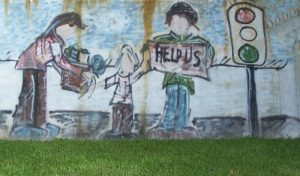
A large graffiti'd mural, painted in a cartoonish style, showing an apparently homeless family of three standing near a traffic light. The mother is handing a box or carton of stuff to the child, whose other hand is reaching to the father figure. He is holding up a sign that says "Help us." Facial features were not drawn on these figures, giving them a universal quality.
Opinion

What’s Driving Homelessness? It’s Not Immigration and It’s Not Opioids.

Homelessness rose by 12 percent between 2022 and 2023. Blaming drug use and immigration for the increase distracts us from the real causes.
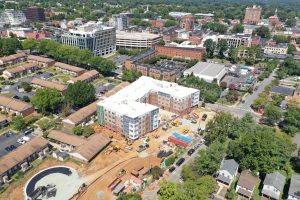
An aerial view of a large, four-story, U-shaped housing development, still being built, and surrounded by settled neighborhoods on the three sides that are visible. The roof is white and the various sections of the exterior walls are blue, tan, brick, or white. The ground around the structure is still raw dirt, with several trucks and machines in view.
Opinion

Can Residents Get More Out of Tax Credit Housing?

Arrangements in which LIHTC tenants share in the development’s financial benefits, or become partial or full owners, are rare—but some properties have pulled them off. This scan of several examples shows the possibilities—and the conditions needed for them to succeed.
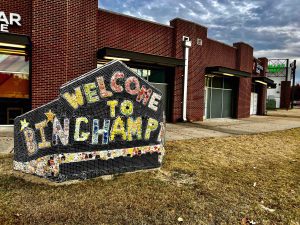
On a lawn in front of a brick building with large glass panels that look as if they might have been garage bays at one point, stands a welcome sign made of mosaic tile. The underlying structure is invisible but may be concrete and forms a boxy semi-circle with a peak. The mosaic tiles are small and spell out "Welcome to Binghampton" in varied colors on a background of tiny black tiles. There are two stars over the letters B and I, and near the bottom is a band of freeform mosaics depicting faces. They're very small and hard to discern individually.
From the Field

Memphis Is Shrinking. Here’s Why We Need to Change That

Memphis is struggling with a dwindling population, driven in part by a high crime rate and disinvestment in low-income areas of the city. What are local organizations doing to turn this around?

An orange and brown playground apparatus including a slide, monkey bars, and a treehouse, sits on a bed of wood chips in a grassy park on a sunny day. Four children of varying skin tones play on the equipment. Beyond the park area a man in uniform watches the playground and behind him is a clapboard house.
From the Field

Rebuilding After Trauma: Public Spaces in Cleveland

Traumatic events, and the ongoing traumas of vacancy and disinvestment, can be strongly associated with the places where they occurred. In Cleveland, several organizations are bringing new function and meaning to traumatized spaces.

A person in a blue jacket and blue shirt writes something down in a notebook. The person's head has been cropped out of the photo.
Opinion

Let’s Act Now to Stop Racism in Real Estate Appraisals

In 2022, a government task force released an action plan about combating bias in the appraisal industry. How can CDFIs fight back against the damage caused by under-appraisals?

A Black woman, wearing a white scarf and black robe and holding a microphone, speaks inside a room. Sitting are four people listening, and others are standing in the back.
From the Field

Preparing Underinvested Communities for New Funding

Underinvested communities are at a disadvantage when it comes to attracting and deploying funding. The Center for Community Investment is helping to change that.

A young dark-skinned man sits on the edge of a bed holding a mandolin. He's wearing a ball cap turned sideway and a cloth mask is pulled down to show a smile. Behind him on the white wall is a mural of colorful insects and flowers.
From the Field

Low-Barrier Motel Shelter Is a Success—But Not an Easy One

Many guests at Motels4Now are on their second or third stays—but staff say that doesn’t equal failure, and the numbers bear them out.

Eleven people, seven standing in back, four crouching in front, pose with clipboards. Several are wearing red T-shirts that say Louisville Tenants Union with an image of two hands fist-bumping. Several of the people are wearing masks; the ones who aren't are smiling.
Opinion

Tenants Unions Are How We Win in the South

Tenant organizing has the power to transcend culture wars and break down the artificial barriers that have been placed between us.

View from above of a ferryboat on roiling waters, with clouds of mist off to the right. The water is blue-green with much white foam from the choppy sea
From the Field

Nonprofit Affordable Housing Developers Navigate Troubled Waters

As housing and building costs rise, nonprofit developers find themselves with strained resources as pandemic relief dries up and tenants need housing assistance more than ever.