



In Brazil, ensuring clear land tenure rights has been difficult ever since Portugal invaded in the early 1500s. Today, legal ambiguity in land tenure the norm. Government officials as recently as 2017 publicly acknowledged that more than half of Brazilians lived on land with unclear property title.
Unclear land title places many Brazilians at the mercy of political and private interests. Expulsions of residents to make way for developments serving higher-income populations are not uncommon.
Even when land tenure is regularized and a deed with clear title is provided, this can carry risk, as that shift creates new economic pressures. When title is regularized, residents—now landowners—must pay property taxes. This can burden low-income residents and lead to displacement.
In this context, where both informal tenure and land regularization can harm low-income Brazilians, we formed a working group to explore whether there are practices from abroad that might better secure land tenure for favela residents.
Through this research, we identified community land trusts (CLTs) as a way to regularize land tenure and avoid displacement.
The CLT model combines collectively owned land with individually owned buildings to better preserve the community. Prohibiting land sales ensures that improvements do not price out residents and deters speculative interests by real estate agents.
We quickly realized, however, that employing a CLT in Brazil is not the same as employing a CLT in the United States.
Challenges in Translation
CLTs in the U.S. date back to the late 1960s and the formation of New Communities in Albany, Georgia. We looked at how CLTs evolved in the U.S., too. However, the turning point for us came when we encountered the Caño Martin Peña project in San Juan, Puerto Rico, which applies the CLT model in an informal settlement resembling Brazil’s favelas.
The Puerto Rican example convinced us that the CLT model can work in Brazil’s favelas. But to introduce the CLT model to Brazil, many issues needed to be considered. First, unlike most U.S.-based CLTs, where the goal is typically to build or acquire housing, market it to low-income residents in the region, and attach deed restrictions to the land to keep the housing permanently affordable, our primary goal is to secure land tenure for residents already living in informal settlements and to regularize that tenure without creating real estate pressures that could force many to leave.
Then there was a legal issue. It turns out that the ‘T’ in CLT—that is, the legal structure of the trust—does not exist in Brazilian law. The CLT model therefore needed to be adapted in Brazil to suit our legal and social circumstances.
In Brazil, CLTs are called “Termo Territorial Coletivo,” which could be translated into “collective land claim” in English. This phrase illustrates that the CLT model being developed in Brazil begins with an agreement in an existing community about collective land governance and tenure.
Applying the CLT Model to the Favela
The CLT offers favela residents a potentially powerful way to formalize land rights and protect their communities from displacement.
Favelas have historically been characterized by self-governance and solidarity networks. Due to state negligence, favela residents have had to cooperate to solve common issues. Despite the precarious conditions these communities often face, the absence of the state has forged fertile ground for collective action and resistance, leading to some of the favelas’ greatest qualities: creative and affordable housing solutions, a vibrant cultural life, and resilience.
As a result, favelas share many features that could be used to build strong, community-driven CLTs. The idea is not to replace existing governance structures to build something new; rather, the aim is to adapt the CLT model to build upon and strengthen these qualities.
Activists involved in discussing the CLT as a tool to promote housing rights in Brazil understand that governance must play a crucial role. From the beginning, there has been a strong focus on ensuring effective community control over land—not only to make sure that residents have a voice in shaping the community they want to build but also to prevent co-optation of the model.

The “classic” CLT governance structure consists of a tripartite board with equal representation from CLT residents, community members, and other stakeholders or experts. In neighborhoods of the Global South where community existed before the CLT, the formula is different. Puerto Rico’s Fideicomiso de la Tierra Caño Martín Peña, for example, ensures that residents always hold a majority on the board.
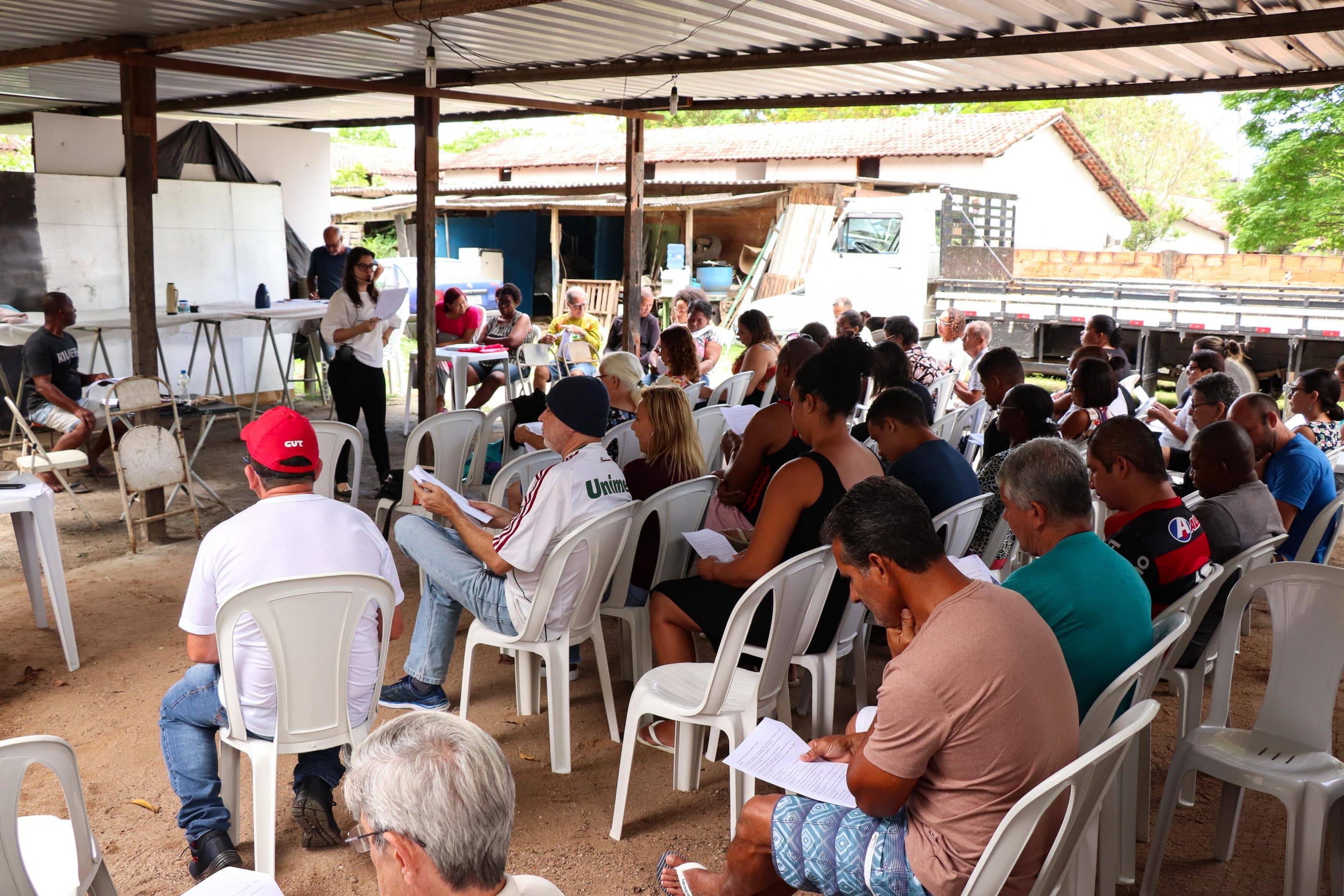
Following the example of the Puerto Rico project, the communities involved in developing CLTs in Brazil have insisted that residents always hold a majority of seats on the board. Many other mechanisms have also been adopted to strengthen democratic participation of residents overall—not just at the board level, but expanding the role of all-member general assemblies and through member-led committees.
Creating a Legal Structure
Establishing CLTs in a country where trusts are not legally recognized is challenging. Therefore, an important part of our work has been advocating for a favorable legal framework for CLTs.
With that in mind, a few years ago, our team began debating what a CLT law might look like in Brazil. This involved developing draft legislation, which was discussed with other stakeholders, including favela residents.
Once draft bills are developed, advocacy can begin in earnest. Brazil has a history of progressive urban legislation, stemming from the urban reform movement that was highly active during the re-democratization period following the country’s 1964–1985 military dictatorship.
Participatory processes are widely used in Brazil, which is known for pioneering participatory budgeting. Efforts to create a legal framework for CLTs have led stakeholders to leverage participatory revision processes of master urban plans to advocate for inclusion of CLTs among city planning tools.
That movement has been successful. Over the last decade, advocates have succeeded in getting CLTs formally included in local legislation in six cities in Brazil, including Rio de Janeiro and the country’s capital, Brasilia.
Besides local legislation, there is currently a national CLT bill being considered in Brazil’s Congress. The goal of the bill is to legally recognize the CLT model and its role in promoting housing rights across Brazil—a change that would enable the use of CLTs to protect resident homes when land ownership is regularized.
[RELATED ARTICLE: How Organizers in Rio’s Favelas Are Harnessing Solar Energy]
Preserving community involves more than just supporting individual residents. Communities, after all, are anchored in networks of social relations built on solidarity as a means of survival. A community has its own collective memory and culture, rooted in long-standing relationships. This fosters a deep sense of belonging among residents.
The Brazilian experience of advocating for the implementation of the CLT is already benefiting over 400 residents in pilot CLTs in Rio de Janeiro. The potential is much greater. In Rio de Janeiro alone, an estimated 1.4 million people—24 percent of the city’s population—live in favelas.
The nascent Brazilian experience, building on the more established Puerto Rican example, again shows how CLTs can be used to stabilize land tenure in informal settlements, formalizing land rights in a way that protects communities, along with their unique qualities and potential.
Potential for CLTs in the Global South
Beyond Brazil and Puerto Rico, we believe CLTs could advance land and housing rights—while also empowering communities—across the Global South.
Several organizations, including the U.S.-based International Center for CLTs (ICCLT), have been working to raise awareness about the potential of CLTs for the Global South.
Since 2023, ICCLT has been developing the Global South CLT Initiative, which produces educational materials on how CLTs could be used in various legal and social contexts. So far, the initiative has mapped over organizations across more than 20 countries, including ongoing efforts in India and Africa.
The potential for CLTs to grow in the Global South is clear. And we believe CLTs help address an ongoing issue affecting many countries: how to guarantee land and housing rights while maintaining community in informal settlements.
About the Author



Fascinating and exciting. Starting a collective land ownership initiative in an already “organized” community probably is every CLT advocate’s dream. Adopting and changing existing legal structures to accommodate lays a foundation for sustainability and expansion. Thanks for the ICCLT information. Please add by comment any groups, entities, or on-the ground actors that could benefit from material support. Great work. Thanks.