



About two hours southwest of Denver, between the Collegiate Peaks and the Arkansas River in south-central Colorado, sits a quiet mountain town called Buena Vista—pronounced Bew-nah Vista by locals. The town has stunning views of the Rocky Mountains, easy access to hiking trails, and old red brick buildings that are home to restaurants and retail shops.
It’s this serene setting that drew Taylor Pellerin to town two years ago from Lafayette, Louisiana—more than a thousand miles away.
“Living in Buena Vista is kind of incredible,” says Pellerin. “But housing is pretty gnarly. It’s hard to find a space, and it’s expensive.”
Subscribe to Shelterforce
Sign up for our free newsletter and get our original reporting, new series, and more in your inbox.
At the time, Pellerin managed the kitchen staff at a local establishment called Deerhammer Distillery, where he earned $24 an hour. It was not enough to comfortably afford the average $2,200 per month rent in town plus food and health care, he says.
So, like a rising number of Americans, Pellerin lived in his camper—a 2017 Keystone Passport Travel. It was much more affordable than a traditional home, and it didn’t sacrifice Pellerin’s ability to travel.
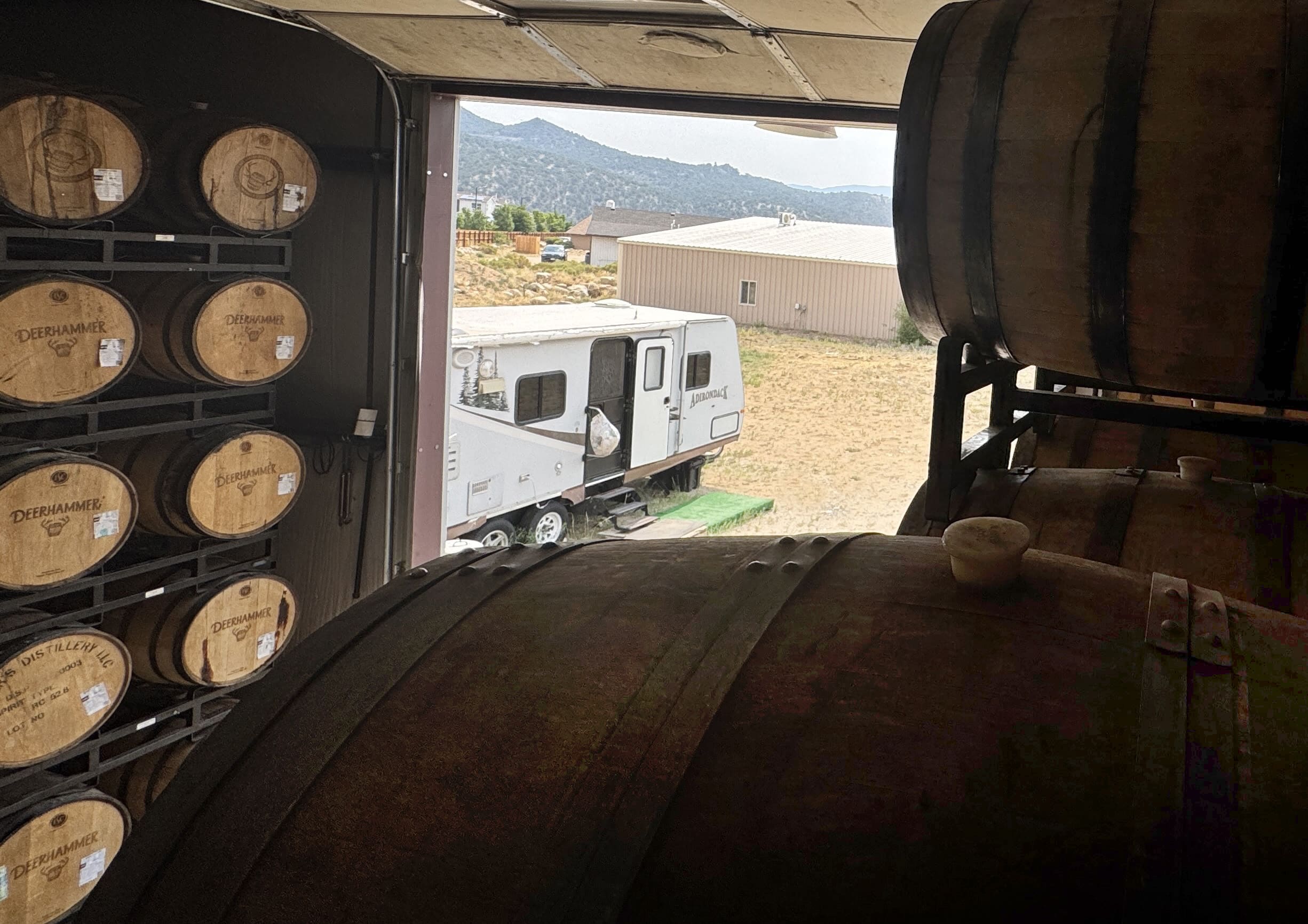
His housing situation was even more affordable because he was able to park his camper outside his employer’s warehouse, located a couple of miles away from the distillery. At first, Pellerin says, he paid a couple hundred dollars per month in rent—significantly less than he’d pay to camp on local federal lands or a campground. But eventually, his employers let him live there for free when business slowed down during the winter months, he says.
It wasn’t always comfortable, Pellerin acknowledges, but he had access to power and running water, which he might not have had if he’d camped elsewhere.
The kind of arrangement Pellerin had with his employers has become more common in towns like Buena Vista, which have strong outdoor recreation and tourism industries, a high number of seasonal recreation workers, and not many affordable housing options.
Camping on Company-owned Land—An Open Secret
As in many mountain towns across the country, rent costs in Buena Vista have risen dramatically over the last several years—43 percent since 2016, according to the most recent housing needs assessment of Chaffee County, where Buena Vista is located. The assessment also found that nearly half of the renters in town were considered “cost-burdened,” meaning they pay more than the recommended 30 percent of their income on housing costs.
The shortage of affordable homes not only makes it difficult to attract workers, it also makes it harder to keep them, says Lenny Eckstein, who owns Deerhammer Distillery with his wife, Amy. While the distillery’s bartenders and servers typically work seasonally, it has a full-time management staff. Amy Eckstein says they pay most employees roughly $50,000 per year, but even at that rate, their employees have had a hard time finding housing they could afford.
The Ecksteins have tried to address their employees’ housing challenges in a couple of ways. First, they bought a three-bedroom home, blocks away from the distillery, where employees can live. They charged $1,600 for rent each month for the entire home, several hundred dollars less than the town average.
They also allowed employees like Pellerin to park their RVs outside of the company’s warehouse at the edge of town. This saved employees between $750 and $3,000 a month, the monthly charge at nearby campsites (depending on amenities). Employees camping on company-owned land has been an “open secret” that a handful of local businesses engaged in while the town figured out how to build more affordable workforce housing, the Ecksteins say.
But doing so also put the distillery at odds with town officials.
Buena Vista prohibits public camping in highway commercial zones, where Deerhammer’s warehouse is located. So, the Ecksteins approached the town for a zoning variance in 2022 to legally allow their employees to live on the site.
The distillery’s application languished for more than a year, the Ecksteins say. During that time, Deerhammer received numerous citations for allowing employees to camp on the site. Deerhammer appears to be the only business in town to receive a violation, according to records obtained from the Buena Vista Police Department. Lenny Eckstein believes his business had been targeted because the company’s warehouse—where Pellerin and other employees have lived—is directly across from the local police station.
We reached out to Buena Vista’s mayor, police department, and multiple town officials for comment on this story, but did not receive a response by press time. We also reached out to several local businesses, but they declined to comment. One business owner said they “don’t want any more trouble.”
By August 2024, Lenny Eckstein says the citations became too much to bear and he was forced to evict his employees—including Pellerin—from the warehouse lot. The Ecksteins also closed the distillery for a while so they could figure out a new business model that didn’t rely on full-time service staff.
Shortly after, Pellerin moved back to Lafayette, Louisiana.
By the end of August, the town passed an ordinance to allow temporary camping at certain business properties. To obtain a permit, business owners must provide hookups to water, sewer, and electricity, and they must submit a cleaning plan to town officials. Employees must also live in an RV or camper.
It took the Ecksteins months to obtain a permit, but they finally secured one before the end of the year.
“If a business wants to be approved for workforce camping, they’re going to have to work really hard at it,” says Lenny Eckstein. “But why? Why create a bunch of hoops for us to jump through?”

The entire ordeal cost the distillery about $60,000 in lost business revenue and legal fees, Lenny Eckstein estimates. To help cover the debts they incurred, the family is selling the rental home they offered to employees.
It’s been more than a year since the camping ordinance passed. In that time, Deerhammer Distillery and two rafting companies were approved for permit, according to public records obtained by Shelterforce and Next City.
Lenny Eckstein says the permit, which expires in December, has been a temporary relief. There are currently two part-time employees living outside of the Deerhammer warehouse, both of whom are bartenders.
While the permit allows the family to continue operating its distillery for a little while longer, the future still seems uncertain. The couple is unsure of whether they will reapply for the permit, and the entire experience made Lenny Eckstein question who is truly responsible for solving the town’s affordable housing needs.
“People with means say they shouldn’t be living in campers, and that’s great, but that’s not going to happen this year or next year,” he says. “So, what do we do in the meantime?”
Addressing the workforce Housing Crisis
Zoning policies like Buena Vista’s updated camping ordinance are important, says Pellerin and the Ecksteins. They can provide a reprieve for workers who can’t afford to rent or buy a home, and they also give local officials more time to figure out longer-term housing solutions.
“It’s a huge advantage,” Pellerin says. “Having people come in who can live transitory and be a good worker for the summer months, it’s crucial.”
Lenny Eckstein agrees. “It’s a good attempt at a solution . . . But it can’t be a solution in a current format.”
Along with allowing public camping, officials in Buena Vista are working toward increasing the number of affordable housing units in town by revising its zoning code to allow for container homes. Buena Vista’s first container home community opened in May with homes renting between $1,150 and $2,600, The Colorado Sun reported. Units that rent for less than $1,600 a month would be considered affordable for Buena Vista’s workers, given that its annual median income is over $62,000, according to census data.
Lenny Eckstein says he is hopeful that the combination of these policies could help ease housing issues in the future. But it often takes years to see the impact of housing policy changes as homebuilders figure out how to navigate new bureaucratic strictures and increase the supply of housing.
While Buena Vista’s public camping policy could help smaller towns overcome their workforce housing challenges, there is a complicating factor that they must also address. Increasing rates of homelessness across the country have distorted conversations about public camping and changed how people perceive tents erected in public spaces. Over the last year, federal data shows homelessness increased by 18 percent nationwide. More than 771,000 people are living without a stable home in America, according to the data.
Lenny Eckstein says these perceptions were among the reasons why it took Buena Vista so long to pass its public camping ordinance, even though visible homelessness is virtually nonexistent in the town. The town wanted to ensure it wasn’t incentivizing people to live in tents, he says, which can be dangerous during Buena Vista’s scorching summers and frigid winters.
“They basically don’t want to see a tent,” Lenny Eckstein says. “I’m all for it, but we’re still trying to figure out how much we’re supposed to pay for an employee to have a place to live.”
This story was published through a collaboration between Shelterforce and Next City. Next City is a nonprofit news outlet that publishes solutions to the problems that oppress people in cities, inspiring social, economic, and environmental change through journalism and events around the world.
About the Author




It’s a shame(or sham) that you didn’t address the real problem in more detail,the greedy real estate and land lords. Why should rents be so high,and yet their so-called affordable housing is $900,000-1 million to get a home???
Ask the tough questions,and maybe the stupid town officials would at least start to listen. Can’t have the slaves living in the streets,build them truly affordable housing.
Think we need a mayor like Mamdani out here too. Bout time the rich start paying their taxes to start with.
They have no idea what they are asking for!
Realtors r the main culprits in rising housing costs. They artificial inflate prices all across the country. It is not very hard to sell your own home as”for sale by owner” I don’t care what the realtors say, they don’t do much to deserve a piece of the profit from selling property they don’t own.Real estate sales commissions r stupid.
Did you know that Colorado actually has a law on the books that prevents there being any type of rent control in this state?. Do you know that most of the apartment complexes near me Fountain Colorado are lying and saying that they’re affordable housing and requiring that you make double the rent. Affordable housing needs to be defined in that law needs to be overwritten. Homelessness is growing at a rate in Colorado and winter is coming.
Finding an affordable place in Colorado Springs is difficult for me. I only get 800 a month for retirement ( I know, I should have done it differently when I worked for myself!!) and that doesn’t come close. Family is saving me at present. What do you do,go where it’s warm I guess.
Are you plagerizing articles from 1980? This disgraceful business practice is common knowlege. Remember Aspen, Beaver Creek….
Shame on US