


Disaster Capitalism. The Shock Doctrine.
Naomi Klein helped us name the way disasters—natural or human-made—are often exploited by power brokers to fast-track harmful changes that communities would never otherwise accept. While people are reeling, overwhelmed by immediate survival needs, power grabs and predatory development slip through unnoticed—or unchallenged.
But what if we flipped the script?
What if, instead of letting crisis be used against us, we prepared to harness the shock for our own liberation? What if we used the disorientation of disaster as an opening for radical change—a chance to grab the steering wheel from the usual drivers of extractive policy and land speculation and turn the car in another direction?
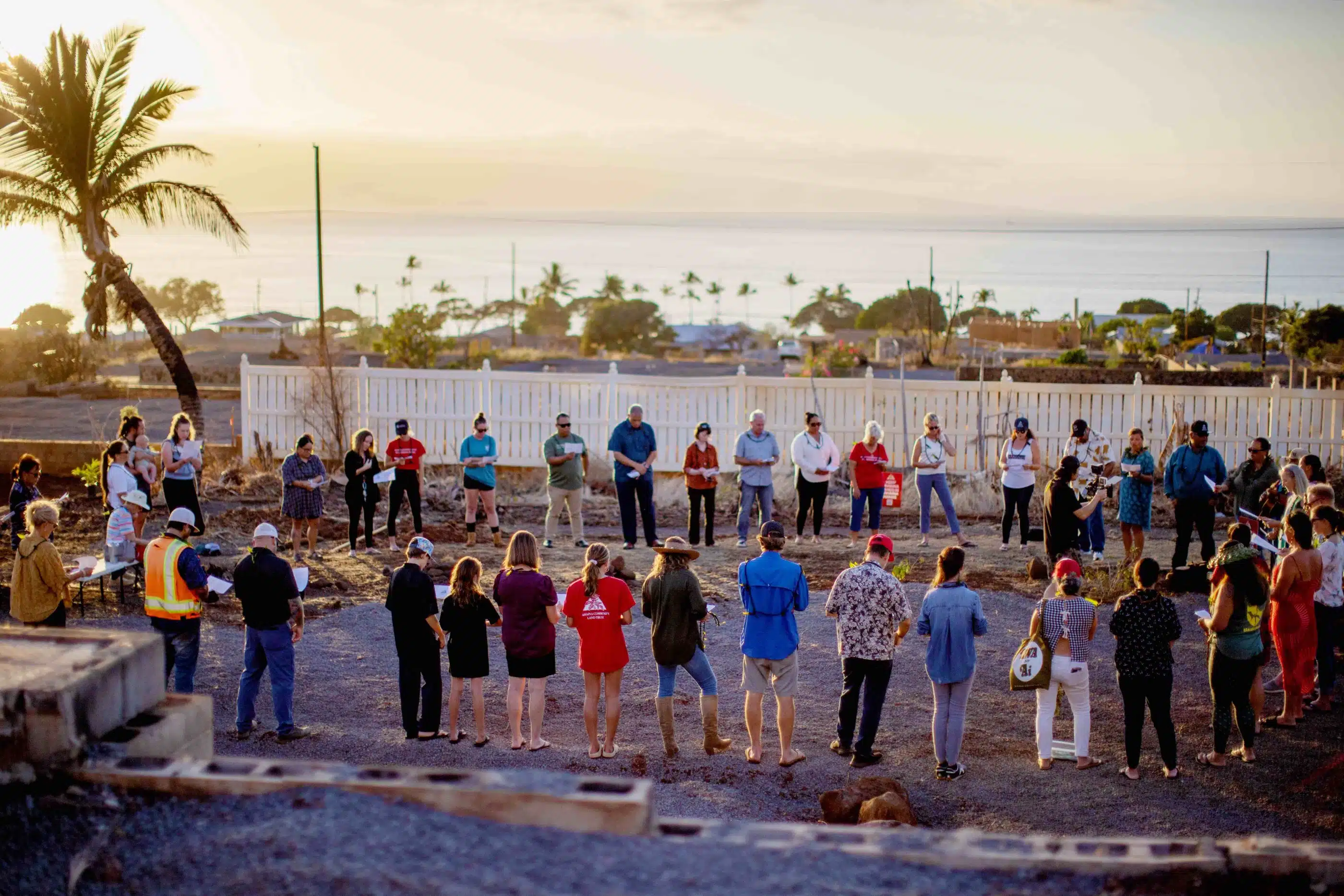
That’s what happened in Lahaina, Maui, after the devastating fires of August 2023. In fact, that’s how the Lahaina Community Land Trust (LCLT) was born.
Fertile Soil for a Fast Sprout
Moments of transformation don’t arise from nowhere. For LCLT to germinate so quickly, the ground had to be prepared long in advance.
Generations of relationship building, mutual aid, and shared struggle laid the foundation. Trust had been built between many of the key players who went on to form the land trust in the process of doing other sorts of work, long before the fire. Over the years, we showed up for one another in times of need. Big and small. Neighbors working on neighborhood issues—grassroots leaders working with policymakers on land, housing, and water issues, local organizations building relationships with funders who watched our community rise to the occasion—over and over again. Without that relational infrastructure, the vision of a community-controlled land trust would have gone nowhere, no matter how good the idea.
We already knew how to harness crises to transform our community for good. We’ve been doing it for decades.
One example: Long before the pandemic, the idea of a centralized food hub had been studied and debated for years. Farmers, organizers, Maui County, and the state of Hawai‘i recognized the need. Feasibility studies were written, working groups formed, but nothing got off the ground.
Meanwhile, our agriculture community persevered, working together on all kinds of food security issues. During that time I was a community organizer working shoulder-to-shoulder with farmers, fighting for farmworker housing, tracking state agricultural policy, and advocating for water justice. These big and small projects, worked on together, were actually foundational projects that built collective trust over time. Every time we answered the call and showed up at a water hearing, we built trust with each other. Every time we fought the sell-off of important ag lands, we built collective power. All of the hours we spent around countless tables, troubleshooting systemic failures and dreaming of better ways, we grew closer in our shared understanding of what our community needs, and what it will take to get there. Each time a hurricane or a wind storm damaged someone’s farm, we learned who in the community would show up with machines and hand tools to help.
Then, out of nowhere, COVID shut down Hawaiʻi’s tourism economy overnight. Hawaiʻi closed its borders. No out-of-state visitors were allowed in without a 14-day quarantine. Our ag industry, which relied heavily on resort and restaurant sales, collapsed. Farmers faced ruin, while our import-reliant grocery stores’ shelves were empty.
People—especially local people—forced from longtime homes. Investors—especially from outside—moving in.’
This happened on the heels of a decades-long debate about what to do about the inequity of resource distribution, with too much dedicated to maintaining our extractive visitor industry, while little support went to resident food security and vital industries like agriculture.
Suddenly, almost overnight, it wasn’t a debate any more. Our worst fears had become reality. We knew we had to move. Fast.
A group of trusted collaborators from different corners of the island came together. We already knew each other from those years of work—on pesticide reform, from water justice hearings, from volunteer work days on farms—and we knew what each person brought to the table. Funders trusted us because of past collaborations. Policymakers knew we could handle the scale of what was needed because we had helped them solve big problems before, and they threw support behind us.
Within a month of the COVID-related border closures, the first Maui Hub deliveries went out from our warehouse to homes. It wasn’t seamless. In fact, there were a lot of challenges, but we worked through them. Five years later, our rapid response has resulted in a permanent shift in how local farmers do business—and how our community gets its food. Since then, Maui Hub has generated millions for local producers and paid hundreds of thousands in salaries to staff whose livelihoods are not tied to tourism.
It started as a crisis response. It transformed into vital community infrastructure. It only happened because we leveraged that small window when our lives were flipped upside down. And we were only able to move so quickly because we already had one another’s trust.
The Lahaina Fires: The Risk of Erasure
The same pattern of rapid transformation, rooted in long-term relationships, played out in Lahaina—but on an even bigger scale.
Before the fire, Lahaina was already bleeding out. Housing was scarce and unaffordable. Teachers were recruited from abroad because local educators couldn’t afford to stay. School bus routes were canceled for lack of drivers. Almost every storefront had a sign: “Help Wanted” or “Be Patient—We’re Short Staffed.” Social media was filled with heartbreaking photos of families sending loved ones off at the airport, leaving the island because they could no longer afford to live in the place they were born.
Then came Aug. 8, 2023. Nearly 2,000 homes burned. Entire neighborhoods erased. Generations of families scattered.
We knew what was coming next because we’d seen it before—in New Orleans; in Paradise, California; in Puerto Rico. A predictable post-disaster narrative: loss, disconnection, bureaucratic delay, the slow grind of trauma, the pressure to sell. People—especially local people—forced from longtime homes. Investors—especially from outside—moving in.
But this time, we had a plan.
Grabbing the Steering Wheel
In the weeks after the fire, while many were still in shock, some community leaders were clear-eyed. We already knew that speculative real estate forces were responsible for the generations-long displacement of our friends and neighbors. We had already been working on carving out a section of our housing stock to protect for local families, but just hadn’t been able to get policies across the finish line because of real estate industry interests. We had already been talking about the need for community land ownership, about how public land and funding could be used for long-term housing solutions, not just temporary Band-Aids. But the political will to make it happen just wasn’t there—until Lahaina burned.
In the immediate aftermath of the fires, when the idea of a community land trust for Lahaina was floated, it wasn’t met with skepticism. It was met with relief.
We called it the Lahaina Community Land Trust. Our purpose was simple and enormous: Keep Lahaina home. Prevent displacement. Stop the land grab. Create a new model for generational stability rooted in community control.
We worked fast to connect to survivors, elders, youth, Hawaiian cultural leaders, funders, legal advisers, county council members. Everyone pitched in with ideas and support.
We assembled a board of directors rooted in Lahaina, with generational ties to the place and lived experience of both the fire and the systemic failures that preceded it. We drafted bylaws rooted in community accountability. We reached out to trusted funders, many of whom we’d worked with before in other contexts—and they answered.

In under six months, LCLT secured its 501(c)(3), launched a donor portal, developed a set of community-centered land criteria, and began reviewing opportunities for acquisition. Our ability to act, with the speed required to prevent post-disaster displacement, is completely attributed to our existing relationships. In this time of crisis, we didn’t have to spend precious time building trust. We already had it.
What we created with LCLT isn’t just a legal entity. It’s a living commitment to a different future for Lahaina, rooted deeply in our history.
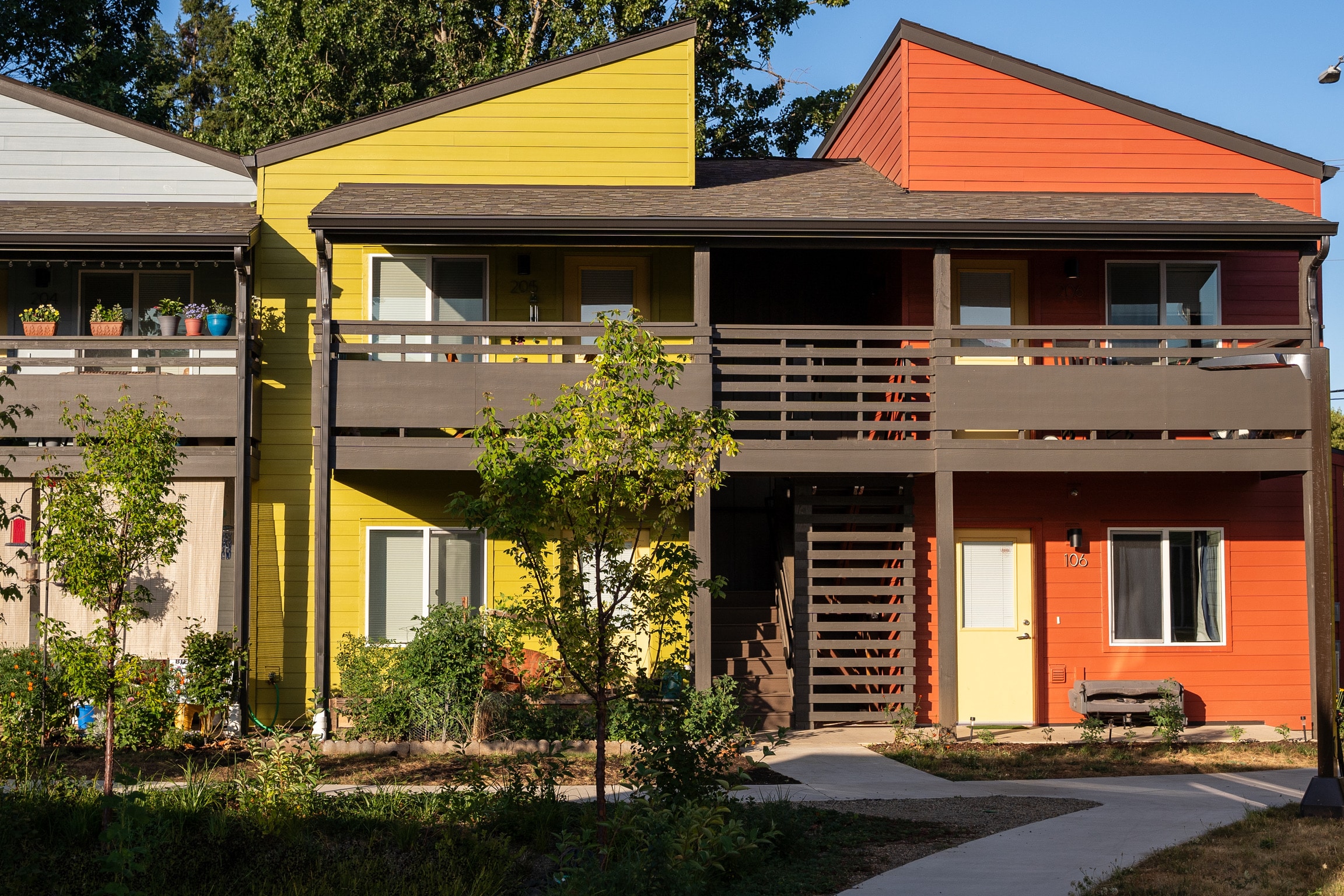
We’re not just acquiring land. We’re building a framework for long-term stewardship. We are working closely with national and local land trust allies, housing justice attorneys, philanthropic partners, cultural practitioners, and most importantly—survivors, to redefine wealth in cultural terms, not financial ones.
In the months after the fire, one of our first big challenges was talking very openly about the role of land sales and real estate agents in Lahaina. We posed the question: what will happen to our community as a whole if individuals each decide to list their lots at way over market value and market them to off-island cash buyers? It was a potentially very divisive question, at a time when sensitivities around land and the need for cash was at an all time high. It was a scary conversation to initiate, but because of the relationships in our community, we were able to navigate it. We ended up building a coalition of real estate agents who publicly agreed to a Lahaina-specific pledge, recognizing that land sales in post-fire Lahaina need to be handled with a generational lens. They agreed to refer families to programs and organizations that might be able to prevent distress-driven land sales, instead of just jumping on the chance to sign a client, and to “consider the broader implications of their work” in their marketing and sales strategies.
What could have been a really divisive conversation actually brought many of us together, grounded in the understanding that we have been in community for decades together, and will be in community for years to come. Those years of shared struggle and the deep roots of trust they created are bearing fruit every day as we build the Lahaina CLT.

And that will have impacts not just on Lahaina, but in other post-disaster communities, too. We are rewriting the post-disaster playbook to ensure that the money that floods into communities during catastrophes doesn’t amplify harm.
We knew this wouldn’t be easy. There are bureaucratic hurdles and political minefields. But we also knew that the old way of doing things failed Lahaina—and that this was our one shot for systemic change. Shock can be paralyzing; but it can also open up possibilities that were previously unthinkable.
The Lahaina fire was catastrophic. But when our sense of normalcy was shattered we could see a new path to a more just future—one rooted in aloha ʻāina (love for the land), collective care, and the belief that the people of this place should shape its future.
If we prepare our communities—by building trust, relationships, and shared vision—we can be ready when the shock comes. Ready not to survive it, but to harness it. When the old systems are too broken to salvage, we can build something entirely new.
About the Author

You are an inspiration to us all, well done! We are working on some serious policy docs to drive a rebuild / town shift at least cost to both community and government. Down with predatory property, up with proactive community!