



Welcome to Solidarity Corner!
In this new monthly column, I hope to explore and examine different aspects of what is widely called the solidarity economy, focusing on practices that help people build more sustainable and equitable communities.
Future column topics will vary—from community land trusts and other community-based land ownership models to emerging city- and regional-level solidarity economy networks, employee ownership and other types of community business ownership trusts, and more.
My intent is not simply to praise cool projects, but to delve into the promises and challenges of local efforts to develop systemic alternatives to our current economic system.
Celina Su recently argued in her book Budget Justice that critiques of the economy need to be based on how our politics and economy actually work. We need to recognize the common myths, such as the idea that a “free market economy” exists, that distort our understanding of the economic problems we face and therefore make finding solutions to those problems far more difficult.
Su points out, for example, that despite the mythos of “big” and “small” government, the difference between governments that lean left or right has little to do with the amount of spending, but rather with where government resources are distributed. The community activists she covers, she explains, do not seek to expand the government but rather to redirect public budgets to align with their priorities.
In this column, I will cut through the myths and discuss the real-world blocks people face, focusing on the ways—despite many challenges—people seek to develop more just housing and community economic development systems and, more broadly, build more rewarding lives in thriving communities.
Mapping the Solidarity Economy
What is the solidarity economy, anyway?
Emily Kawano, a founder of the US Solidarity Economy Network, and feminist economist Julie Matthei define it as a bottom-up approach to pursuing systemic economic change that “focuses on the process of building economic practices and institutions based on the values of equity in all dimensions (race, class, gender, sexuality, and so on), cooperation and solidarity, economic and political democracy, sustainability, and pluralism.”
(For a deeper dive, check out the work of Jean-Louis Lavalle and Chilean activist-scholar Luis Razeto Migliaro, who are widely credited with popularizing the term “solidarity economy” in the academic world.)
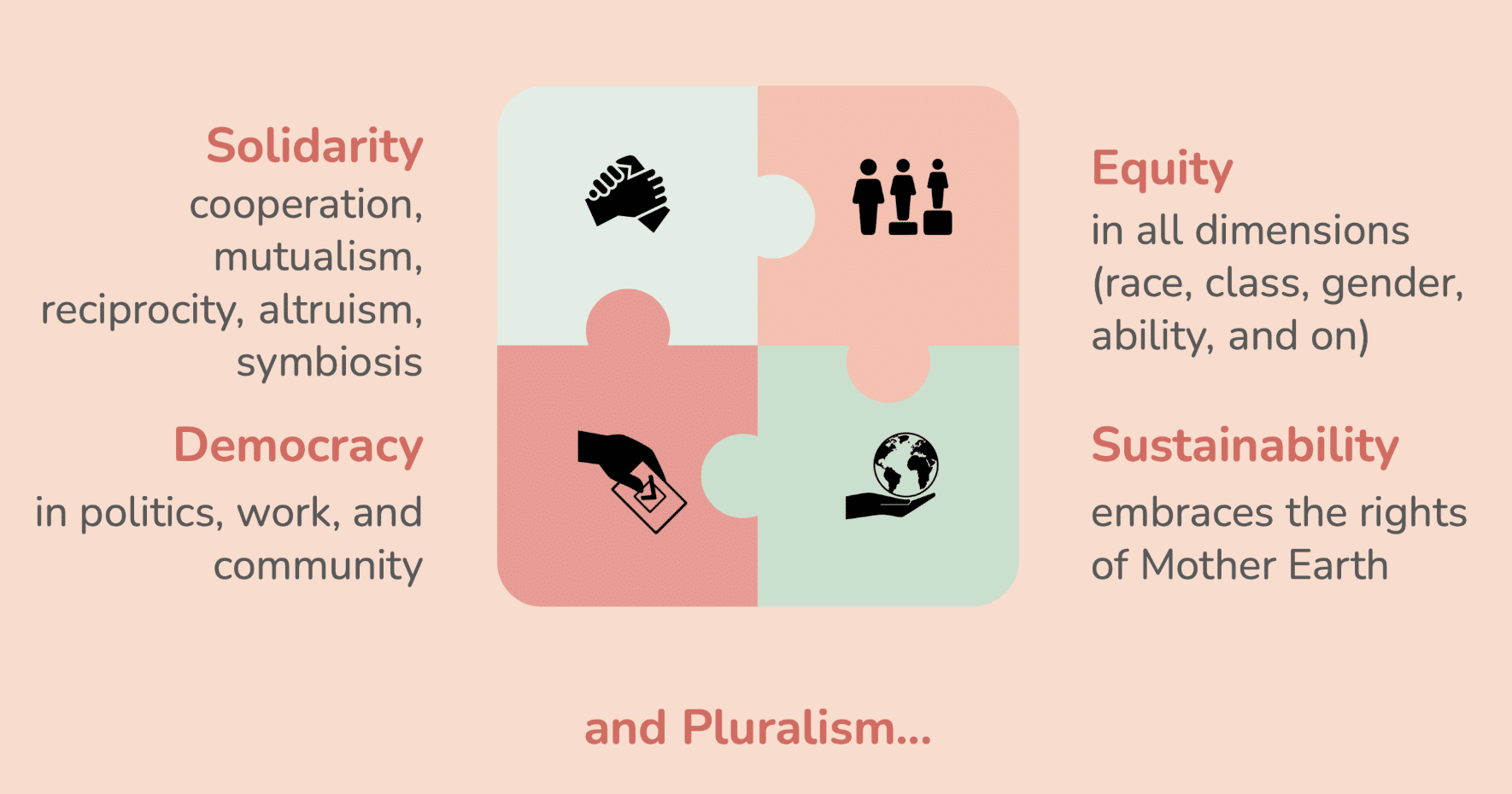
The solidarity economy reminds us that capitalism is an economic system that has not existed forever but has a historical start point and, therefore, likely an end point—even if, as has often been said, “it’s easier to imagine the end of the world than the end of capitalism.”
Advancing systemic change means changing who owns and controls economic assets. Clearly, capitalism today is incredibly unequal—and in the United States, it is becoming increasingly so. A recent article in American Prospect cited a RAND Corporation study showing that the bottom 90 percent of wage earners took home about 67 percent of all taxable income in 1975, but only 46.8 percent in 2019. The difference, the RAND study authors noted, worked out to $3.9 trillion or $28,000 per average wage earner in 2023 alone. The impact of this on affordability is obvious, and the stakes for altering this trend are incredibly high—not only for meeting people’s needs but also for providing a more stable foundation for long-term democratic governance.
How can a turnaround occur? There are many possible paths—unions are important, of course—but a basic concept behind the solidarity economy is that if capitalism concentrates wealth, income, and productive capacity in the hands of those who can live off investment income alone (i.e., capitalists), then a solidarity economy must bring large swathes of land and capital into different types of common or community ownership.
Of course, systems are not pure; they typically blend into one another. Plenty of noncapitalist practices exist today, including many affordable housing strategies. A solidarity economy lens helps us “see” these practices. Additionally, the idea of the solidarity economy highlights that our notions of what comprises the formal economy are too narrow. Even the World Economic Forum—yes, those folks who like convening world leaders and CEOs in Davos each winter—concedes that unpaid care work would add 9 percent of world gross domestic product if counted.
Kawano and Matthei identify some of these uncounted practices as part of the “actual existing” solidarity economy we have today: buying clubs, volunteer collectives, community gardens, time banks, peer lending, complementary currencies, free-cycle networks, and mutual aid.
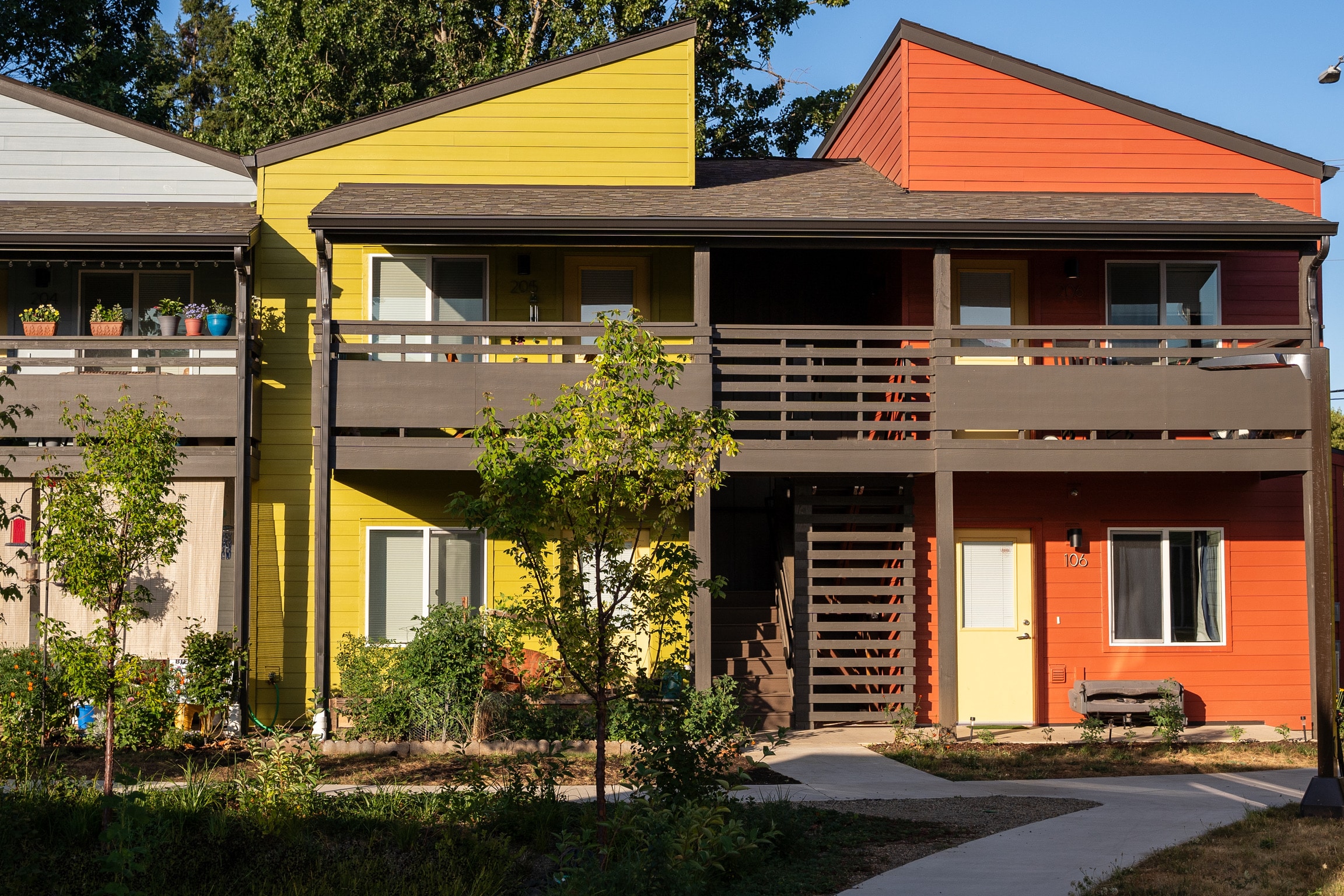
Importantly, if you are aware of the often-hidden economic functions of these types of activities, you can improve residents’ lives by designing housing and communities to foster them. Cohousing, for example, intentionally designs communities that feature common spaces and encourage the kind of economic activities—like childcare networks and shared meals—that can take place in them.
Let the Conversation Begin
The goal of this column, in short, is to extend our field’s vision and imagination. Some practices featured here will fall squarely in the field of housing and community development. For example, perpetual purpose trusts and permanent real estate cooperatives, featured in Shelterforce’s community ownership Under the Lens series last fall, are solidarity economy practices that are part of housing justice advocates’ and community developers’ toolkits.
But this column will also extend beyond housing and community development practices. The notion of a solidarity economy is broad. The work of housing advocates is part of a larger economic whole, which includes practices—such as caretaking—that are often excluded from economic analysis; environmental practices, such as the management of commons resources; forms of business ownership other than corporations, like worker cooperatives; or community-based financing tools, such as public banking.
This column will aim to connect the dots among these community-building practices. Building an economy with solidarity at its core implies a cultural shift—from an economy that focuses on the trading of goods and converts nearly everything, even the land you live on, into a commodity, to an economy focused on meeting people’s needs and fostering community bonds.
I welcome your feedback on topics that should be covered here—and what challenges and possibilities you see in your own community. Please reach out and share your thoughts—and if there are any specific themes, topics, or local examples in your community that you think are worthy of examination, please let me know.
Again, welcome to Solidarity Corner. May the conversation be a fruitful one.
About the Author



Kudos to Steve Dubb on a thoughtful and provocative essay. From my way of thinking, the Solidarity Economy is a perfect framework for those of us who support housing as a Human Right…