


This article is part of the Under the Lens series
Innovations in Community Ownership
updated Sept. 16, 2025
Artists have long been a vital part of vibrant communities, and many places and organizations have created artist housing programs to try to make sure they can stay. The Artist Space Trust in California’s Bay Area melds a deep commitment to artists—and a celebration of the way artists have long been helping each other find affordable space—with the community land trust model. Shelterforce talked with one of AST’s founders and its executive director about where the group came from, what makes a housing group for artists different, and the legacy of elders in the arts community they are preserving.
Ian Winters: I’m the director of incubation and special projects at the Northern California Land Trust [NCLT]. Artist Space Trust is a project I founded in my prior role as longtime executive director of NCLT near the beginning of COVID with a friend and collaborator, Kathryn Reasoner of Vital Arts. I’m now here in a role as co-founder and adviser, and mentor to the project. I am also a working artist. That’s my full-time job, and I dabble in housing stuff.
Meg Shiffler: I’m the inaugural director of Artist Space Trust, and I come from an arts background, not a real estate background. Most recently, I was at the San Francisco Arts Commission for 16 years. I know our arts sector very well, and I’m excited to continue to serve them in this new role.
Miriam Axel-Lute: Thank you both for joining us to talk about this exciting project. Talk a little bit about the importance of artists being able to stay in their communities and why this is an important focus to have for a land trust.
Shiffler: There’s a lot of health indicators [showing] the value of the arts in one’s life and in one’s community, both increased mental and physical health and social cohesion and belonging.
Can you imagine not being able to go to a movie, not being able to read a book? Not being able to go out and have a gathering with your community members around central issues for the community that also incorporates the arts as a method of entering into dialogue?
The second [issue] is cultural heritage preservation and vitality. In the Bay Area, we not only have an out-migration, displacement of our artists and culture bearers, but also of many of our racially specific communities.
For example, in San Francisco, the Black population used to comprise 14 percent of the population, and it’s currently down to around 5 percent. Rooting culture bearers that are able to literally be the keepers of history and the movers of cultural vitality moving forward is critical to the health of the city and the health of its residents.
Then, economic impact. We are a powerful, primarily low-income labor sector that contributes 7.5 percent [of our] statewide [economic activity]. We’re a significantly impactful economic force, and we’re mostly low-income. When you combine those things, economic health relies on our organizations and our individuals being stabilized.
I’ll give you an example, and I’ve been given permission to share this. In collaboration with Northern California Land Trust, we distribute CalHome downpayment assistance, a low-interest loan of 40 percent of a purchase price, up to $200,000, that doesn’t need to be repaid until the home is sold. That means that these low-income qualifying artists are making payments on a first mortgage, and this second piece of the puzzle is on hold in terms of payback. It’s really, really helpful. Oftentimes, their mortgage ends up being less than their rent was.
That’s what happened for an artist named Flee and her [child], Pickle. Flee is a photographer and a single mom, member of the LGBTQIA community, and has been moving from [apartment to] apartment.
She had a certain amount of housing insecurity and health issues related to the places that she’s been able to afford. One of her apartments when Pickle was little was full of mold.
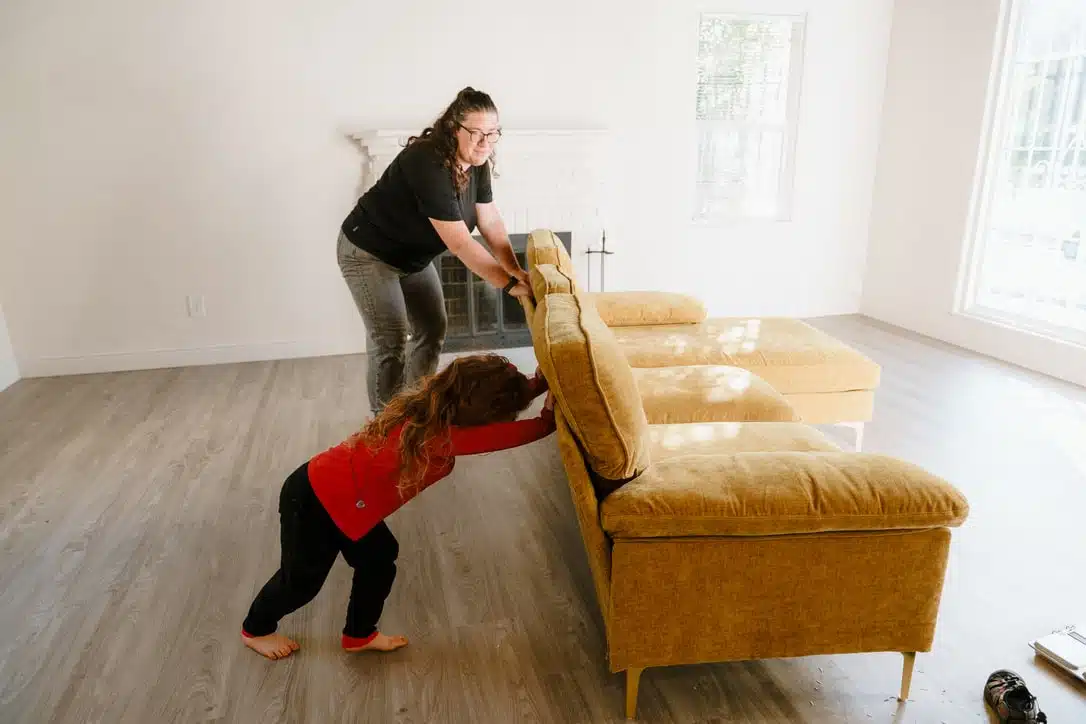
With our assistance, Flee and Pickle are now stabilized in a home that they own. Flee, growing up, never had housing security. Both of her parents are housing insecure. Flee has made a commitment to raise her [child] within housing stability and now we’ve made that possible.
That is beautiful. Ian, tell me how Artist Space Trust got started.
Winters: A lot of the original impetus came out of this really, really terrible tragedy that happened to the East Bay music and performing arts world [in 2016], called the Ghost Ship fire. There was a space in deep East Oakland that no one should have been living in. There were a lot of people who didn’t have any other option. There were also a lot of people from the arts and music community who could all have said, “Oh, I don’t even feel comfortable playing a show there. Should we say something more than, ‘Dude, that place is a fire trap’”?
There are a lot of failures all the way around, whether it’s city, landlord, master tenants—but also the arts community. There are two organizations that came out of that. One is called Safer DIY Spaces, a self-help group to help people from the DIY and punk and warehouse communities go, “Yes, we might be living in this dodgy warehouse, but actually it’s cool to have fire extinguishers and smoke detectors.”
Then, in parallel, a group called Vital Arts was founded, and was originally led by a friend of mine, Kathryn Reasoner, who’s an amazing curator, an activist, and lifelong supporter of the experimental and the contemporary arts community. Vital Arts’ mission was, and still is, is to help make sure this doesn’t happen again, both through policy and through helping make spaces better.
She and I started talking. How do we make these spaces permanently affordable? We started inventorying all of the great spaces that we knew about. You start realizing that actually many of the spaces and homes and smaller gathering spaces and so on, are really held and maintained and cared for and loved by artists.
Everyone that I know [who] is a painter, in their 20s, worked out of somebody else’s studio. [For example,] “Oh, David Ireland sells some paintings, and he bought a studio,” and then 10 years later, there’s 15 people that work out of the second studio that he’s added on. There’s that tradition in the Bay Area.
We realized that there’s this looming demographic crisis because the market shifts in real estate have meant that younger artists can’t do that. You could get a big commission and buy a beaten-to-death, semi-abandoned garage and warehouse and turn it into something functional in the early ’80s, and you can’t do that anymore. We needed to come up with a way to help preserve those spaces permanently.
Also, so many of these spaces are artists’ main economic asset. And many of these same people don’t necessarily have heirs. How do we help preserve those spaces and also provide a way that people can retire and age in their home that they love, and have a dignified end of life, [instead of] trying to donate back to their community and suddenly find[ing] that they have nothing left.
That’s the dual mission. We started talking to friends, going like, “This is our community. These are our friends, our family, and we need to take care of them.” With that, we started talking to funders. Both of us also have had parallel careers in nonprofit administration, me in the land trust world and Kathryn in the museum world. There’s a certain privilege that comes with having funders’ phone numbers, and you get to go, “Hey, here is what we think is a great idea. Can you help us make it real?” Enough people said yes, that it’s become real. We have Meg and staff, an advisory board, properties, and that’s the history.
Shiffler: I would add that Ghost Fire was in 2016, and we lost 36 young members of our creative community. Almost everyone I know knew someone, including Ian, including me. Vital Arts was founded by the parents of one of the victims and their circle. It not only is a situation where we need to keep people safe, it’s a very personal mission for a lot of us. It’s been almost 10 years, and it still feels like it was yesterday. Maybe because there was the pandemic in the middle, where time sort of stopped.
Time has gotten very strange.
Shiffler: During the pandemic, artists were being displaced left and right because they had no employment from their regular gigs. All the theaters, the music venues, everything was shut down, and artists were leaving, not by choice.
A lot of people in affordable housing are driven to that work because of personal experiences of either themselves or members of their community that they’re particularly touched by. It’s no different for all of us. Ian is an artist, I’m a curator. The estate attorney that we send our elders to is also an artist. The person who does our real estate pre-assessment is also an artist. Qiana [Ellis, Artist Space Trust’s programs manager,] is an artist. Our education coordinator is also an artist. I think just about everyone that we work with has an art practice.
We are running four primary programs. The first and largest is properties. We’re building our portfolio; our primary way right now is through bequests. All of the bequests are being made by elders that are also low-income and know that they would have never been able to stay here if it wasn’t for the stability of this house, this cottage, this odd property that they bought for $60,000, $70,000, $80,000, $90,000 a million years ago. Almost all of them are coming to us debt-free and ready to turn around and put another artist, or artist cooperative, or artist family in. It’s personal.
We also distribute CalHome downpayment assistance. In addition to the properties that come to us through donations, bequests, and bargain purchases, we’re developing a buyer-directed program, so that if somebody goes out and finds a house, they can come to us and say, “Would you like to buy the land and bring it into the community land trust?”
In the Bay Area, it’s much more about stability than an equity play because the houses are at a price point that it’s unlikely that they’re going to triple in value like we’ve seen in the past. These homes are much more about stabilizing one’s life and making sure that you can stay near the opportunities. If we’re speaking in economic terms, we don’t want our labor force to become a completely commuter labor force. I mean, commuter in from Sacramento, from the Central Valley. All the opportunities are here for them. We need to keep them close.
We have about $10 million [worth of property] between bequests and a big, wonderful donation from an artist who donated a duplex in the Mission District in San Francisco that’s worth $2.6 million. We will be selling both of those units very shortly to low-income artists at phenomenally below market rate. I mean, obscenely low, that matches what somebody at 80 percent AMI and below can afford. What is the mortgage that they can afford? That is the formula for us.
The thing we realized really quickly is that our second program needed to be education. We give free financial education to the arts sector: how to build wills and trusts, how to take care of your assets, how to financially prepare to become a homeowner or to enter into a below-market-rate program. This is building a pipeline for us, but it’s also simply part of educating and stabilizing our community.
Some artists are great with money. Many, many, many artists are great with other people’s money, but not with their own finances. For example, managing a big theater project—some people are great about that, but then turn around and are just miserable at doing their own taxes.
We find that we also have to develop relationships with lenders, because artists have varied income sources and they [fluctuate]. One year you could get a really big commission, and the next year it could be dry as a bone, and so we began to look at artists within a three- to five-year period to get a bigger snapshot of their practice and their financial success.
The third pillar is replication. We’re building this, and we’d like to have other communities around the country also do this as well. It’s a toolkit that we’ll be putting out probably around our five-year mark. We were founded in March 2023, so we’re only 2. Maybe with five years under our belt, we’ll be able to give really good advice to other communities. We’re available for consulting now, but that toolkit piece, we’re not sure what it looks like yet. Could be a literal how-to guide, but it could also look like a nonprofit franchise.
Community land trusts are hyperlocal, so Artist Space Trust Dallas may look entirely different than Artist Space Trust Bay Area, but if you have Artist Space Trust community land trusts all over the country, we all of a sudden become a bigger policy voice, a bigger voice advocating for the holistic wellness of artists and communities.
Our last program is a social impact loan fund to purchase, renovate, and fund our Aging in Place Program.
Tell me more about how the Aging in Place Program works. Is that for folks who want to eventually donate their properties?
Shiffler: It can work a couple different ways. For example, CLAM, Community Land Trust of Western Marin, has their Age-in-Place Initiative. A woman who owned a property with multiple units on it was just done being a landlord, but didn’t want to move. She sold her property to CLAM for a below-market-rate price and is staying there for the remainder of her life. That was the model for many of us in the Bay Area.
What if someone who’s bequeathed their home to us all of a sudden needs the potential income from the sale of that home in their final years? We would be able to come in and do something like a reverse mortgage, but within a community land trust frame, where eviction is not a value, and be able to care for our community while they age in place. That’s a big program that we’re developing the legal framework for and the financial framework for.
Since you are also looking for properties that have studio space, are you looking at different kinds of properties than strictly affordable housing land trusts might be looking at?
Shiffler: Kind of. I’ve been a curator in the Bay Area for over 20 years. I would say that 80 percent of the studios that I visited are in [the artist’s] home. I think for Artist Space Trust, when we say housing and creative space, there’s really not a separation most of the time. I’m looking at artwork that’s laid out on someone’s bed, or they’ve turned their garage into their studio, or they’ve got a basement situation happening.
The majority of times, here, a home is a creative space. If a person really needs a specific kind of studio with proper ventilation or a sprung floor for dancing or that kind of thing, there are lots of warehouses around that we’ll be looking at.
Winters: We do look [for] space, whether it’s an extra bedroom, or a fairly generous basement, or a garage or something like that, that in an engineered-to-an-inch-of-its-life LIHTC building would be carved out to be a second and third bedroom, and restricted only to families with multiple children. You do need a space to be able to make stuff.
That, I think, is really one of the big differences between what we’re trying to do and a lot of the conventional affordable housing world. It also drives looking to see what can we do with private philanthropy rather than relying primarily on governmental funding because we want to be able to go, “Yes, very, very clearly, your living is made out of your studio at home, and yes a two-person household can have this.” What might otherwise be called a two-bedroom, is a bedroom plus a studio.
Then we can work with people that one year have brought in 250 percent of AMI, and then had minus 100 percent of AMI losses for the next two years.
Shiffler: That’s real. [laughter]
Winters: Those numbers don’t play well with trying to satisfy a federal housing formula. We know probably 50 percent of AMI is actually what it averages out to.
That’s also what drives the education side of the program: We need people to be able to present themselves closer to the official dictates. The biggest piece is really being able to go, “Oh, income, it’s actually your net income . . . On the first form, you gave us the gross amount that you received in a grant. What did you actually make?” It turns out it’s usually about 10 percent of that.
Oh yes. Much, much less.
Shiffler: I think policy is the key there. California has legislation called AB 812. It’s statewide legislation that allows cities to designate cultural districts. If the state approves the cultural districts in the cities, all new development can have 10 percent of their affordable housing go to artists and culture bearers.
Currently, we’re looking at cultural districts and where they are and what they’re doing now, and what they’re going to be doing in the future, and seeing how Artist Space Trust can be engaged in these new developments. In the meantime, we haven’t taken any government funding for our properties and wish that we could, but are being really careful about how we operate as affordable housing providers and how we care for our community.
Winters: Another thing salient to the governmental funding piece is that artists are people who tend to be disproportionately politically active and vocal about that political activity and their opinions, in sometimes very forceful ways.
We want to be thoughtful about not providing mechanisms to stifle people’s speech rights. Long before the current political instability, I know I, as an artist, have on a fair number of occasions, gotten phone calls from a council staff member or this person or that person, [saying] “We’re a little concerned about this project or that project…”
What is unique about artists is not on the economic side. [That’s] mostly shared with really any other independent small business owner that has some good months, has some bad months, is not in it to become fabulously wealthy, [and] genuinely enjoys running a café or a little store or their construction business or whatever that business is.
Commonly, people think about artists as outside of the business world, then actually, most of the time, if I’m at some event, I end up making chitchat and common cause with the welders and the carpenters and the plumbers, and they’re like, “Yes, we’re all just going to make stuff.”
That common cause, I think, [that] similarity is an important thing that I regularly notice in what we’re doing with AST. “Oh, these are lessons that could also apply to these other sectors that also have a really challenging time navigating the traditional affordable housing sector.”
Shiffler: We’re actually teaching a class to prepare people to go take the HUD[-approved first-time homebuyer] certification class because it’s so intimidating that we want to prep our artists who often would walk out in the first half hour.
One of the things that is different is that many artists not only thrive by working collaboratively, but have often lived collaboratively and collectively and cooperatively—this whole notion of the artist co-op. This is something artists are really, really good at, getting together and going forth and accomplishing something as a team.
Are you setting up to help groups of folks become cooperatives on the land trust?
Shiffler: Yes. Our fourth [education program] is about shared housing frameworks and the various ways that you can go in together as a unit to purchase something or to form a collective or co-op.
We haven’t made our first big purchase yet, but we often get calls from artists who are saying, “Our landlord just came to our collective that lives in this apartment building or this wacky house, and they want to sell it to us,” and this is where we need to explore if we come in, it could be a rental situation, or is this a group of people that’s been living together for a while and really wants to become a cooperative that purchases the home and we retain ownership of the land. We’ve been able to bat it around a little bit, but haven’t found that exact circumstance. I can see it in our future, though.
Winters: Starting a co-op is a big project. Having done it a few times, it’s something to not approach lightly. There are so many people, at least in the Bay Area arts community, who have a lot of knowledge and a lot of acculturation of collaborative and cooperative practice, which is—We’ll see how that works out. [chuckles] It’s not a guarantee of an effective co-op, but it is knowing that in some cases we might be able to work with a group that already has some of the interpersonal skills and knowledge and lived experience of making decisions collaboratively and collectively.
One of the big hurdles when you’re starting a new housing cooperative is that we’re not a culture that teaches you normally how to do anything cooperatively or collaboratively. Having some of that knowledge down already is a good starting point.
Absolutely. Which seems like a good segue into governance of the artist-based trust itself.
Shiffler: Artist Space Trust was conceived by Ian and Kathryn to be a joint project of these two organizations. We are technically a program of Northern California Land Trust. Then Vital Arts is in a primary advisory position and a fiscal sponsor when needed to apply for arts funding.
Our board is the Northern California Land Trust board. Then the Vital Arts board also works with us in an advisory capacity on numerous committees. Our advisory committee is broken into two different groups. One is artists and the other is real estate experts.
Our artists represent a variety of artistic media, geographic locations, points in their careers, racial and cultural communities, genders, and sexual orientations, and disabilities. We’ve got this beautiful, beautiful group of folks that always come to the table with advice from as many perspectives as we could possibly think of here in the Bay Area. The questions are good, and they’re checking and balancing us to make sure that we’re serving the way that we should serve and communicating the way that we should be and moving forward with an ethical foundation.
Then the real estate folks are advising us. We’re in our first strategic planning process, moving from launch to growth. We’re very excited.
Do we stay with Northern California Land Trust forever? Do we join with another arts and real estate organization? Do we go out on our own? Anything’s possible in the future.
There’s an organization called Community Art Stabilization Trust, CAST, that’s been around for 10 years. Their primary goal is to stabilize arts organizations in spaces that they own or have long, long, long-term stabilized leases. They never entered into housing; we exist in mutual support, them with organizations and us with individuals.
How many residents do you have at this point?
Shiffler: We have bequests from three incredible elder artists. They’re residents in their properties until the properties come to us by way of aging in place or bequest. We’re named as the beneficiary of their properties, and in one instance of their entire estate. That’s exciting and [there are] more on the horizon.
Then our property in San Francisco, which we call Celadon House, the duplex that I mentioned. We’re getting ready to hand our first keys over to those folks; that will be the first two artists in a property inside of our portfolio.
Then we’ve distributed CalHome downpayment assistance allocations to two artists who are now homeowners in Alameda County in the East Bay. Those properties have not come into our portfolio, but in the future, we’re hoping to be able to have a pathway where that can happen.
Is there anything that hasn’t come up yet that’s important for people to know?
Shiffler: CLT means two things. CLT in the housing world means Community Land Trust, and CLT in the arts and culture world means Creative Land Trust. There’s an international movement around Creative Land Trusts, both for housing and for organizations.
There was just recently the very first Creative Land Trust Summit here in San Francisco that brought people from all over the world. One of the things that we discovered by participating in that summit is that there’s not another Artist Space Trust. People are incredibly excited about the model and watching to see what happens. As far as we know, we’re the only CLT that’s a CLT.
That’s great.
Winters: We haven’t yet used any cross-laminated timber. [laughter] We might.
There are only so many letters to go around.
Shiffler: Our properties aren’t going to look like any other CLT properties. I just think that’s really interesting too, to talk about portfolio development. It can be a warehouse, it can be a single-family home, it can be a small multi-unit situation. We’re finding that our bequests are a wide variety of hippie-era–plus situations.
It’s so fantastic to have these unusual Bay Area properties coming into the portfolio.
Winters: These are fabulous, amazing properties. Oh my God, the conventional real estate world would be like—
“What do I do with that?” [chuckles]
Winters: “It’s this priceless preservation property. We can’t touch anything.”
Shiffler: [Or] “Why aren’t you tearing everything down and just building a new building there?”
Shiffler: Is there anything else, Ian?
Winters: I feel like that’s a pretty good overview.
Shiffler: We’re terribly ambitious, and we’re terribly understaffed.
That describes many a great project at the beginning.
Winters: People in the arts don’t tend to be ambitious, really, or under-resourced…
[laughter]
Thank you.
Editor’s Note: This transcript was updated to correct Qiana Ellis’s title.
About the Author


Comments