


 In recent months, the once very under-the-radar debate about manufactured home financing has gotten much more attention than is typical for the industry. At issue are lending regulations promulgated by the Consumer Finance Protection Bureau, which took effect in January 2014. The rules, which encourage responsible lending to consumers who are typically low-income and often first-time homebuyers, offer more protections to borrowers for loans that exceed certain rate and fee thresholds. It also defines retailers—who often direct families to lenders—as loan originators if they perform certain functions, such as completing a loan application. These are common-sense rules aimed at preventing another industry-caused mortgage meltdown like the one that occurred at the end of the last century.
The regulations treat chattel loans, which fund the majority of purchases, differently—more generously—than mortgages. And they should. Lenders argue that the rules are too onerous, forcing banks from the market or making other lenders restrict the types of loans they offer. For whatever reason, industry has not shared data to support their claims, but have relied on anecdotes and, more to the point, Congress, which introduced legislation that would gut the rules. It’s clear that part of the strategy to advance the measure is to attack organizations that oppose the bill, such as mine, as ill-informed or as somehow opposed to consumers and manufactured housing.
Here’s the truth. . .
CFED is deeply committed, through its Innovations in Manufactured Homes (I’M HOME) initiative and the I’M HOME Network, to partner with industry, government, lenders, and nonprofits to advance the use of manufactured housing to help solve the affordable housing crisis. And, the industry’s recent attacks on homeowner advocates only undercuts their effectiveness in finding solutions that serve homeowners.
Our work has repeatedly upheld the potential of manufactured housing. We’ve studied what good-quality lending looks like. We’ve written about how the energy efficiency of new manufactured homes can transform a family’s balance sheet while also addressing environmental concerns. We’ve highlighted how that the lack of standardized appraisal methodologies, terminology and practices hurt consumers, restrict lending and frustrate retailers. We’ve challenged the antiquated and harmful zoning and permitting rules that poison too many markets across the country. And, we highlight best practices wherever they arise.
Each of these efforts would, if adopted, heeded or expanded, lead to the expansion of manufactured housing and ultimately more retail sales, something you would think the industry would support. These efforts would go a long way to reverse the stereotypes of manufactured homes and their residents that are too often used to force them into industrial zones, exurbia and unsafe loans. And yet, despite the benefit these efforts would bring to industry representatives’ bottom lines, they continue to push back with baseless claims, all in the name of helping homeowners who meanwhile are prevented from seeing the full potential of homeownership come to life.
The coming months will see some real opportunities. The most important is the release by the Federal Housing Finance Agency of re-proposed Duty to Serve (DTS) rules, which will require Fannie and Freddie to invest in and support manufactured housing lending. This should be a big deal, attracting new lenders to the market, adding credibility to the sector and lowering financing costs for families. Moreover, this represents yet another opportunity for CFED to restate its commitment to manufactured housing and again reach out to industry on an issue that resonates with both sides.
While industry professionals and nonprofit advocates in the manufactured housing space haven’t always seen eye to eye, our mutual interest in expanding the market means we can and should work together. We see a number of opportunities to do so.
As one example, we know that however the DTS rules shake out, we expect them promote new lending—more mortgages, better chattel products and dynamic financing tools for community preservation. Ultimately, DTS could stabilize and help grow the industry, through both home sales and community preservation. If chattel loans become part of the rules, even as a pilot, not all chattel loans will be eligible. They will need to conform to strong underwriting standards, and they will need to include consumer protections, such as land security and the right for families to work together to solve problems or purchase their communities. Such a platform will require cooperation between the manufactured housing industry and nonprofit advocates such as CFED.
Another area where all parties should join together is around appraisals. While many in the industry have raised concerns about the new rules that apply to high-priced manufactured home loans, which took effect July 18, a broader, much less controversial challenge needs to be addressed. As recommended in CFED’s 2012 appraisal report found, all of us would benefit from better and more accurate data collection, standardization of terms and definitions related to the product, and uniform guidance on comparable properties. In the coming weeks, CFED and its partners will approach industry players about this project, which could help make new loan products born from DTS viable.
Opportunities abound—appraisals, Duty to Serve, energy efficiency, and local and state zoning rules—to create better mortgage products, wider acceptance of manufactured homes, more affordable housing and, yes, more unit sales. But these opportunities can’t be seized without genuine, thoughtful collaboration between nonprofit and for-profit organizations. CFED will continue to invite our industry colleagues to the table to engage in conversations about how to best expand manufactured housing to serve the communities that need it the most.
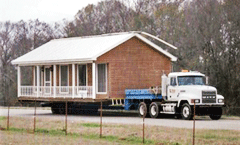
(Photo credited to www.mobilehomequest.com)
About the Author




Comments