


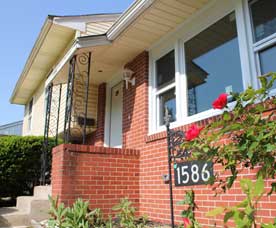
What’s Good For Kent County Is Good for Its Low-Income Homebuyers
Leveraging Diamond State’s community land trust model to make NSP funds serve a dual purpose — stabilizing neighborhoods in the short term and providing a permanent affordable housing solution over the long haul — has proven especially beneficial to Kent County.
In Kent County, even though the foreclosure crisis has reduced housing prices to some degree over the last three years, home prices countywide are still far more than most families can afford. Median home pricing in Kent County is 49 percent higher than in 2000.
For a family at 60 percent of area median income, the affordability gap in Kent County is $48,000. What working families can safely afford are homes priced at $120,000 and below. That’s what Diamond State offers. CLTs lower the price of homes well below the prices for conventional (fee-simple) homeownership, and often even below traditional affordable homeownership. This helps foreclosure-riddled communities recover by helping families into homes they can truly afford.
Buying a home from a CLT also gives low-income buyers some consumer confidence even when the market is at its worst. Propsective low-income buyers have seen what happens in the free market where folks have been encouraged to borrow more than they can afford and under terms that are not sustainable. Low-income buyers are more jaded because they know at their economic strata, virtually no one is looking after their best interest. CLTs have a special value proposition for these buyers. Diamond State found out that in the midst of the crisis, prospective buyers expressed how they believed the CLT had their best interest at heart and wasn’t offering them something that was too good to be true. Diamond State’s reassurance that they’d maintain a relationship with the buyer has also proved incredibly comforting during the sell cycle.
That relationship matters: A 2010 survey by the National CLT Network and Vanderbilt University found that land trust homes have a foreclosure rate of 0.46%, which is one-tenth of the national average (4.63%) for homeowners of all incomes. (See SF, Fall 2010, “Stewardship Works.”)
CLT buyers also build equity in a safer way. As described in NHI’s Homeownership Today and Tomorrow, based on research by the Urban Institute, a cross section of shared equity homeownership programs, including the community land trust model, generates wealth building opportunities for lower income families at the same time as maintaining a stock of affordable owner-occupied housing. Low-income families who participated in these programs, the research found, realized the financial benefits of homeownership with less risk of losing their homes to foreclosure.
About the Author


Comments