

The Road Less Traveled: Funding a Land Trust with NSP

In Delaware, a partnership with Diamond State CLT let Kent County leverage NSP money it wasn't originally sure it had the capacity to use at all into permanently affordable housing.

Scott Gleeson Blue

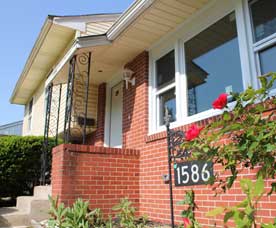
This Dover, Delaware, property is one of 15 homes for sale under the Kent County & Diamond State CLT NSP partnership.

Diamond State staff, having many years experience in purchase/rehab/for-sale programs and neighborhood stabilization and revitalization, understood the limitations of NSP. They began working to help the state make the most of its NSP allocation by enlisting partners, including Discover Bank, New Community Partners, and Morgan Stanley New Markets, and creating a plan to leverage up the $19.6 million into a statewide working pool of $55 million for use in the hardest hit neighborhoods. This coalition was one of few groups nationwide looking to leverage NSP in this way.

As Diamond State educated the five jurisdictions on its plan to benefit the entire state, Kent County recognized the power of the financing mechanism to multiply its portion of the NSP funds. They also saw the advantage of the CLT model and what it could do for them in terms of permanently affordable homeownership and cost-effectiveness of public investment. Residential community land trusts hold land in perpetuity, preserving public investment and passing it on in the form of continued affordability to the next generations of homeowners. Diamond State’s current statewide inventory of 24 permanently affordable homes is preserving more than $2 million in public investments.

In Delaware, 15 years from now, there will be no lingering effect from the millions of invested NSP funds except those homes preserved through the CLT model. Kent chose the path less traveled — but one they believe to be a wiser one, keeping NSP dollars working for Kent County families generation after generation.

“Diamond State showed us that if we invested our funds using the community land trust model it would also equip us to fortify and perpetuate our affordable housing stock for decades. It was a rare chance to make a big, long-term difference for our county and we took it,” says Keifer.

  • The front of a large concrete building with many exterior windows. Large capital letters on the top of the building read DEPARTMENT OF HOUSING AND URBAN DEVELOPMENT.

    HUD’s FY 2027 Spending Bill Funds Vouchers—But Would Make Them Harder to Get

    June 17, 2026

    While not adjusting for inflation, the White House’s FY 2027 budget request otherwise maintains HUD’s Housing Choice Voucher funding, but proposed policy changes would make it harder for families to access and maintain assistance.

  • A white man with curly hair and a short beard, wearing a black sweatshirt and tan Carhartt pants, hands supplies to a white man with a close-shaved head and short beard, wearing a black Vans sweatshirt, and checkered red-and-black pajama pants. They are standing in the interior doorway of an apartment in what appears to be a residential building. A white woman with strawberry-blonde hair, wearing a checkered shirt and dark pants, stands behind them, holding a pen and papers in her hands.

    Unsupported Housing: When Stability Isn’t Enough

    June 16, 2026

    As the country’s mental health, substance use, homelessness, and affordability crises collide, traditional affordable housing providers say they’re being pushed to fill the gaps left by underfunded supportive systems—without the money, staff, or resources to do so.

  • A group of unhoused people congregating along the perimeter of a public park. Some people are carrying backpacks and loose clothing. A bus stop and a shuttle bus can be seen in the background.

    Will the World Cup Fuel Arrests of Homeless People in Atlanta?

    June 12, 2026

    As World Cup matches begin, advocates warn that Atlanta is on track to repeat the arrests, displacement, and criminalization of homeless residents that drew criticism during the city's 1996 Olympics.