


Tag
mixed income housing
The Latest

Free Land, Retail Rents, and Other Ways Cities Are Cutting Reliance on Federal Housing Funds
Though the federal role will always be necessary, local governments, and developers themselves, are looking for ways to develop affordable housing with less federal subsidy. Here are some of the approaches they are trying.
Search & Filter Within this Topic
filter by Content Type
filter by Date Range
search by Keyword

A D.C. Neighborhood’s Transformation From “Chocolate” to “Cappuccino”
To longtime residents of D.C., the findings presented in Derek Hyra’s Race, Class, and Politics in the Cappuccino City—that gentrifying neighborhoods’ racial and economic diversity does not translate into integration—is likely not surprising.
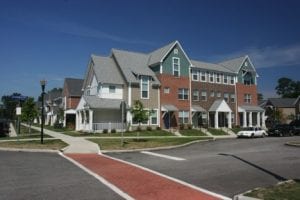
20 Years Later, What HOPE VI Can Teach Us
Affordable housing programs are at great risk of elimination under the current administration. In this uncertain climate, what can we learn from a program that leveraged private interest while aspiring to be a protector of affordable housing?
The Challenges of Economic Integration
Is it more important to have mixed-income buildings, or to give more people access to mixed-income neighborhoods?
Addressing Social Segregation in Mixed-Income Communities
In some newly created mixed-income, mixed-race communities, we are witnessing “diversity segregation,” where people of different backgrounds, races, ethnicities, and incomes live next to one another but not alongside one another.

Build Mixed-Income Housing–But Not in Isolation
A focus on housing connected to education and wellness will be needed to break the cycle of intergenerational poverty.

Don’t Build Mixed-Income Communities, Buy Them
Building when you could buy is inefficient—and contributes to economic segregation.
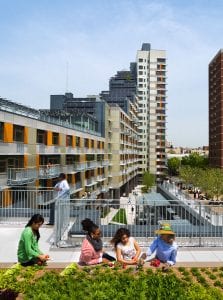
Making Mixed-Income Developments Work
A single development with an intentional income mix involves very specific challenges—both in its design and its management.
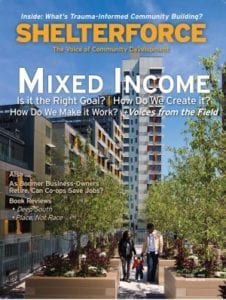
Mixing It Up
Compared to the worst examples of urban design that have physically isolated low-income families, mixed-income housing seems like an intuitively healthier, more equitable way to go about designing neighborhoods.
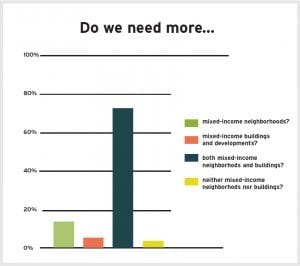
Voices From the Field: Mixed Income
Do we need more mixed-income housing? Why or why not? The following data and observations were collected via a survey we conducted from late January through mid-February, distributed via Shelterforce Weekly and social media.
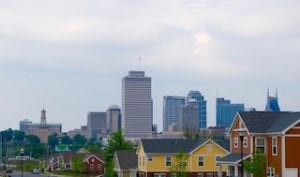
Bigger Forces at Play
If social inclusion and the creation of mixed-income neighborhoods is embraced by so many, why does it seem to be so difficult to materialize this vision for the city? Let’s look at some examples.
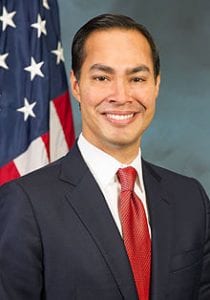
Interview with HUD Secretary Julian Castro
Shelterforce got a chance to speak with Secretary Julian Castro about some of the current ways in which he’s working to make HUD a force for good in people’s lives, and what steps there are left to be taken.

Can San Francisco Get Mixed-Income Public Housing Redevelopment Right?
The HOPE SF program is aiming to explicitly avoid many of the problems mixed-income public housing redevelopments have faced, to create a truly inclusive process.