


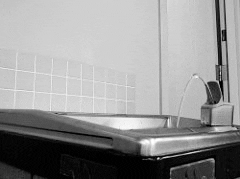
 How far does the Environmental Protection Agency's (EPA) denial about leaded drinking water go? This week, I was having tea with a friend who had been an intern at the EPA in 2012. She recalled a story of starting to drink from the water fountain in the hallway of EPA's DC office, when her colleagues began shouting at her, “Stop, don't drink that water!” I know this seems incredible, but doesn't it make sense in a weird way? EPA had a drinking fountain in their own DC office that had lead pipes that they hadn't yet cleaned up in 2012. Now it sort of makes sense that they delayed so long on Flint, Michigan's water in 2015. If you can't even clean up your own house, how can you clean up anyone else's?
Earlier this year, lead-tainted water was found in water fountains in the Cannon building, a congressional office building right next to the Capitol. Rep. Dan Kildee (D-MI) said, “It's long past time that Congress get serious about this health threat. Helping Flint families ought to be as much of a priority as ensuring safe water on Capitol Hill.”
The EPA's dysfunction about the need to take quick action when lead, PFOAs or other chemicals are discovered amounts to a state of denial. We have a drinking water crisis in our country, and the sooner EPA admits the severity of the problem, the sooner they can start to find an adequate solution. Entire drinking water systems are unable to deliver clean, safe drinking water at a decent cost in Flint, Michigan; Toledo, Ohio; Merrimack, New Hampshire; Hoosick Falls, New York, and many other cities. When you're planning a vacation these days, you had better do a search to find out if your destination has safe water—in the USA, not the third world.
Then, we have the crisis in school drinking fountains in Ithaca, NewYork, Chicago, Illinois, Los Angeles, California, and countless other school districts. There are school janitors whose duties include running water through drinking fountains for a certain number of minutes every morning to clear the polluted water.
What is stopping our presidential candidates from declaring that they will get the lead out of every school drinking fountain in America and that safe water will be a priority for the new administrator they appoint to EPA? That commitment would do more to leave No Child Behind than any testing program.
(Photo credit: Rishabh Mishra via flickr, CC BY 2.0)
About the Author


Comments