


 Since we recently had bloggers squaring off on the question of whether expanding homeownership really is an important policy priority in and of itself (Alan Mallach: Yes, Tony Roshan Samara: No), I thought it was interesting to throw this New Yorker article into the mix—a reminder that many of our tax subsidies ($200 billion a year folks) don't really increase our homeownership rate compared to similar countries without them, they primarily increase the size and cost of our housing. Is that really the American Dream? As the author writes:
It’s only when you think of all the other things that we could be spending that money on—education, say, or technological or medical research—that the real cost of our addiction to housing becomes clear.
(Mind you, I think he means our addiction to homeownership, or perhaps to housing as an economic driver. Housing as a whole we aren't doing so great with, and it's hard to argue we're addicted to a necessity. We should pay more attention to housing, not less, but in different ways—ways devoted to stabilizing families, not trying to goose the economy. Reforming the mortgage interest deduction and using the savings to fund the National Housing Trust Fund would be a splendid start.)
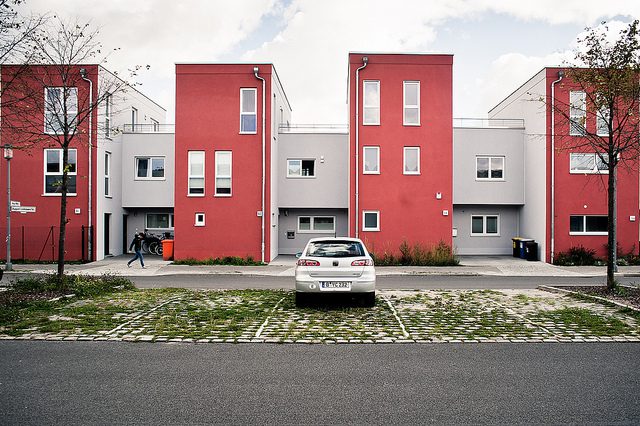
Meanwhile, Germany, a country with a fairly low homeownership rate, has decided to stop bellyaching about displacement in rapidly appreciating urban neighborhoods and do something about it. As CityLab writer Feargus O'Sullivan reports, they care about having mixed income neighborhoods and feel that displacement would be a loss to everyone. They already have rent stabilization, but there are loopholes for major renovations—so if an area is in danger of losing its economic mix due to to rising rents, cities have started designating them as zones where you can't do luxury upgrades like adding balconies or guest bathrooms. This is likely hard for property-rights steeped Americans to even imagine, but the point is that if there is a political will, there are policies to address displacement. And sometimes it helps to look to other places that don't have the baggage we do about what's possible.
Photo credit: Flickr user Jonas_K, CC
About the Author


Comments