


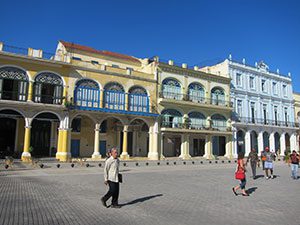
Joe Kriesberg of Mass. Assoc. of CDCs recently took a trip to Cuba with a group of community development colleagues. He's written up his varied observations of that unusual island under the cautionary headline “Enjoy My Country, But Don't Try to Understand It.”
If you have been feeling like everywhere is basically the same, tired of hearing the same old storylines and problems from everywhere, check out his account of a place where you can't even quite always tell whether someone is a homeowner or a renter.
Personally, I was fascinated by this observation: “Our self-defeating embargo policy is giving our competitors a big head start in Cuba. That said, the U.S. Embargo is also providing the breathing space for Cuba to figure out how to manage foreign investment before it must confront a massive wave of American capital.”
It made me wonder if there is some kind of analogy between this poor, disinvested country, and poor, disinvested neighborhoods here. Do our struggling neighborhoods do better with the breathing space to ease into receiving needed outside investment gradually, having the time time figure out how to manage it with community planning and anti-displacement measures and community benefits organizing, for example, rather than suddenly having the spigot on full throttle?
If so, what would be the public policy implications?
Thoughts?
(Photo by Joe Kriesberg, renovated buildings in Havana.)
About the Author


Comments