


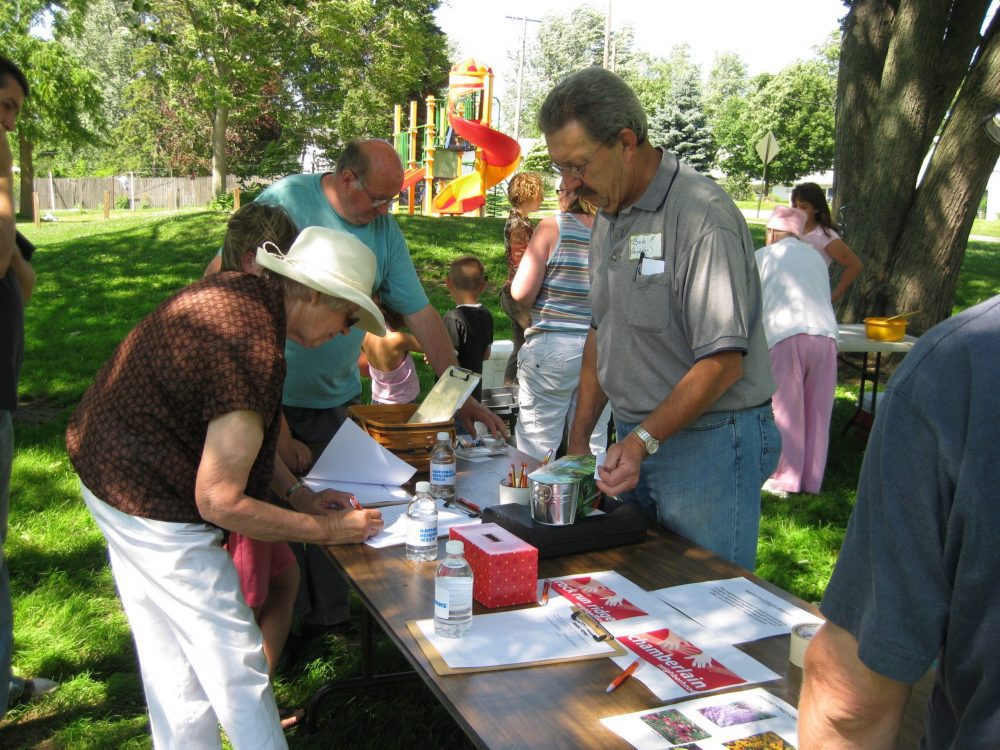
In community development's formative years, it would have been unthinkable for a nonprofit housing organization not to have a grassroots membership and not to have a governing board elected in whole or in part by that membership. It was universally accepted as an article of faith that people most directly affected or directly benefited by the organization’s work should have a favored place among the organization’s members and directors.
Times have changed. Many nonprofit developers that started out with deep roots in their communities have allowed those roots to wither. They now lack an engaged membership and elected board. Many others retain the formal structures of community involvement, but they no longer do much to organize, mobilize, or involve the surrounding community in the organization’s activities.
That is not true everywhere. Many community development corporations, community land trusts, community development financial institutions, and other nonprofits remain faithful to the democratic precepts that were once ubiquitous among organizations developing low-cost housing or redeveloping low-income communities. Some of these organizations take community involvement a step further, recognizing that neither an open membership nor an elected board is sufficient to ensure regular and active participation by a community’s residents. So they look for additional ways to raise their public profile, to expand their local base, and to energize the people they serve.
The twin challenge of community engagement is how to draw residents through the organization’s door—and how to keep them coming back for more. Over the years, I’ve compiled lots of lists of strategies and activities that can be used by CDCs and CLTs to recruit and retain volunteers. I’ve given lots of advice. When all my pontificating is stripped down to its bare essentials, however—or, as my neighbors would say in Vermont, when it’s all sugared off—what is left is a rather simple set of commonsense rules for community engagement.
VARIETY: Meetings are not for everyone, especially night meetings. Give people many different ways to participate. Vary the activities, times, and places, so that anyone can find something that is interesting, comfortable, and convenient to do.
SIMPLICITY: If your goal is to recruit lots of people, the tasks they are asked to do must require no skill or allow quick mastery with less than an hour of training. The more complicated the task that volunteers are asked to do, the fewer the people who will volunteer to do it. Keep it simple.
CLARITY: Surprises are scary; unknowns are intimidating. Volunteers want to know when an activity will start, what it will entail, when it will end, and how much will be expected of them. Make it clear.
BREVITY: People are more likely to volunteer for tasks of limited duration than for those that require an open-ended commitment. Ask for a little time, at least at first. Keep it short.
PROXIMITY: Engagement begins at home. People are more likely to volun-teer for activities that improve conditions within their own neighborhood, touching the lives of people nearby. Start local.
FAMILIARITY: People come out and hang out with people they already know—or want to know. They need some sense of who’s going to be there before they show up. They need to be welcomed when they walk through the door. They must feel like they belong.
UTILITY: People want to be of use. They want the time they contribute to be productive, to add value, to make a difference.
LEVITY: People are willing to do serious work, but they want to chuckle while doing it, especially as volunteers. Keep it light. Make it fun.
COURTESY: People want to be appreciated for the precious gifts of personal time they have generously donated. Give lots of recognition. Say thank you.
More from Shelterforce:
-
Volunteerism in Community Development, by Susain Naimark, Shelterforce #161, Spring 2010
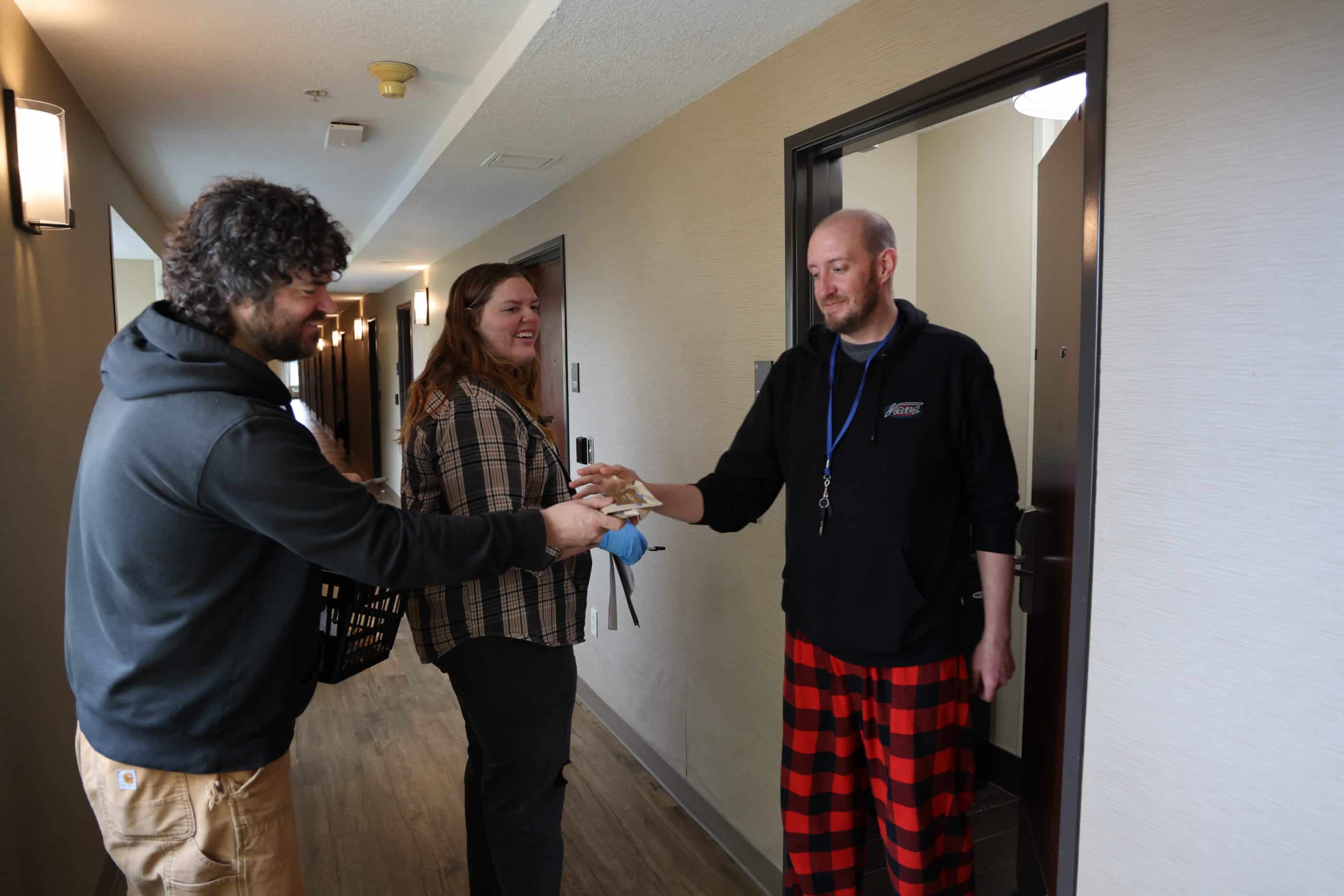
Photo courtesy of La Casa of Goshen, Goshen, Ind.
About the Author



Comments