


The ideas of Friedrich Hayek (1899-1992) are making a comeback, in large part due to Glenn Beck, who has touted the libertarian economist and philosopher’s views on his TV show. The essence of Hayek’s views — spelled out in his most well-known book, The Road to Serfdom — is that government stifles freedom and liberty. With a few exceptions, he viewed almost any governmental intervention in economic affairs as a slippery slope toward totalitarian socialism. No wonder that Beck has been hawking Hayek.
Now comes Francis Fukuyama, the neoconservative political scientist, who uses the pages of The New York Times Book Review to hawk his own version of government-bashing. Unfortunately, Fukuyama, who claims to be something of a student of Hayek’s ideas, hasn’t done his homework.
In his review of the new edition of Hayek’s The Constitution of Liberty, published in the Review on Sunday (May 8), Fukuyama off-handedly comments that three of Hayek’s ideas “have become broadly accepted by economists.” But it so happens that economists don’t agree on these three ideas. Moreover, the policy conclusions that Fukuyama draws happen to be untrue.
First, Fukuyama claims that “labor unions create a privileged labor sector at the expense of the nonunionized.” It is true that unionized employees earn better wages and benefits than their nonunion counterparts, even those with comparable experience and education. But economists know that it is also true that unions raise wages and benefits for nonunionized workers. The higher the “density” of union workers in an industry or area, the more likely it is that employers will increase the wages and benefits of nonunion employees in order to stave off a union drive. Thus, unions lift the floor for everyone, not just union members, contrary to Hayek.
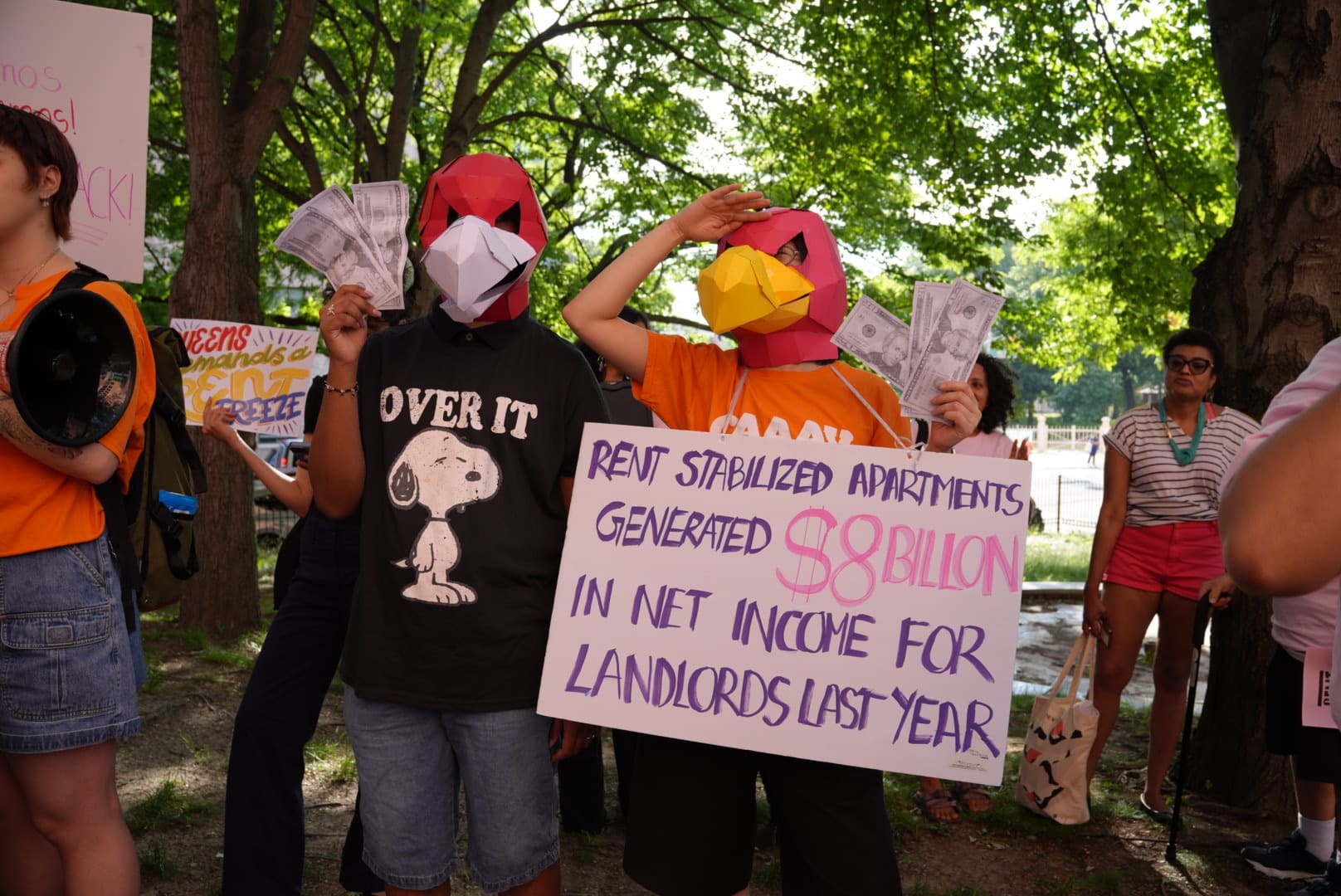
Second, Fukuyama claims that economists agree with Hayek that “rent control reduces the supply of housing.” Economists differ on the wisdom of price controls in general, but it helps to test economist theories in the real world. There is absolutely no empirical evidence for the statement that rent control — which some cities use to maintain a supply of affordable housing — reduces the housing supply in general or even rental housing in particular. Every study of rent control in U.S. cities (except those funded by the real estate industry) — including those that compare similar cities with and without rent control — shows that rent control has no impact on either the level of new housing construction or the level of housing abandonment. Local rent control laws exempt new construction and allow landlords to raise rents annually based on expenses. Cities with various forms of rent control are often in “hot” markets in which developers want to build rental and other forms of housing. The evidence is clear that rent control does not dampen private investment.
Finally, Fukuyama claims that economists agree that “agricultural subsidies lower the general welfare and create a bonanza for politicians.” Again, there is no evidence for this statement. The impact of farm subsidies depends on who gets them, what they are used for, and the general economic condition of the period. During the Depression, subsidies saved many family farmers from going under, helped stabilize prices, and kept entire farm communities, and the nonfarm jobs that depended on agriculture, alive. Today, the vast majority of federal farm subsidies go to large agribusiness conglomerates like Archer Daniels Midland and Cargill that don’t need them rather than small family farmers. President Obama campaigned on a pledge to limit individual farm payments to $250,000 to ensure family farms and not “corporate agribusiness” got the money. This is still a good idea. But food stamps, which are an indirect subsidy to farmers, clearly improve the general welfare by dramatically reducing the incidence of hunger and malnutrition.
Hayek’s ideas may be making a comeback, as Fukuyama asserts, but it is not because his economic ideas have been proven correct by empirical research, but because they’ve been promoted by the likes of Glenn Beck to justify a conservative ideological and political agenda.
If conservatives don’t like labor unions, they are entitled to their opinions. But when they attack unions by arguing that they actually hurt working people, they don’t have the facts on their side. They are crying wolf.
Echoing Hayek and Beck, the U.S. Chamber of Commerce, House Speaker John Boehner, Rep. Darrell Issa, and the Tea Party can fulminate all they want that government policies to make corporations behave more responsibly — such as the minimum wage, consumer and environmental protection laws, rules to improve workplace safety, regulations to restrain Wall Street abuses, and health care reform — are “job killers.” But repeating this libertarian mantra doesn’t make it true.
Editor’s Note: A version of this article first appeared on Huffington Post
About the Author



Comments