




At the Center for Architecture in Manhattan’s Greenwich Village, two teams are presenting projects under the umbrella of “Repair – Democracy and Urban Spaces.”
The exhibition explores New York City’s environmental needs, particularly those in a changing climate. That includes faulty infrastructure—polluting peaker plants (energy plants that operate only when demand for electricity spikes) and sidewalks that flood when it rains, for example—and the unequal ways it affects residents.
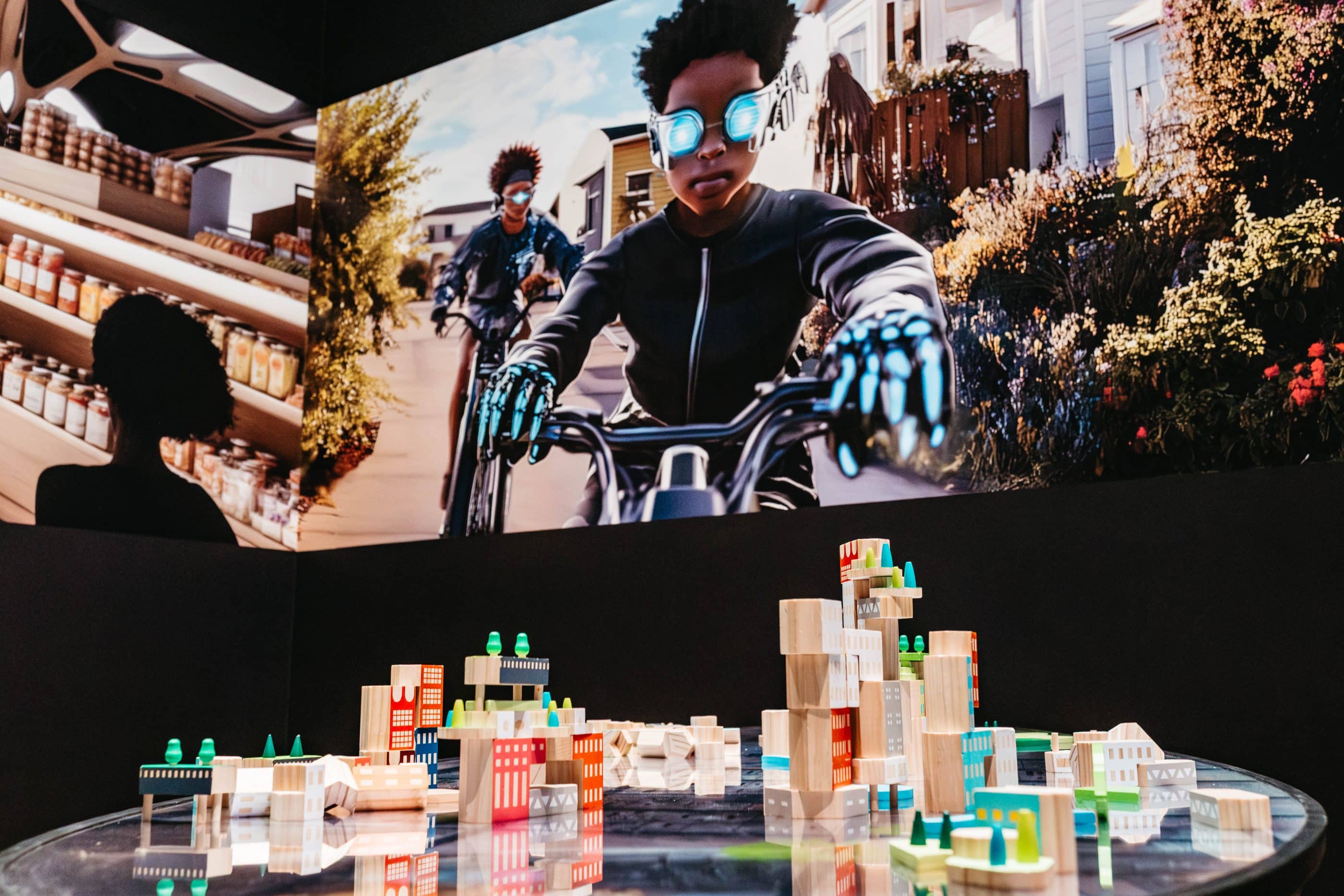
Pictured above are photos from “Energies of Repair: Visualizing Community Power in NYC,” by Andrea Johnson and Ashley Dawson. The other project on view at the Center for Architecture is “DEPAVE: An Ecological Repair of the Ground,” created by Amelyn Ng, Christine Giorgio, and Gabriel Vergara of Friends Making Work.

Dawson, an author and activist who teaches postcolonial studies at the City University of New York, says he wants to familiarize visitors with the just energy transition. “The energy system is the biggest machine arguably ever invented by human beings, and yet it’s pretty invisible. Most people, when they turn on the lights … don’t think about where the power comes from,” he says. “The energy system is the prime driver of climate change, and so the fact that people are so ignorant of the system is driving, basically, the planet over the brink toward apocalypse.”
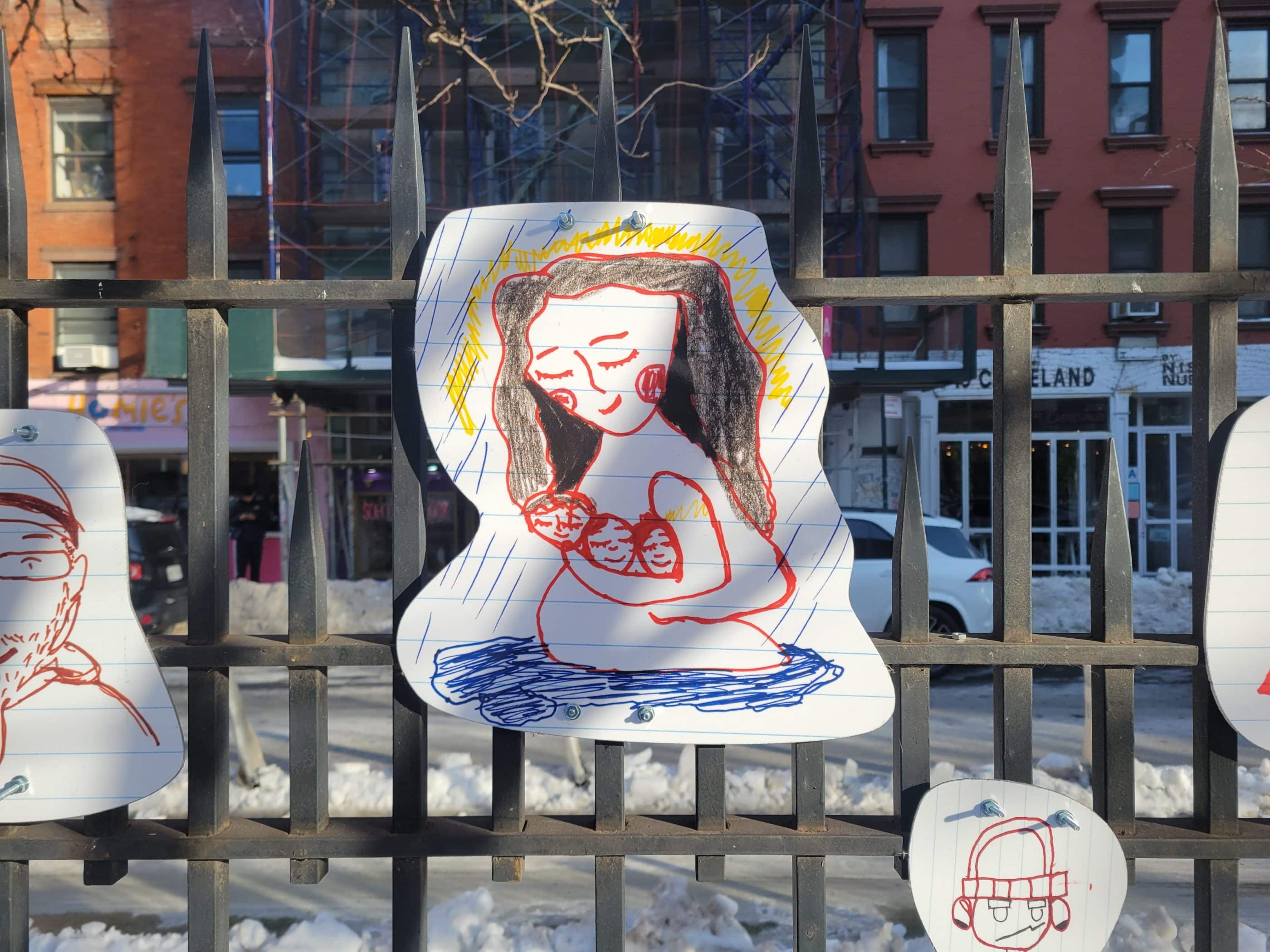
Dawson and Johnson’s exhibition is a multimedia mix of collages, paintings, videos, and maps. A custom tarot deck that illustrates the dynamics of community power in the city is one memorable fixture. New York Gov. Kathy Hochul sits as the “empress” at the top; at the bottom are cards labeled “The Blackout” and “The Squeeze” (rising energy bills). Youth from THE POINT Community Development Corporation in the South Bronx painted larger versions of images from the tarot cards for the exhibit. Around the room, multiple collages represent different neighborhoods in which community groups are responding to environmental challenges through innovation and organizing.
Johnson, a planner and designer, met Dawson through their work in the state public power movement, which advocated for the Build Public Renewables Act. The law, which was enacted in 2023, tasks the New York Power Authority with developing wind and solar projects, ensures these renewable energy projects are publicly owned, and requires the closure of multiple peaker plants in the city.

Despite their momentum, the climate and public power movements in the state have faced recent setbacks. In May, the state budget partially rolled back the 2019 Climate Leadership and Community Protection Act, relaxing its emissions guidelines and pushing back the deadline to reduce fossil fuel use. Hochul has been frequently criticized for failing to do her part to meet New York’s climate goals, and the implementation of the Build Public Renewables Act has stalled.
“My hope is that people will get more active … We also need to hold the elected leaders’ feet to the fire,” Dawson says. “We really wanted to draw attention to how Governor Hochul is taking us in the wrong direction around energy transition.”
Johnson is also part of the Renewable Rikers movement, one of the three locations spotlighted in the exhibition. The artists hosted tours of each of these locations, including a walk-through of Hunts Point, a neighborhood across the water from Rikers Island. Dawson says that one of the tour attendees was formerly imprisoned on the island and is now part of the Renewable Rikers campaign. The movement advocates using the land on Rikers Island for green infrastructure after the jails there are permanently closed.
The jails at Rikers Island are built on top of a landfill, and the island is considered hazardous. It’s one of multiple places in the city where people have been forced to live with threats to their health. In the Bronx, peaker plants and major thoroughfares contribute to pollution. Often, this kind of infrastructure is located in neighborhoods with many low-income, Black, and brown residents.
“I think people are familiar with the idea of noxious infrastructure being sited in low-income Black and brown neighborhoods … but I don’t think the general public would understand the extent of how policymaking … and urban planning [have] been complicit in that,” says Johnson.
The exhibition will be on view through Sept. 2, 2026.
About the Author


A better iptv avrupa experience comes from better setup confidence for customers.
very informative articles or reviews at this time.
I really like reading through a post that can make men and women think. Also, thank you for allowing me to comment!
Good post! We will be linking to this particularly great post on our site. Keep up the great writing
This was beautiful Admin. Thank you for your reflections.
I just like the helpful information you provide in your articles