



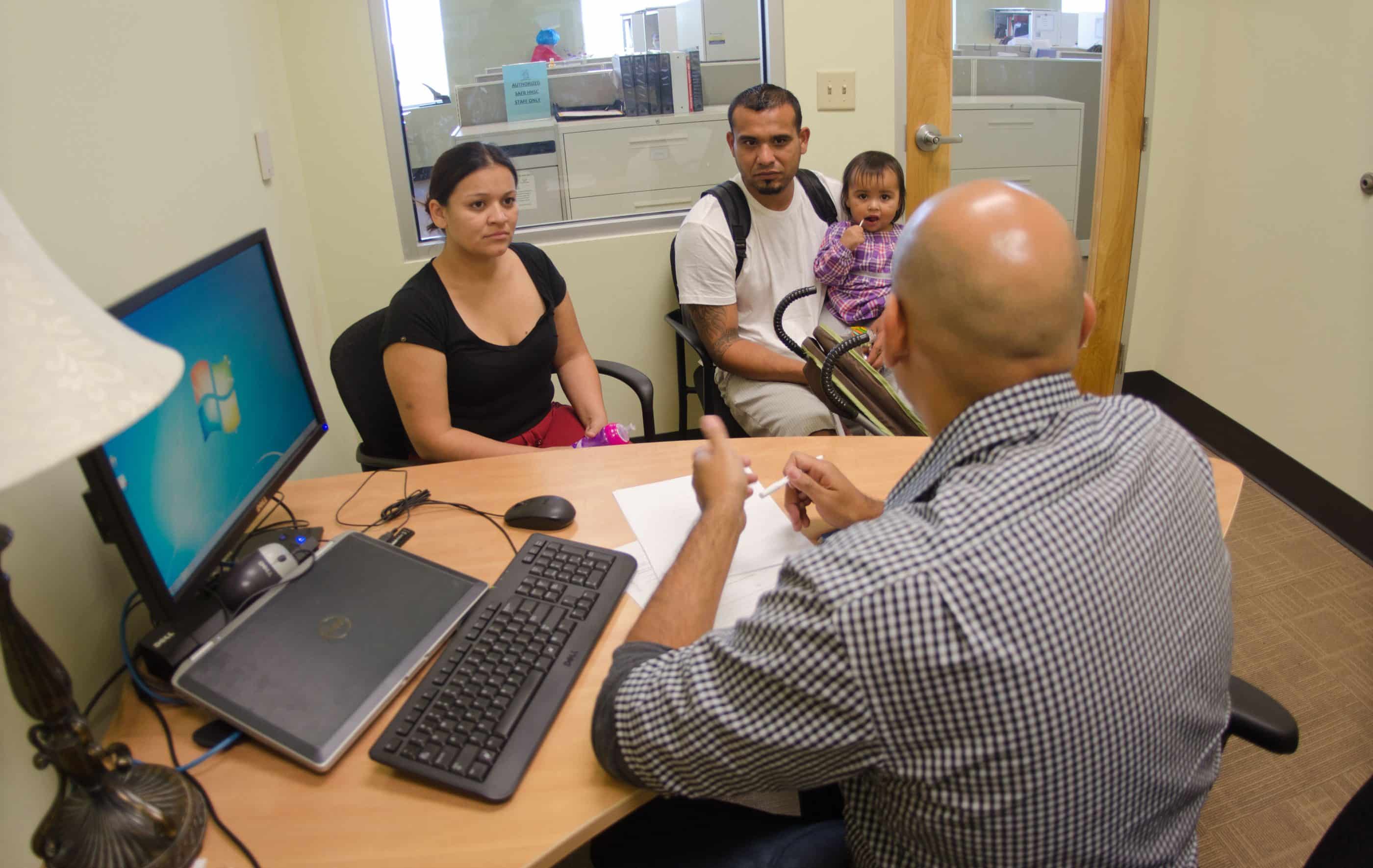
As a volunteer with the Asian Community Care Organization, I help seniors navigate their housing applications through the nonprofit’s centralized phone system. Even though we don’t typically meet in person, the distance has never dulled the human connection. Through regular remote check-ins, I have come to know the stories, the fears, and the quiet resilience of Chinese immigrants who live in New York.
“Thank you again . . . I feel bad to bother you so much,” Ms. T says softly during one of our calls. Every two weeks, she calls us to check her NYC Housing Connect account to review the results of the latest housing lottery. That’s because once selected, applicants have only 10 business days to respond or they lose the opportunity. So far, Ms. T has never been selected. Yet she keeps applying for newly released affordable housing opportunities, hoping that one day she will.
Before we start, she always apologizes. I reassure her each time: there’s nothing to be sorry for. We never know when luck will arrive. But every click brings the same disappointment. “If I ever win . . . I just want a small, quiet space where I can finally belong,” she says.
Ms. T is nearly 70 and is of Chinese descent, speaking almost entirely in Mandarin. She lives in a tiny, subdivided room in Flushing, Queens, barely large enough for two single beds. The rent, $700 a month, eats up almost 80 percent of her fixed income. She survives by doing odd jobs like cleaning houses, and holding on to the hope that she’ll one day find a place of her own.
Ms. T’s story is far from unique. There are more than 520,000 applications for affordable senior housing in New York City, and another 220,000 applicants seeking affordable senior units through the city’s Housing Connect lottery system, according to a report by LiveOn NY.
A significant portion of New York’s aging population are Chinese-speaking seniors with limited English proficiency. Many of them live in neighborhoods like Flushing and Chinatown, where rising housing costs, low incomes, and language isolation converge to form a persistent and multilayered housing crisis.
For Chinese immigrant seniors, housing equity is not only about affordability; it is about being seen, heard, and included.”
At the Asian Community Care Organization, the needs of Chinese-speaking seniors are especially visible. Most of the seniors we serve are over 70, monolingual, and unfamiliar with digital tools. They often cannot read or understand English notices, and they worry that a single missed message or call could cost them their chance at affordable and stable housing through Housing Connect or NYCHA, the city’s housing authority.
We help seniors like Ms. T fill out Housing Connect applications online and register for NYCHA housing, and we translate documents and guide them through critical follow-up steps, such as renewing NYCHA applications every two years or checking Housing Connect accounts every two weeks to avoid missing time-sensitive selection notices.
In this work, we are not just translating language; we are interpreting entire systems, serving as both buffer and bridge for seniors who would otherwise be left behind.
While the housing application system in New York doesn’t explicitly exclude Chinese-speaking seniors, it silently expects them to adapt to structures that were never designed with them in mind. While some affordable housing projects in New York City do offer a Chinese-language option on their websites, the application system still assumes a certain level of digital literacy. For example, with both the NYC Housing Connect platform and NYCHA, registration requires an active email address for application submission and subsequent communications.
However, through my volunteering experience, I’ve spoken with many seniors who speak Chinese and do not have access to email. Using the internet and email is not a part of their daily life. They may not own a smartphone, have internet access, or know how to use it if they do have it. So while the application may be provided in their language, the system does not provide the necessary tools for some seniors to move forward. It’s like handing someone a map in their native language, but not the car to get there, or them having a car but not knowing how to drive. The system’s digital expectations are accelerating the marginalization of older immigrant communities.
Another senior, Ms. L, told me her friend was dropped from a housing waitlist because she didn’t understand how to submit documents after being selected. Stories like this reflect how easily the system leaves older immigrants behind.
To address these gaps, several community-based organizations like ours have stepped in to fill the void. For example, the Chinese‑American Planning Council offers senior center services that include case management, benefits and housing application assistance, and translation/interpretation support for clients navigating complex systems. Likewise, Asian Americans For Equality provides housing counseling and senior support programs, including help with rent subsidy applications and translation services.
Despite their efforts, many community-based organizations rely on unstable funding, are stretched thin across multiple services, and cannot provide assistance to the rising number of people who need it. This mismatch between need and available support is further compounded by city and state policy that rarely considers digital inclusion, linguistic access, or cultural familiarity.
Older Chinese immigrants have limited formal education and have remained largely invisible in policymaking conversations that prioritize market metrics—such as the number of affordable units built, or the speed of project completion. These conversations often ignore what it actually feels like for someone like Ms. T to try to navigate the housing system.
Layered on top of these oversights is a severe funding crisis. Financing for senior housing in New York continues to fall far below demand. At the same time, many existing senior housing buildings remain in disrepair. A state audit found that some apartments sat vacant for years, even as seniors waited on long lines for placement. NYCHA’s own reports reveal unmet capital needs in the billions of dollars, including delayed repairs for elevators, heating, and plumbing, due to chronic underinvestment in infrastructure.
As a result, far fewer units are built than needed, and the existing buildings often go without adequate renovations. Waiting times for HUD-funded senior developments, like those under Section 202, which specifically funds affordable housing for low-income seniors and other affordable senior programs, can last 7 to 10 years.
Meanwhile, NYCHA’s efforts to lease vacant apartments also face delays: turnaround times more than doubled to 399 days in 2022-2023, despite its official target of 30 days for re‑occupancy. In short, New York’s senior housing landscape is overwhelmed by long waitlists, crumbling infrastructure, and language barriers that persist despite token efforts at inclusion.
These studies underscore a truth I witness daily in my volunteer work with the Asian Community Care Organization: achieving housing equity requires not only structural investment but also policy systems that reflect the lived realities of the aging people they are meant to serve.
Addressing these existing gaps requires more than incremental adjustments. It demands multiple levels of change.
At the administrative level, housing platforms such as NYC Housing Connect and NYCHA should integrate low‑barrier access options for seniors, including paper applications in Chinese, mailed notices, and phone calls or mailed letters in the languages seniors are most comfortable with, not email alone.
At the service level, the funding for trusted community organizations like the Asian Community Care Organization, the Chinese‑American Planning Council, and Asian Americans For Equality should be increased to allow them to expand and enhance their housing navigation services. These organizations are already embedded in the communities they serve, supporting seniors through housing applications, translation, and outreach. With more resources, they can scale their services and reach more seniors who otherwise must navigate the system alone.
At the systemic level, the senior housing pipeline needs targeted investment, not only to build new units, but also to restore long-vacant apartments and complete long-delayed repairs; bringing neglected buildings back into use is just as important as constructing new ones. These actions are essential to shortening waitlists and bringing more seniors into safe, stable housing in a timely manner.
Finally, at the policy design level, Chinese immigrant seniors must be meaningfully included in the policymaking process, not only as recipients of services, but as stakeholders whose experiences shape how those services are designed. Without intentional representation, policy will continue to address symptoms without dismantling the underlying inequities.
Community-based nonprofit organizations like ours play an essential role in bridging the gap between policy systems and the communities they serve. However, staff and funding are limited, and lasting change requires more than grassroots efforts. To truly address structural barriers, city and state agencies must institutionalize this kind of support by creating multilingual outreach units, funding community liaisons, and ensuring that seniors’ voices are included at every level of housing policy design.
In addition, as technology continues to evolve, future improvements could include practical digital solutions, such as adding automatic multilingual notification features within existing housing application systems to remind seniors in their preferred language about renewal deadlines or lottery results. These types of technologies could help make housing access more inclusive and responsive to the needs of older adults.
These are not abstract concepts, but crucial initiatives to renovate the daily lives of seniors. For Chinese immigrant seniors, housing equity is not only about affordability; it is about being seen, heard, and included. During my conversations with them, what sticks with me are not statistics or housing codes, but the words of the women themselves:
“I probably won’t live long enough to move in.”
“My friend got picked, but did not know what to do, so she lost it.”
“Another waited years, got a unit, and passed away not long after.”
These are not bureaucratic glitches. They are the direct consequences of systems designed without taking into account the people they are meant to serve. To create equitable housing for Chinese immigrant seniors, we must think beyond affordability. We must build visibility into the language used, the timelines allowed, the access points offered, and the role of trusted organizations that guide seniors through the maze.
Until these changes take root, it is not the system but the quiet resilience of elders like Ms. T that will continue to carry them across the cracks where policy has yet to meet its promise.
About the Author


I hope the researchers that are studying the Chinese population in NYC are paying attention to the fact that there has been an explosion of Chinese residents living in various types of government sponsored housing developments in many various parts of the five boroughs and they are still increasing due to the fact that all of the NYC Chinese enclaves have all gentrified. Many are placing in applications for any affordable housing programs accepting applications and taking the offer if they are selected.
A lot of them are spread out in many parts of Manhattan and Brooklyn or either preferring to be wait listed for these developments due to many of them wanting the convenience to be able to transport themselves into Manhattan’s Chinatown or Brooklyn’s three large Chinatowns in Sunset Park, Bensonhurst, or Sheepshead Bay for their cultural shopping and errand needs.
Some in different parts of Queens. The Bronx and Staten Island, not too much but there are a few.