


When most Americans think of public housing, they think of failure. Crumbling towers like Pruitt-Igoe in St. Louis or Cabrini-Green in Chicago loom large in our collective memory as monuments to dysfunction, neglect, and abandonment.
But the notion that public housing was destined to fail is a myth—one that has disfigured housing policy for generations. The real story is both simpler and more damning: public housing in the U.S. didn’t fail. Rather, it was actively dismantled: starved of funds, stigmatized by the law and in the media, and handed over to markets that were never designed to care for it.
And yet, from the beginning, public housing in the U.S. was not merely a policy tool. It was a design project—an effort to express social solidarity in brick, steel, and open space. Its earliest examples dared to suggest that the poor deserved beauty, light, air, and dignity.
That aspiration still matters. Especially now, as we face an increasingly dire housing affordability crisis across the nation.
Public Housing’s Early Promise
When public housing emerged in the 1930s, it embodied a bold ethic: housing as a social right, not a market commodity. Architects, planners, and reformers treated shelter as essential infrastructure, and as a canvas for dignity.
Across the country, early public housing sought to integrate design with social mission. The best examples featured playgrounds, communal kitchens, and natural light—amenities designed to support not only physical well-being but social cohesion. In segregated and exclusionary housing markets, these developments often provided the first stable, decent homes for Black, immigrant, and working-class families.
This vision didn’t last.

Sabotage, Not Failure
By the mid-20th century, the very success of public housing became a political liability. As Black families gained access to these dignified spaces—spaces previously dominated by white tenants—the backlash was swift. In the Cold War era, public housing became entangled in racialized fears of integration and ideological panic over “socialism.”
The 1949 Housing Act’s commitment to providing “a decent home for every American” was gutted. Instead, federal funds flowed toward suburban homeownership for white families, while public housing in cities was subjected to budget cuts, red-baiting, and racial resentment. Maintenance funds were slashed. Resident services disappeared. Design standards collapsed under austerity.
By the 1960s and ’70s, the moral architecture of public housing—its attempt to give working-class people not just shelter but pride—was replaced with an ethos of containment. Towers were built cheaply and clustered in redlined districts, concentrating poverty and reinforcing racial segregation. Instead of integrating low-income families into the urban fabric, public housing was repurposed to segregate and surveil them.
If the mid-century retreat was slow erosion, the 1990s brought demolition. The 1998 Faircloth Amendment capped the number of public housing units nationally, effectively banning new federal construction. Since then, the U.S. has lost over 200,000 units, as reported by Shelterforce in 2021.
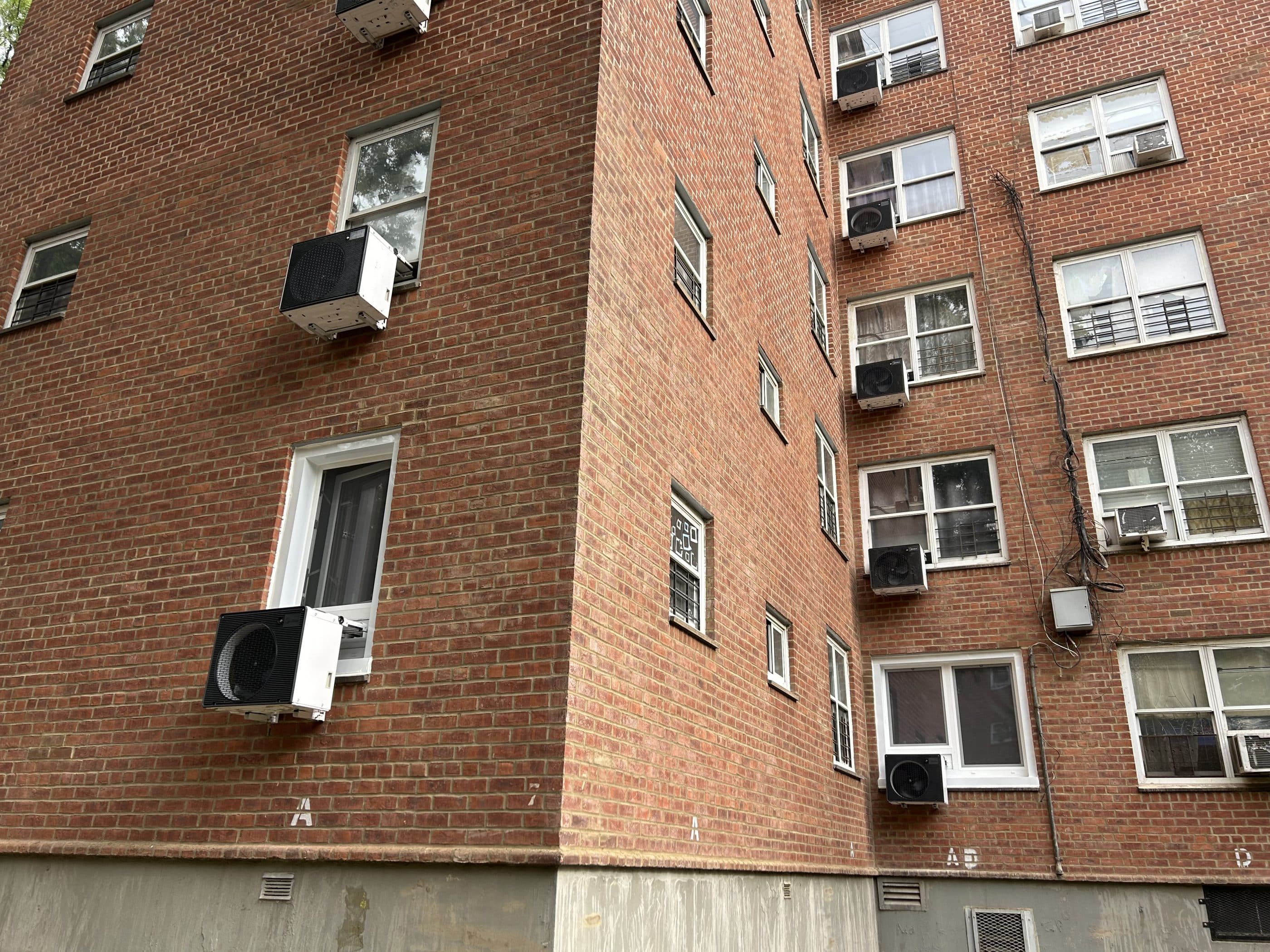
Today, approximately 877,000 public housing units remain, serving nearly 1.2 million residents. The units face a significant maintenance backlog, with the National Association of Housing and Redevelopment Officials estimating a $90 billion shortfall for necessary repairs and upgrades. This deterioration is further compounded by the aging infrastructure of many public housing sites, with numerous developments built over 50 years ago requiring complete redevelopment to address capital needs.
Public housing’s deterioration isn’t solely due to policy; it was also due to ideology. A bipartisan consensus emerged that only the private sector could be trusted to provide housing, even for the poorest. Public housing was treated as a failed experiment—one unworthy of repair or reinvention.
Instead of rebuilding a public system that centers care, policymakers embraced public-private partnerships and programs like the Low-Income Housing Tax Credit (LIHTC), which funds a majority of new affordable housing projects in the U.S., and the Housing Choice Voucher Program, also known as Section 8. These programs treat housing not as a right or a responsibility, but as an incentive structure. The result? A patchwork safety net, riddled with gaps, delays, and market failures.
A New Vision for American Public Housing
The U.S. already spends billions subsidizing housing—through tax deductions for mortgage interest, capital gains exclusions, and more. But these programs overwhelmingly benefit the wealthiest Americans. A fraction of that money redirected to public housing could transform lives.
And yet, reviving public housing will require more than allocating additional funding or repealing Faircloth. To truly change course, we need federal leadership to treat public housing not as welfare but as infrastructure—as essential and enduring as our roads, water, or schools.
Public housing demands a new ethic of care—manifested in how we design, govern, and value our housing systems. A future that’s worth creating includes:
- Scattered, integrated housing to weave affordability into the city’s core. This can happen with inclusionary zoning and by building social housing on public land.
- Sustainable, beautiful architecture that enhances—not stigmatizes—the urban environment. Think rooftop gardens, shared courtyards, art, and adaptive reuse.
- Resident governance that treats tenants as co-owners and co-planners, not as mere recipients of aid.
- Permanence—not time-limited tax deals, but generational investment in communities that last.
Care is not a soft word. It’s a radical design principle. It means collaborating, investing, and building as if the people who live in public housing matter—as if they belong. Because they do.
Dignity for Whom? Designing with Disabled People
If we’re serious about public housing rooted in care, we must ask: Care for whom?
Disabled people have always lived in public housing—but too often, they’ve been treated as an afterthought in its design. A 2017 HUD-funded study showed that nearly 44 percent of households receiving HUD rental assistance or public housing include a person who has a disability, highlighting the urgent need for accessibility and disability-informed services. And yet we have aging tenants and tenants who use wheelchairs or have other mobility limitations stranded in buildings without functioning elevators.
Recent research shows that autistic individuals account for a growing share of HUD-assisted households, but our public housing predates critical understandings of neurodiversity-sensitive design (e.g., calm lighting, clear spatial logic, low sensory load). This isn’t just about maintenance or retrofits. It’s about who gets designed into public life—and who gets left out, structurally excluded.
[RELATED SERIES: Not Just Ramps—Disability and Housing Justice]
Designing for dignity must design with disabled people as co-authors of the built environment. That means going beyond the bare minimum of ADA compliance. It means embracing Universal Design principles from the start—features that work for everyone, like level entries, wide doorways and sidewalks, visual and tactile signage, acoustic privacy, and shared spaces that neither overstimulate nor isolate.
There are already models that point the way. In Chicago, the Access Living building integrates community programming with universally accessible, affordable housing, including apartments specifically designed by and for disabled tenants. In Los Angeles, GLAD’s Deaf Affordable Housing Corporation provides housing specifically for deaf and hard-of-hearing people, with myriad resources available for tenants not typically available in other housing projects.
The future of public housing should build on these lessons. A new generation of public housing can co-design with disabled tenants from the beginning, not retrofit later, and design for aging in place, so that elders and disabled people aren’t forced out of their homes as their needs change.
If we want housing that affirms dignity by design, we must center the needs and imaginations of those most often excluded. Disabled people have always been part of our cities. It’s time we built as if their lives mattered, too.
Reclaiming Public Housing
The most damaging lie about public housing is that it was a mistake. But the mistake wasn’t building it. The mistake was abandoning it.
Public housing is not radical. It’s rational. We know that the market is not the solution to our housing crisis. Public housing done well can protect families from eviction. It can stabilize neighborhoods by reducing turnover. It can reduce homelessness by providing deeply affordable shelter, support health by reducing stress related to fears of displacement, and ensure that care is built into the bones of the city.
We can build homes that reflect our highest values. We can make room for everyone. The path forward demands bold, sustained commitment—recognizing housing as a fundamental human right, not merely a market commodity. We have the tools and knowledge to make this a reality, but it requires leadership from federal and local policymakers, organizers, planners, and housing advocates who are willing to put care and justice at the center of a reinvigorated public housing policy.
About the Author



Thank you for this well-written and passionate defense of public housing. The Faircloth Amendment is an immoral constraint on creating the kinds of communities we need in the 21st century. It should be repealed.
Hello Richard!
Thankk you for your article. We’re fighting for Elliott-Chelsea and Fulton Houses survival. We’re a large group and growing of advocates and neighbors of public housing. Your article lighten our spirits. Can I have you speak out our homeless and housing meeting, on the first Tuesday of every month @ 9:30A zoom? We’re also meeting and raising funds, planning events.
Please reach out to me to discuss. John Mudd, 917-520-3009, [email protected]
Richard, Thank you for this succinct and compelling argument for public housing. We have a small group of people here in Rochester who are promoting the idea that housing is a human right. We believe that we need to change the narrative around housing so that housing is seen as. human right a when this right is not honored many suffer and fail to flourish. As someone has said homelessness is not the problem, the lack of adequate and affordable housing along with appropriate support services is the problem.
Or small group is making presentations throughout the greater Rochester region in the hope we will help to change how people think about homelessness and housing vulnerability. I plan to share your article as widely as I can.
Richard, I’ve read your articles and would like to see if you can meet with an advocate and the mental health program coordinator at GLAD (Greater Los Angeles Agency on Deafness, Inc) to share your experiences living in public housing with people with disabilities. I can arrange the schedule and an interpreter.
Beautiful and forceful argument – thank you! As I recall from grad school though, the seeds of public housing’s demise were sown as early as the program’s creation in 1937. According to Housing Policy in the United States by Alex Schwartz, the federal public housing program we know today succeeded a smaller, more generous New Deal program. Schwartz’s discussion of public housing history cites a 1996 book by Gail Radford, “Modern Housing for America: Policy Struggles in the New Deal Era.”