Community Development Field

On the Cover: Transformation

So you may be wondering, what is that amazing mural on the cover of the latest issue of Shelterforce? It's called Transformation, and it was created by Chilean graffiti artist […]

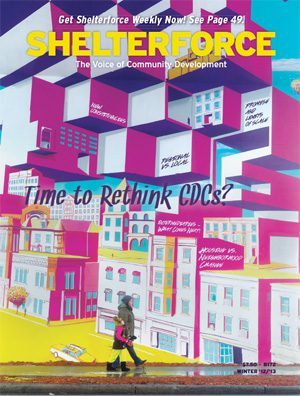
So you may be wondering, what is that amazing mural on the cover of the latest issue of Shelterforce?

It's called Transformation, and it was created by Chilean graffiti artist Dasic Fernández in Newburgh, N.Y.
Check out the site of the Newburgh Mural Project for some shots of the mural in process, and Fernández's own site for some pictures of the complete finished mural, which is far larger than the section featured on our cover. 

In fact, Transformation is a three-dimensional full-immersion mural spanning a whole bridge underpass and encompassing over 7,500 square feet of wall space.  The complete mural  features a profile of a woman merging with the Hudson River and transforming into the building blocks of a revitalized city, capturing the intimate connection between the individual and the built environment.

We wrote in our Third Spaces issue about the importance and use of public art across Philadelphia's neighborhoods. The Newburgh Mural Project (NMP), which commissioned Transformation, is operating under similar principles. NMP is a public/private art and education program launched in 2012. Its mission is to inspire the community by transforming public spaces into public works of art that reflect City of Newburgh’s spirit and vibrancy.  The NMP develops large-scale murals and provides local young artists with an opportunity to learn about mural-making.

In its inaugural year, the NMP selected Fernández to create three murals in the heart of the city’s distressed historic East End District. They were made possible by the International Institute for Education, with the support of the Ford Foundation and the Greater Newburgh Partnership.

Fernández has also been doing work in Newark, N.J., and Detroit.

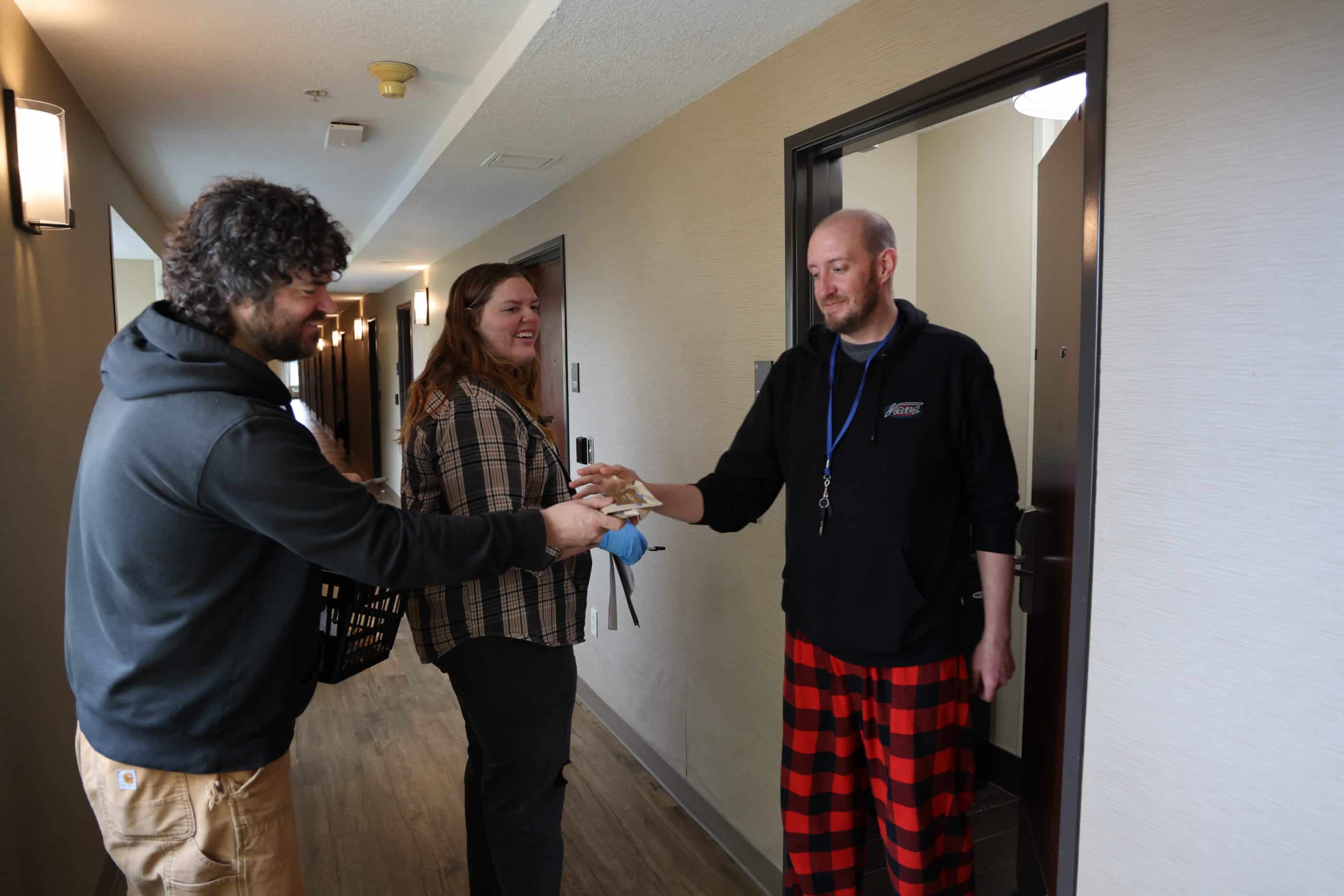
  • A white man with curly hair and a short beard, wearing a black sweatshirt and tan Carhartt pants, hands supplies to a white man with a close-shaved head and short beard, wearing a black Vans sweatshirt, and checkered red-and-black pajama pants. They are standing in the interior doorway of an apartment in what appears to be a residential building. A white woman with strawberry-blonde hair, wearing a checkered shirt and dark pants, stands behind them, holding a pen and papers in her hands.

    Unsupported Housing: When Stability Isn’t Enough

    June 16, 2026

    As the country’s mental health, substance use, homelessness, and affordability crises collide, traditional affordable housing providers say they’re being pushed to fill the gaps left by underfunded supportive systems—without the money, staff, or resources to do so.

  • A webinar screenshot of three people. In the top-left corner is a white man with gray hair and dark eyebrows; he is wearing headphones, glasses, and a checkered shirt, and his background is blurred. In the top-right corner is a Hawaiian woman with dark hair; she is wearing glasses and a black t-shirt, and she is set against a screensaver of a tree-lined field. On the bottom is a white woman with brown hair; she is wearing a green floral top and large earrings, and she is set against a screensaver background of the earth viewed from space.

    What Does a Solidarity Approach to Housing Look Like? A Shelterforce Webinar

    June 10, 2026

    In this webinar, we examine what a solidarity economy approach is, what its principles are, how these principles are being applied presently, and how they might be applied more broadly to support housing justice and transformative economic change.

  • Unlikely Partners: How Neighborhood Housing Services of Chicago Came to Be

    June 4, 2026

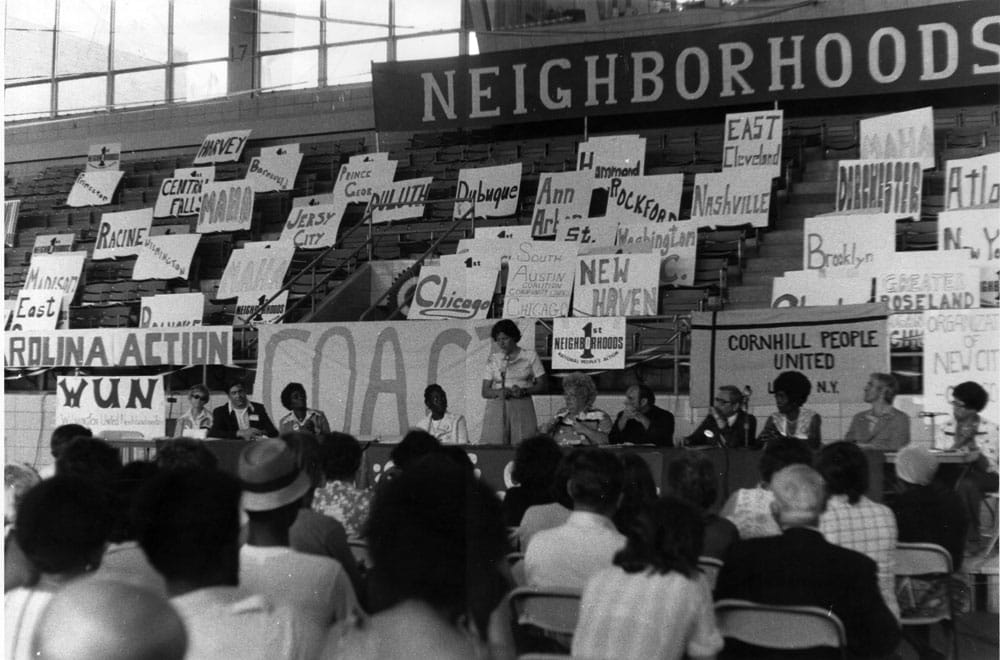
    In the 1970s, anti-redlining movements were in full swing and the idea that activists, lenders, and elected officials could share power to revitalize communities and advance homeownership felt like a reach. But that was exactly my charge.