


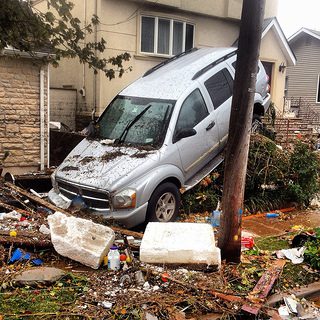
The aftermath of October's Hurricane Sandy brought attention from the nation to New York and New Jersey where the superstorm caused devastation to homes and lives and shut down livelihoods for many.
Organizations from both states are now fighting to ensure the recovery aid is used for the region's most vulnerable communities.
“Tornadoes, hurricanes and winter storms do not discriminate in the path they take, but people's resources often dictate how well they fare during the event and after the weather passes,” writes David Holtzman in a blog post on Rooflines.
Grassroots groups are urging the U.S. Department of Housing and Urban Development (HUD) to hear their concerns on the plan recently submitted by the New Jersey Department of Community Affairs (DCA):
In a letter to HUD, the Housing Community and Development Network of New Jersey (HCDNNJ) says the plan to use a $1.8 billion installment of a $5.4 billion share given to the state needs “signifcant improvement.”
“Your approval of the plan, as submitted, will result in an unprecedented amount of federal funds being spent in a way that lacks fairness for all New Jerseyans,” HCDNNJ writes.
The plan favors homeowners over renters in a state where the price of renting is among the higest in the nation, said Diane Sterner from HCDNNJ said in an op-ed to NJ.com.
“Both groups deserve an equal shot at any funding the federal government is sending to the state,” Sterner writes.
Sterner also questions whether the DCA will even be able to handle repair, as its resources have been significantly cut back in recent years.
A group of 76 signatories, including religious, civil rights, and community leaders, have also called on New Jersey to change its plan, says Laura Denker on the Fair Share Housing Center blog.
The requests include “fairly analyzing housing needs and addressing the historic pattern of exclusion of lower-income families and persons of color from impacted communities” and pushes for a greater focus on groups with special needs and the homeless.
Holtzman, like many, pointed out that community participation was left out of the planning of this and most recovery agendas.
In response, an association of environmental justice organizations, community-based groups, labor unions and allies from Sandy-affected areas in New York, New Jersey and Long Island has created its own plan.
Named the Sandy Regional Assembly, its recovery agenda reports that Sandy affected “nearly 20 percent of all New York City Housing Authority properties, (i.e. 402 buildings with over 35,000 units) and nearly one-third of owners (29.9 percent) and two-thirds of renters (64.9 percent) directly impacted by Sandy had household incomes of less than $30,000 per year.”
The agenda details three main goals:
- Integrate regional rebuilding efforts with local resiliency priorities
- Strengthen vulnerable communities and address public health impacts
- Expand community-based climate change planning, preparedness and response
The recovery from Hurricane Katrina was famously inequitable on many fronts. These voices want to make sure the Sandy Recovery doesn't go the same way.
(Photo by Rob Gross CC BY-NC-ND)
About the Author


Comments