


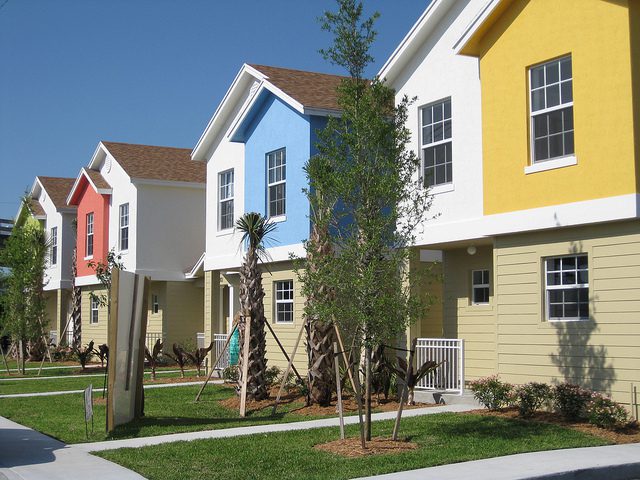
We recently asked affordable housing developers across the state of New York: (1) what they do, (2) how they do it, (3) why they do it, and (4) what types of local community opposition they face, and how they overcome it.
Seventy-four nonprofit and for-profit developers responded to our survey (about 50 percent of those contacted). Of these, 70 percent have experienced local community opposition to their affordable housing development projects in urban, suburban, and rural communities throughout the state.
Here is the first in a short series of posts about what we found out about these developers and their affordable housing development projects, and why it matters to housing policymakers, planners, developers, and advocates.
The majority of affordable housing developers are motivated to focus on affordable housing development by both mission and community need, regardless of not-for-profit or for-profit tax status. Around 80 percent of all developers confirmed having affordable housing development specifically within their mission or business statement, regardless of their for-profit (82 percent) or nonprofit (80 percent) status.
When asked why they develop or manage affordable housing rather than, or in addition to, market rate housing, the language used varied, but the concepts did not. Nonprofit respondents mentioned community need and organizational mission most frequently, but for-profits also mentioned community need, community benefit or impact, and mission or business expertise most frequently. Several of each type of developer also mentioned the availability of funding as influencing their decision.
There is greater diversity in the level of affordable housing business activity among nonprofits, while the majority of for-profit developers focus most of their business activity on affordable housing. As shown in Table 1 below, the level of housing activity among nonprofit housing developers varies considerably, indicating that they are engaged in a broad array of activities and services. For-profit developers, on the other hand, tend to concentrate more of their business activity on affordable housing. This is not surprising, considering the breadth of mission among not-for-profits, leading to broader interests in community development.
Table 1: Percentage of business activities related to affordable housing development or management
|
All Developers (n=74)
|
Nonprofit (n=57)
|
For-profit (n=17) | |
|
75-100% |
48% |
39% |
76% |
|
50-75% |
21% |
23% |
12% |
|
25-50% |
16% |
21% |
0% |
|
Less than 25% |
16% |
18% |
12% |
For-profit affordable housing developers appear to be more focused on providing rental units, while a higher proportion of nonprofit developers seem to focus on developing units for ownership. As highlighted in Table 2, just over half of all nonprofit respondents indicated that they focus primarily on rental units, while a quarter of them focus on owned unit development.
Over 80 percent of for-profit respondents focus primarily on rental housing development, however, while just over 10 percent said they focused on owned units. (There was not much difference in proportion between those developers who focus on both types of tenure equally.)
Table 2: Type of units developed
|
All Developers (n=74) |
Nonprofit (n=57) |
For-profit (n=17) | |
|
Primarily Rental Units |
62% |
56% |
82% |
|
Primarily Owned Units |
22% |
26% |
6% |
|
Both Equally |
16% |
18% |
12% |
|
Total |
100% |
100% |
100% |
While some funding resources are sought by most rental housing developers, for-profit and nonprofit developers do differ in their usage of certain programs. For example, a much larger proportion of for-profit developers have utilized federal programs to fund rental housing development, as shown in Table 3, including the Low Income Housing Tax Credit, Section 515 for rural rental housing, and Section 202 for senior rental housing.
For-profit developers also use New York State’s Low Income Housing Tax Credit program in much higher proportion, and use state bond financing at a slightly higher rate. These differences in program usage could reflect program criteria that favor the capacity, development scale, and financial resources that for-profit developers often have in greater abundance than not-for-profit ones.
Table 3: Programs used by developers of primarily rental housing
|
All Rental Housing Developers |
Nonprofit |
For-profit | |
|
Federal Programs |
100% (n=46)
|
100% (n=32)
|
100% (n=14)
|
|
HOME Investment Partnership Program |
93% |
91% |
100% |
|
Low Income Housing Tax Credit |
85% |
63% |
86% |
|
Community Development Block Grant |
59% |
56% |
64% |
|
Section 202 |
30% |
31% |
50% |
|
Section 515 |
28% |
19% |
50% |
|
State Programs |
89% (n=41)
|
84% (n=27)
|
100% (n=14)
|
|
State Housing Trust Fund |
73% |
70% |
79% |
|
Homeless Housing Assistance Program |
54% |
67% |
29% |
|
State Low Income Housing Tax Credit |
37% |
15% |
79% |
|
State Bond Financing |
34% |
30% |
43% |
Federal programs remain critical sources of funding for both affordable rental and ownership units. In addition to the resources highlighted in Table 3 for rental housing development, federal funds are heavily utilized to support owned unit development, too. HOME funds are used by over 90 percent of developers focused on rental housing, but also by 79 percent of those focused on owned units, and 83 percent of developers that do both types of units. Community Development Block Grant funds are used more commonly by owned unit developers, over 70 percent of them compared to just over 50 percent of rental housing developers; an even higher proportion (over 80 percent) of developers of both types of units access CDBG funding. This influential funding program, established through the Housing and Community Development Act of 1974, celebrates its 40th anniversary this year.
State housing trust funds serve as key gap financing for both rental and ownership units; other state funding sources significantly support homeownership. New York State’s Housing Trust Fund provides a critical source of financing for developers of both affordable rental and ownership development projects, funding just around 70 percent of developers working on either rental or ownership units, and 100 percent of those equally developing both types of units. Almost all states have at least one housing trust fund now, according to the latest numbers from the Housing Trust Fund Project at the Center for Community Change.
Specialized state programs are also important for supporting affordable homeownership, such as the RESTORE program for the repair of homes owned by seniors, and the funding through the Affordable Housing Corporation to develop and renovate affordable ownership units.
Editor’s Note: Read the second part of our series, where we will examine how frequently affordable housing developers in New York State face community opposition and when during the development process such opposition occurs.
Acknowledgements: Many thanks to the developers who took the time to respond to our survey, and for the difficult work you do. Thanks, also, to the New York State Rural Housing Coalition, Neighborhood Preservation Coalition of New York State, and the New York State Association for Affordable Housing, for broadcasting our survey to their members. We retain sole responsibility for analyses, errors, or omissions.
About the Author



Comments