


Explainers
Housing and community development can be complex, and no one is an expert on every corner of it. Even the experts sometimes have trouble breaking down what they know for others. Shelterforce explainers will help you introduce yourself to new topics, and explain key points and frequently asked questions to others. Have a topic you’d like covered in an explainer? Send it to [email protected].
The Latest

Series Guide: Shelter in a Federal Storm
Start here to navigate our series on state and local strategies that are being deployed at a time when federal action is largely blocked.
Search & Filter Within this Topic
filter by Content Type
filter by Date Range
search by Keyword
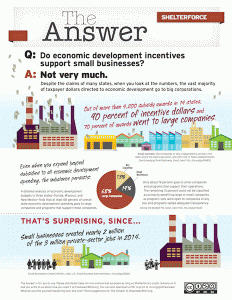
Q: Do Economic Development Incentives Support Small Businesses?
A. Not very much. Despite the claims of many states, when you look at the numbers, the vast majority of taxpayer dollars directed to economic development go to big corporations.
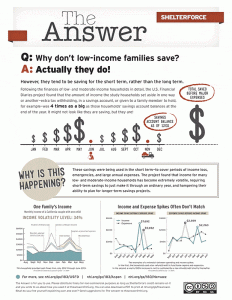
Q: Why Don’t Low-income Families Save?
A. Actually they do! However, they tend to be saving for the short term, rather than the long term.
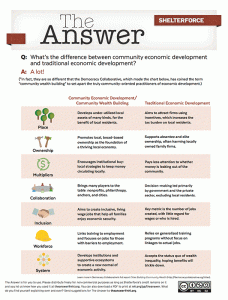
Q: What’s the difference between community economic development and traditional economic development ?
A: A lot! In fact, they are so different that the Democracy Collaborative, which made the chart below, has coined the term “community wealth building” to set apart the truly community-oriented practitioners of economic development.
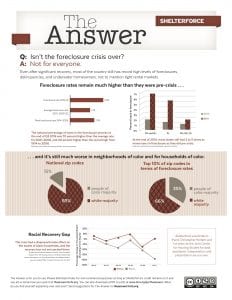
Q: Isn’t the Foreclosure Crisis Over?
A: Not for everyone. Even after significant recovery, most of the country still has record high levels of . . .
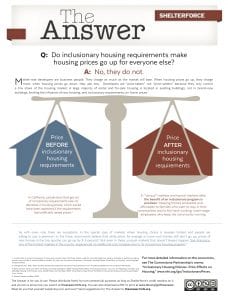
Q: Do inclusionary housing requirements make housing prices go up for everyone else?
A: No, they do not. Market-rate developers are business people. They charge as much as the market will bear. When housing prices go up . . .
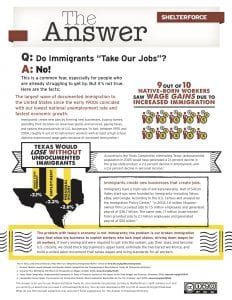
Q: Do Immigrants “Take Our Jobs”?
A: No! This is a common fear, especially for people who are already struggling to get by. But it’s not true. Here are the facts:
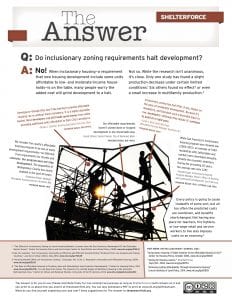
Q: Do Inclusionary Zoning Requirements Halt Development?
A: No! Research shows that hasn’t been the case. And here’s what local officials in places that have implemented it had to say . . .
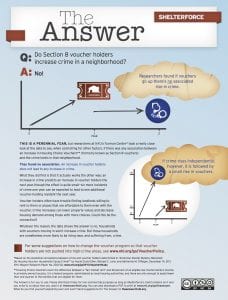
Q: Do Section 8 Voucher Holders Increase Crime in a Neighborhood?
A: No! This is a perennial fear, but research shows that additional voucher holders don’t change the crime rate at all. However it does show that . . .
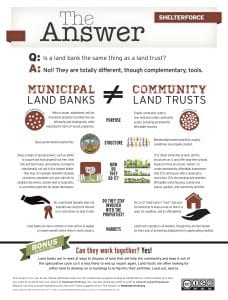
Q: Is a Land Bank the Same as a Land Trust?
A: Nope. They are totally different, though complementary tools. This chart will walk you through the differences.
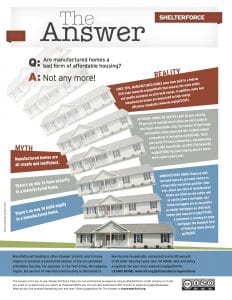
Q: Are Manufactured Homes a Bad Form of Affordable Housing?
A: Not any more! There are many myths out there about manufactured (or “mobile”) homes, but in fact they can be a very important source of quality affordable housing…
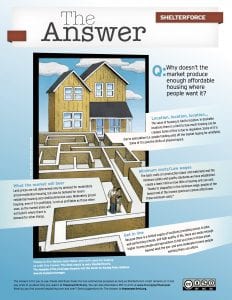
Q: Why doesn’t the market produce enough affordable housing where people want it?
A: The market is supposed to meet demand, but the importance of location, location, location, plus other factors, keep this from working for affordable housing.
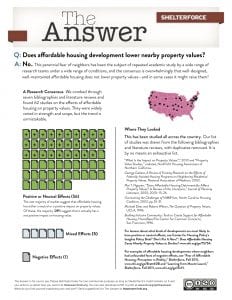
Q: Does Affordable Housing Development Lower Nearby Property Values?
A. No. No. No. Are 56 studies enough no for you?